
Last updated October 30, 2026
 Wrought iron
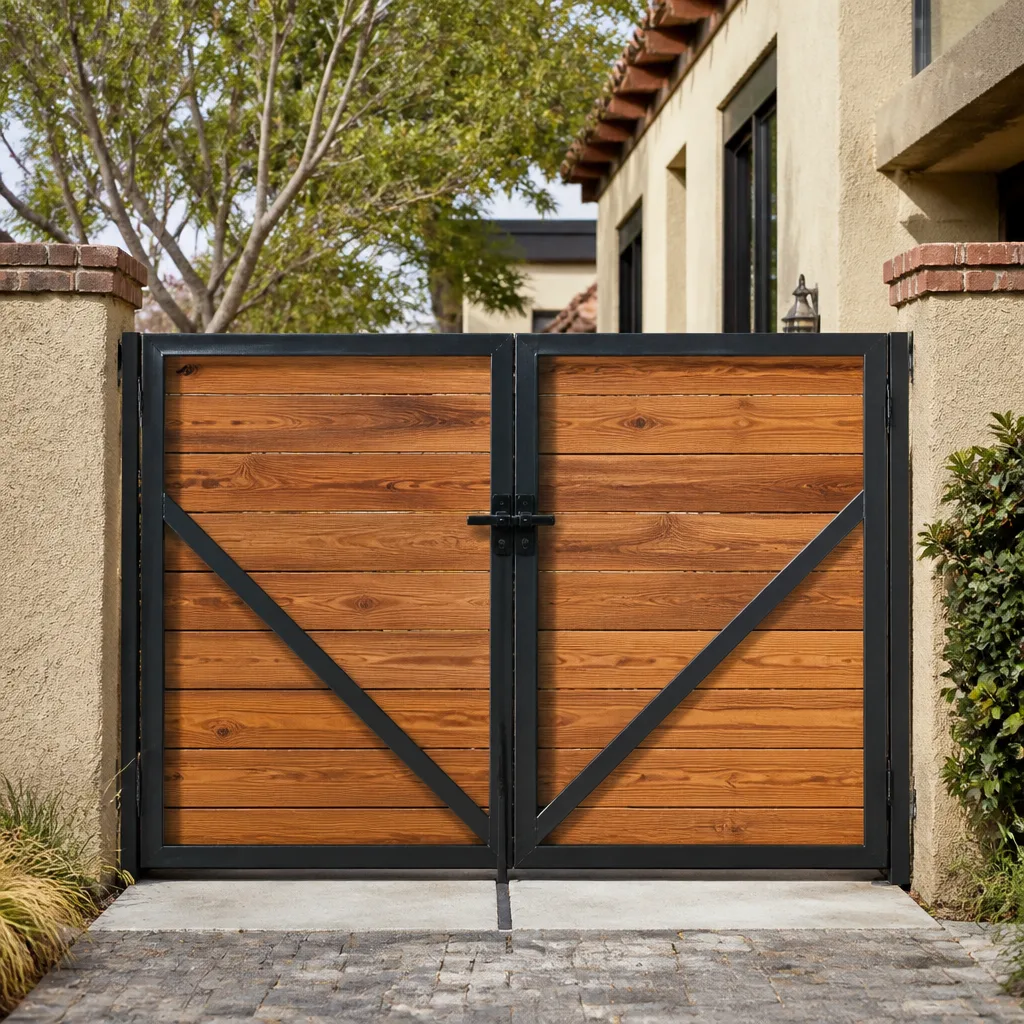 Wood & steel frame
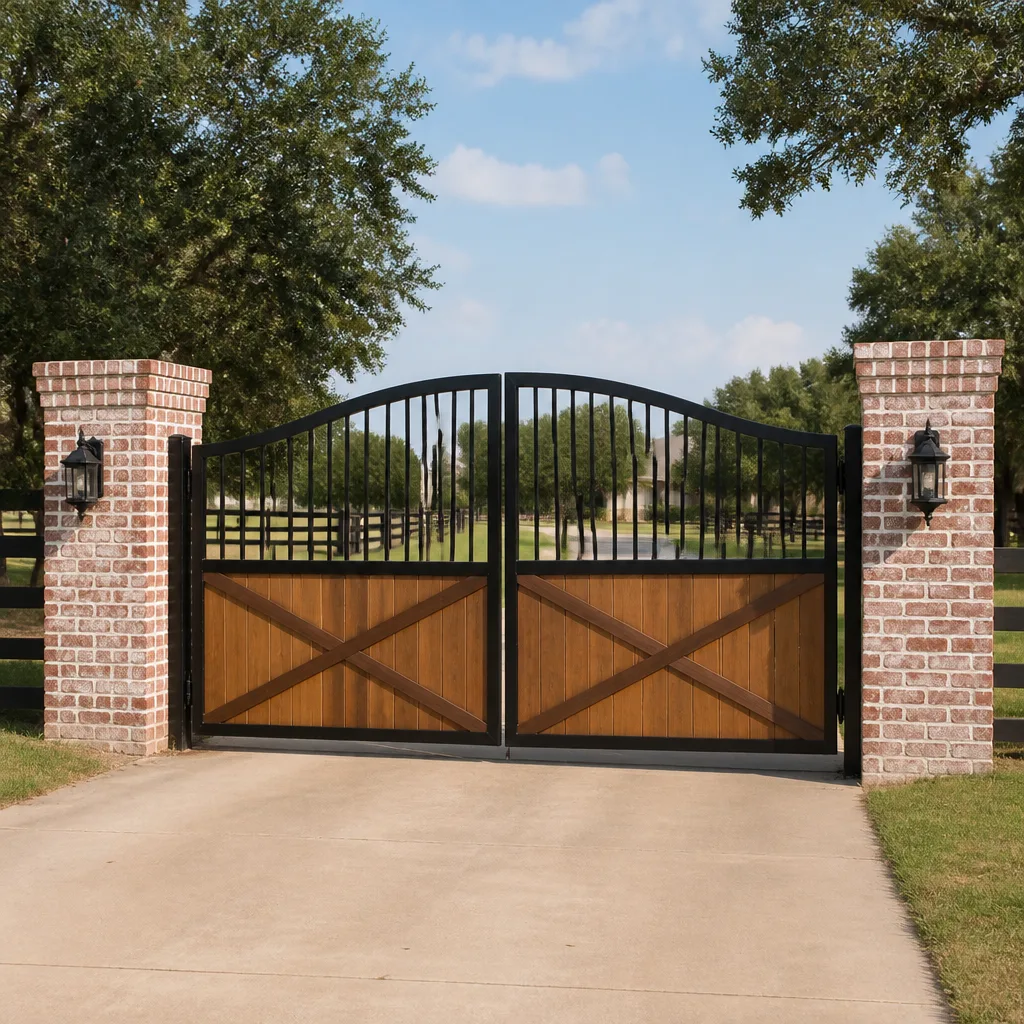 Farm & ranch
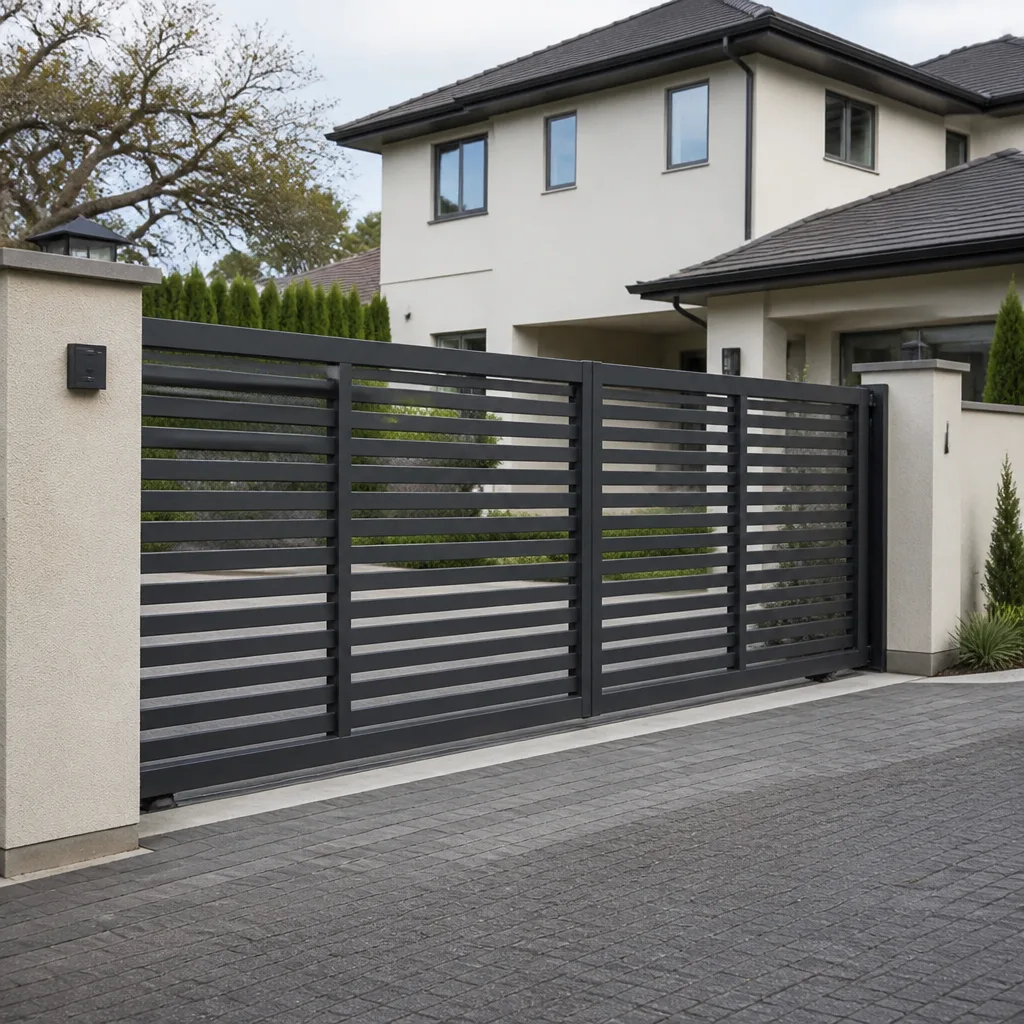 Sliding driveway gates
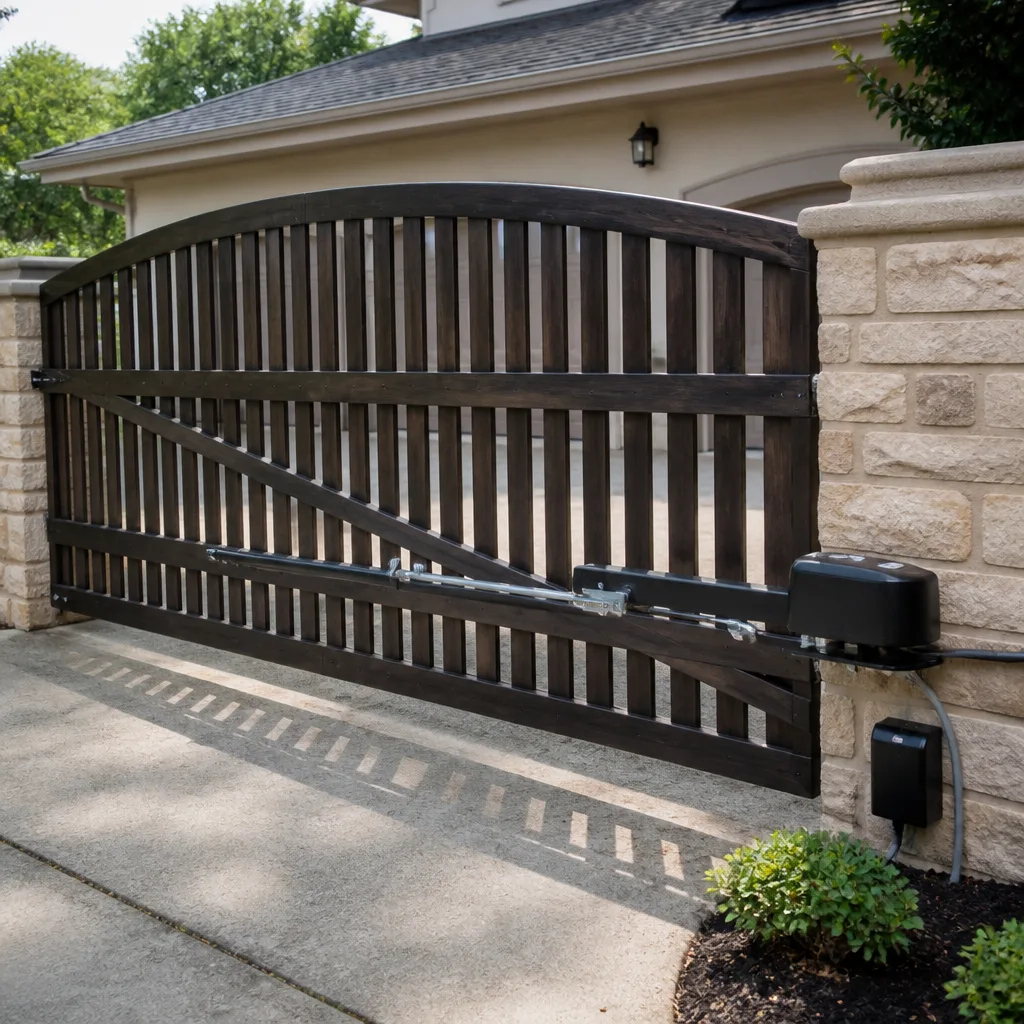 LiftMaster operators
Free on-site gate assessment - hinges, posts, and your LiftMaster or Nice gate operator checked before anything is quoted
The assessment is free and the quote is the invoice.
Get your free estimateHow to Hire a Gate Repair Contractor in Chino: A Step-by-Step Guide
Here’s something most Chino homeowners don’t realize until it’s too late: California has no specific state license category for gate repair. A general contractor, a fencing company, even a garage door outfit can legally charge you to work on your automatic gate operator. What separates a specialist from someone learning on your dime comes down to brand-specific training, diagnostic discipline, and insurance that actually covers gate liability. In this guide and our more guides & resources, we’ll walk through exactly how to screen contractors in Chino so you hire someone who fixes the problem once, not someone who guesses twice and bills you both times.
Quick Answer
Hire a gate repair contractor in Chino by verifying their CSLB license classification, confirming brand-specific experience with your gate operator, checking that their insurance covers gate automation liability, and getting a written quote with itemized diagnostics. A true gate specialist offering Gate Repair services can name the brands they work on, describe common failure modes for your specific opener, and explain the difference between parts and labor warranties before ever touching your gate.
Styles & brands we work with
Table of Contents
- Understanding CSLB License Classifications for Gate Work
- Questions That Expose Brand-Specific Knowledge
- How to Verify Insurance Covers Gate Liability
- Red Flags in Quotes: What Vague Line Items Signal
- Parts Warranty vs. Labor Warranty: Why the Difference Matters
- Chino-Specific Factors That Affect Gate Repair
- The Step-by-Step Hiring Process
Understanding CSLB License Classifications for Gate Work
The Contractors State License Board (CSLB) issues dozens of license classifications, but none of them says “gate repair.” This is the root of the hiring confusion. Here’s what actually applies:
- C-61 / D-28 (Door and Gate Services): This is the closest thing to a gate-specific license in California. A contractor holding a D-28 classification has demonstrated competency in gate installation, repair, and automation. When you see this on a license lookup, it’s a strong signal the contractor is in the gate business as a primary trade, not a side hustle.
- C-10 (Electrical): Automatic gate operators involve line voltage, low voltage control wiring, and safety loops. A C-10 license covers the electrical portion of the work. Many quality gate contractors hold both a D-28 and a C-10, which means they can legally run power to the operator and repair the control board without subbing it out.
- B (General Building): A general contractor can legally work on gates, but the license doesn’t prove any gate-specific competency. It means the person passed a test covering framing, roofing, concrete, electrical, plumbing, and a dozen other trades. Gate automation is a footnote. If a contractor holds only a B license and no D-28, ask how many operator control boards they’ve diagnosed in the last year.
- C-13 (Fencing): A fencing contractor can build the physical gate leaf and hang it on posts. But a C-13 license does not cover the electrical work required to automate that gate. We regularly see gates in Chino that a fencing company installed beautifully and then automated badly, because they subbed out the operator wiring to someone who wasn’t there for the installation.
How to check: visit the CSLB website, search the contractor’s name or license number, and look at the classification. It takes 60 seconds and tells you more than any advertising copy ever will. If a contractor is vague about their license number or says they’ll “send it later,” that’s your first red flag. A legitimate Gate Repair in Chino contractor will have it printed on their invoices and their truck.
What if the contractor has no license at all?
Walking away from an unlicensed operator is the correct move, no matter how good the price sounds. Unlicensed work carries no CSLB complaint process, no bond for recovery, and typically no insurance that will survive a claim. In Chino, we’ve been called to fix gate work done by unlicensed operators more times than we can count. The fix is always more expensive than the original job would have cost with a proper contractor.
Questions That Expose Brand-Specific Knowledge
A fencing company can hang a gate leaf and make it swing. A garage door company can rebuild a chain drive. But neither of them knows the difference between a BFT control board failure and a Limitronic issue on a Linear actuator. If the contractor can’t name your brand without reading it off the motor, they’re treating all gate openers as interchangeable. That’s the misdiagnosis trap.
Here are questions to ask on the phone before you invite anyone to Chino to look at your gate:
- “What brands of gate operators do you work on?” Listen for specific names. A specialist should be able to rattle them off without pausing: LiftMaster, FAAC, BFT, Linear, Viking, Ghost Controls, DoorKing, Elite, Mighty Mule. If the answer is “all of them” or “whatever you have,” that’s not an answer. A contractor who works on everything repairs everything mediocre.
- “What’s the most common failure you see on my specific opener?” If they ask you what opener you have and then go silent, that’s telling. By contrast, if they say “we see a lot of failed transformer boards on BFT units after power surges, and Viking swing arms tend to blow out the drive gears when they’re not maintained,” that’s a technician who has seen your problem before.
- “How do you diagnose before you quote?” The wrong answer here is “we’ll figure it out when we get there.” The right answer is some version of “we check the power supply first, then the safety loops, then the control board, then the mechanical drive.” That diagnostic order is not universal. A specialist knows the sequence for your specific brand and controller generation.
- “Do you stock parts or order them?” In Chino, you’re 45 minutes from some of the best industrial supply houses in Southern California. A gate specialist who works this market regularly will have relationships with suppliers who carry Viking, BFT, and Linear components. That means same-week repairs, not two-week waits for a part to ship from a warehouse halfway across the country.
- “Can you tell me what happens if the repair doesn’t hold?” The answer you want involves a labor warranty on the diagnostic and the installation. If they have no answer or say “we’ll take a look again,” they haven’t thought through their own accountability.
We work on all nine of the major gate opener brands, but the point isn’t the number. The point is that we know a Ghost Controls residential swing arm behaves differently than a DoorKing rotary operator on a commercial slide gate. Different failure modes, different diagnostic paths, different parts. When a contractor in Chino serves both residential driveways and commercial properties, that brand fluency matters even more.
How to Verify Insurance Covers Gate Liability
General liability insurance is not gate insurance. A standard policy from any company will cover basic property damage, but gate automation adds a specific exposure: an automatic gate is a moving object that can injure a person, damage a car, or fail in a way that creates a security liability. If the contractor’s insurance adjuster has never dealt with an automatic gate claim, that’s a problem.
Here’s what to ask for and what to look for:
- Ask for a certificate of insurance (COI) directly from the insurance carrier. Any contractor can print a COI from an expired policy. Call the number on the certificate and verify the policy is current and the limits are real. This takes three minutes and it’s the difference between a paper shield and an actual policy.
- Look for “products-completed operations” coverage. This is the part of the policy that covers work after the job is done. Gate repairs fail over time. If the policy doesn’t include completed operations coverage, you have no recourse if the repair fails and damages property or injures someone six months later.
- Confirm the policy covers electric gate automation specifically. Some contractors carry a basic general liability policy that’s geared toward fencing or carpentry. When they wire in a control board and that board fails and the gate slams into a car, the insurer may deny the claim because the work wasn’t listed as a covered operation. Ask if “automatic gate operators” or “powered gate systems” are on the declaratory page.
- Check for workers’ compensation coverage. Gate repair involves working with tension springs, heavy gate leaves, and live electrical work. If a worker is injured on your property and the contractor doesn’t carry workers’ comp, you may be liable. This is not a theoretical risk. California law is clear: property owners can be held responsible for uninsured worker injuries.
In our experience in Chino, about half of the gate repair quotes we replace each year came from contractors who couldn’t produce a current COI when we asked. If a contractor hesitates to show you insurance, that’s not a small detail. That’s the entire bet.
Red Flags in Quotes: What Vague Line Items Signal
An itemized quote is a diagnostic report. When you read a quote and can’t tell what the contractor actually plans to do, the contractor probably doesn’t know either. Here’s how to read a gate repair quote like a specialist:
- “Gate repair – labor” is not a line item. It’s a shrug in writing. A competent quote should say something like “replace BFT control board, retest safety loop continuity, adjust limit switches, verify photo eye alignment.” If the quote can’t specify the parts by name, the contractor doesn’t know what’s broken yet.
- “May require additional parts” with no upper bound is a budget trap. Some contingency is fair. An infinite contingency is not. A good contractor in Chino will quote you a range for likely additional parts and cap it with your approval before proceeding.
- “Operator service” is different from “operator diagnostic.” One is labor. The other is the intellectual work that produces the correct diagnosis. If a contractor charges service labor but doesn’t list diagnostic time, ask what you’re paying for when they spend 45 minutes finding the problem. A specialist charges for diagnosis separately and credits it toward the repair.
- License numbers on the quote. This is such a simple thing, but the CSLB requires contractors to include their license number on all contracts and quotes over a certain amount. If it’s missing, the quote is technically non-compliant. In practice, it also means the contractor hasn’t been doing this long enough to have the requirement drilled into them.
If the quote is too vague to understand what you’re paying for, push back. Ask for parts names, diagnostic steps, and a clear scope of work. A contractor who can’t articulate what they’re doing before they start won’t be able to explain it after the bill arrives either. When we quote Electric Gate Repair in Chino, the scope is explicit enough that a competing contractor could bid on it line by line.
Parts Warranty vs. Labor Warranty: Why the Difference Matters
This is the least understood part of gate repair. A parts warranty is what the manufacturer gives you. A labor warranty is what the contractor stands behind. Most consumers confuse the two, and contractors exploit that confusion.
A gate opener part typically carries a manufacturer’s warranty of 1 to 5 years depending on the brand and the part. That warranty covers the part itself if it fails due to a manufacturing defect. It does not cover the labor to remove the failed part, install the replacement, or re-diagnose the problem. It also doesn’t cover failures caused by improper installation, power surges, water intrusion, or lack of maintenance.
What you want from a gate contractor is a labor warranty on the diagnostic and the installation. The labor warranty should cover at least 90 days, and a full year is better. Here’s why:
- A labor warranty on the diagnostic means the contractor is confident in the diagnosis. If a contractor replaces a control board because they guessed and the gate still doesn’t work, do you pay for the second visit? A contractor who stands behind their work will come back and re-diagnose at no charge within the warranty window. A contractor who doesn’t will hand you another invoice.
- A labor warranty on the installation protects you from installation errors. Gate operators have wiring harnesses, limit switches, safety loops, and photo eyes. A loose connection or a misaligned limit switch can cause a failure weeks after the work is done. That’s an installation error, not a parts defect. The labor warranty covers it.
- The manufacturer’s parts warranty won’t cover a part damaged by a bad installation. This is the gap that catches homeowners. You pay for the repair, the contractor installs a new Viking control board, it fails two weeks later because the wiring was wrong, and the manufacturer inspects the board and denies the warranty claim. Now you’re paying for a second board and the labor to do the job right.
Ask every contractor in Chino this direct question: “What’s your labor warranty on the diagnostic, and what happens if the repair fails during the warranty period?” The answer will tell you more about their relationship with their own work than any review page will.
Chino-Specific Factors That Affect Gate Repair
Chino has a climate and a layout that produce specific gate problems. If your contractor doesn’t know the area, they’ll diagnose for a different city and miss the issue entirely.
- Santa Ana winds and dust. Chino sits in the path of the Santa Anas, which kick up dust and fine particulate in the fall. Dust infiltrates limit switches, photo eyes, and control board contacts. A contractor who works the Inland Empire regularly will check for dust intrusion first. A contractor who works mostly in Orange County neighborhoods that don’t see the same wind patterns might not think to check.
- Summer heat cycles. Chino regularly hits triple digits in July and August. That heat expansion and contraction works on gate tracks, swing arm pivot points, and hydraulic lines over time. If a gate worked fine all winter and started failing in July, the problem is often thermal expansion in the mechanism, not a brain-dead controller. A local contractor knows this. An out-of-area contractor might replace a board that was never the problem.
- Agricultural land and fly populations. Chino’s dairy and agricultural legacy means more insects and organic matter around perimeter gates and rural property entrances. Photo eyes get coated in insect debris. Slide gate tracks clog with ag dust. If your gate is on the edge of Chino or in the surrounding San Bernardino County area, the operating environment is different from a suburban cul-de-sac.
- HOA and commercial access systems. Chino has a growing number of gated communities and commercial/industrial properties using access control tied to automatic gate operators. These systems often use commercial-grade operators like FAAC, BFT, or DoorKing. The contractor you hire needs to understand both the gate mechanism and the access control protocol. A residential-only technician will struggle with a system that integrates call boxes, keypads, and vehicle detection loops.
When you install a new gate in Chino, these environmental factors dictate equipment choices: whether a hydraulic or electromechanical operator makes more sense, whether the photo eyes need weather shrouds, whether the control board should be mounted in a sealed enclosure. A contractor who doesn’t work this market won’t make those calls correctly.
The Step-by-Step Hiring Process
Don’t wing this. Follow this sequence, and you’ll end up with a specialist who fixes the gate and doesn’t create a new problem. Skip a step, and you’re rolling dice.
- Write down your gate’s brand, model, and symptoms before you call anyone. Look at the motor housing, the control board cover, the inside of the operator cabinet. Write down what you see. If you can’t find a model number, note the gate type (slide, swing, hydraulic, chain drive) and when the problem started. This information is diagnostic gold, and a contractor who doesn’t ask for it isn’t doing proper intake.
- Call three contractors in Chino and run the brand questions. Don’t lead with price. Lead with the brand questions from the section above. If a contractor can’t answer the specific brand questions, don’t invite them out. The phone screen filters out generalists faster than any in-person consultation.
- Look up each contractor’s CSLB license before the visit. Take the license number from their quote, their truck, or their website. Look it up on the CSLB site. Check for active status, complaint history, and license classification. A D-28 or C-10 is what you want. A B alone with no gate-specific classification is a yellow flag.
- Ask for a certificate of insurance before the visit. This is non-negotiable. Have the contractor email you the COI from their insurer. Verify it’s current. Confirm the policy covers gate automation and completed operations. If they can’t produce it before the visit, they won’t produce it after the work either.
- Get a written diagnostic and itemized quote before approving work. This is where vague language gets filtered out. Read every line item. If you don’t understand a line, ask. If the contractor can’t explain it, move on. The quote should specify parts by brand and part number where possible, labor hours, diagnostic fees, and warranty terms.
- Agree on the price before work starts. This deserves explicit emphasis because it’s the second most common complaint we hear from Chino homeowners. The price you see on the quote is the price you should pay when the work is done. If additional work becomes necessary during the repair, the contractor must get your approval before proceeding. No floating line items, no surprises at the end.
- Get the warranty in writing before you pay the final invoice. Not a verbal “yeah, we’ll take care of it.” A written warranty with a term, a scope, and a phone number. If the contractor won’t put the warranty in writing, the warranty doesn’t exist.
Common Mistakes to Avoid
- Hiring a fencing company to automate a gate. A fencing contractor can build a beautiful gate, but they typically don’t have the electrical certification to wire the operator. We’ve replaced automation systems in Chino that fencing companies installed, and the installations shared a common profile: wrong wiring gauge, no surge protection, and photo eyes that were never actually aligned. The gate looked great. It just didn’t work.
- Getting one quote and accepting it. When a homeowner gets a single quote, they have no baseline for what the repair should cost or what the diagnostic should include. The quote might be fair. It might be inflated. Without a comparison, you can’t tell. Two additional quotes cost you an hour and a half total.
- Not asking about the safety loops. Automatic gates have safety loops or photo eyes to prevent the gate from closing on a car or pedestrian. If a contractor quotes a repair that doesn’t mention checking the safety loops, they’re either planning to skip them or they don’t understand the system. In either case, you don’t want them on your property.
- Prioritizing price over diagnostic quality. A cheap technician who guesses wrong costs you twice: once for the initial guess, once for the correct repair. The cheapest quote is often the most expensive outcome. In gate repair, you’re paying for the diagnosis more than the parts.
- Skipping the insurance and license verification. This is the mistake that turns a $400 repair into a $14,000 liability claim. If the contractor is uninsured and an improperly repaired gate injures someone, you’re the deep pocket. The verification takes minutes. The liability lasts years.
- Not asking who does the electrical work. If the gate is an existing automatic gate and the wiring has been there for years, the electrical side is usually the last thing to fail. But when it does, the contractor needs electrical credentials. Ask who’s running the wire and who’s pulling the permit. If the answer is “we just tie into the existing circuit,” that’s fine for a mechanical repair. For a new power run or a new operator installation, the answer needs to be more specific.
- Ignoring the warranty conversation until after you’ve paid. Once the invoice is settled, your leverage is gone. Ask about the parts warranty and the labor warranty before work starts, and get them in writing. A contractor who is vague about warranty before the work will be useless about it after.
See the difference
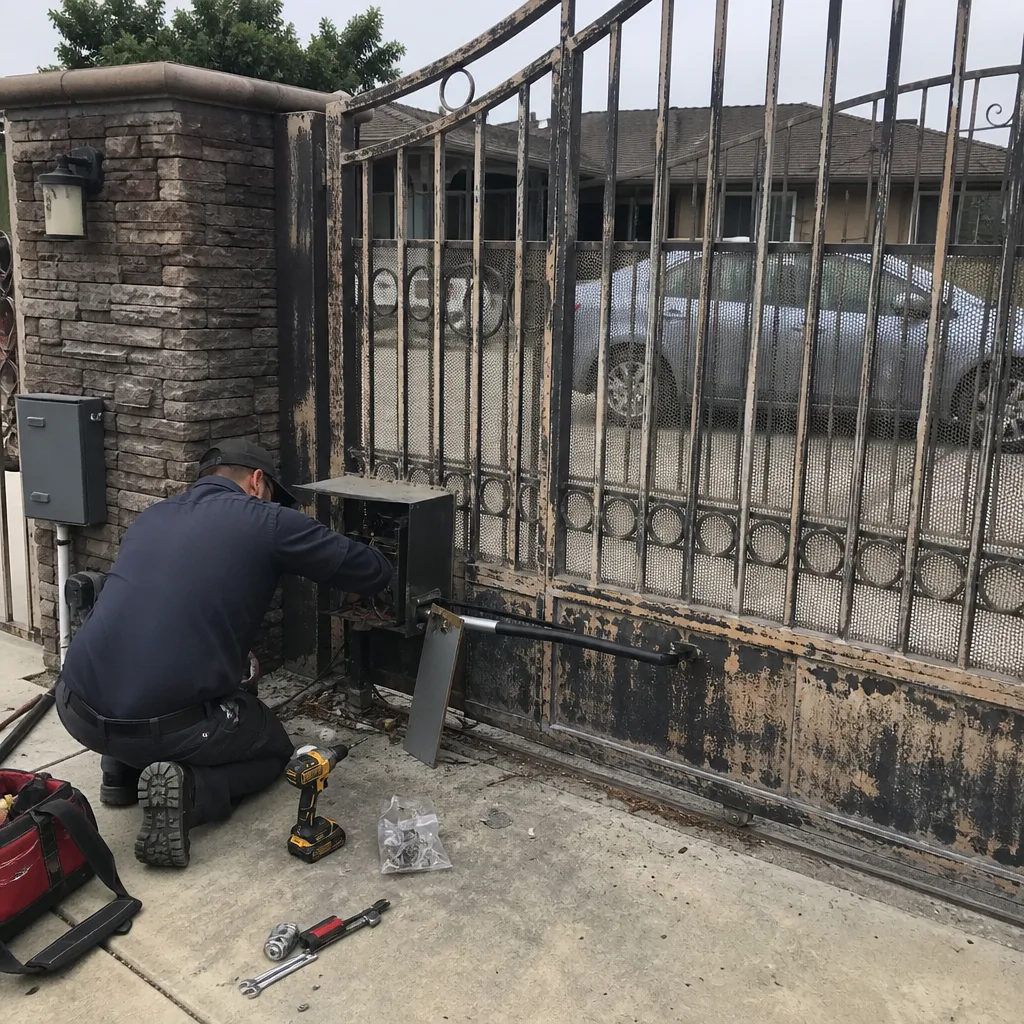 Before
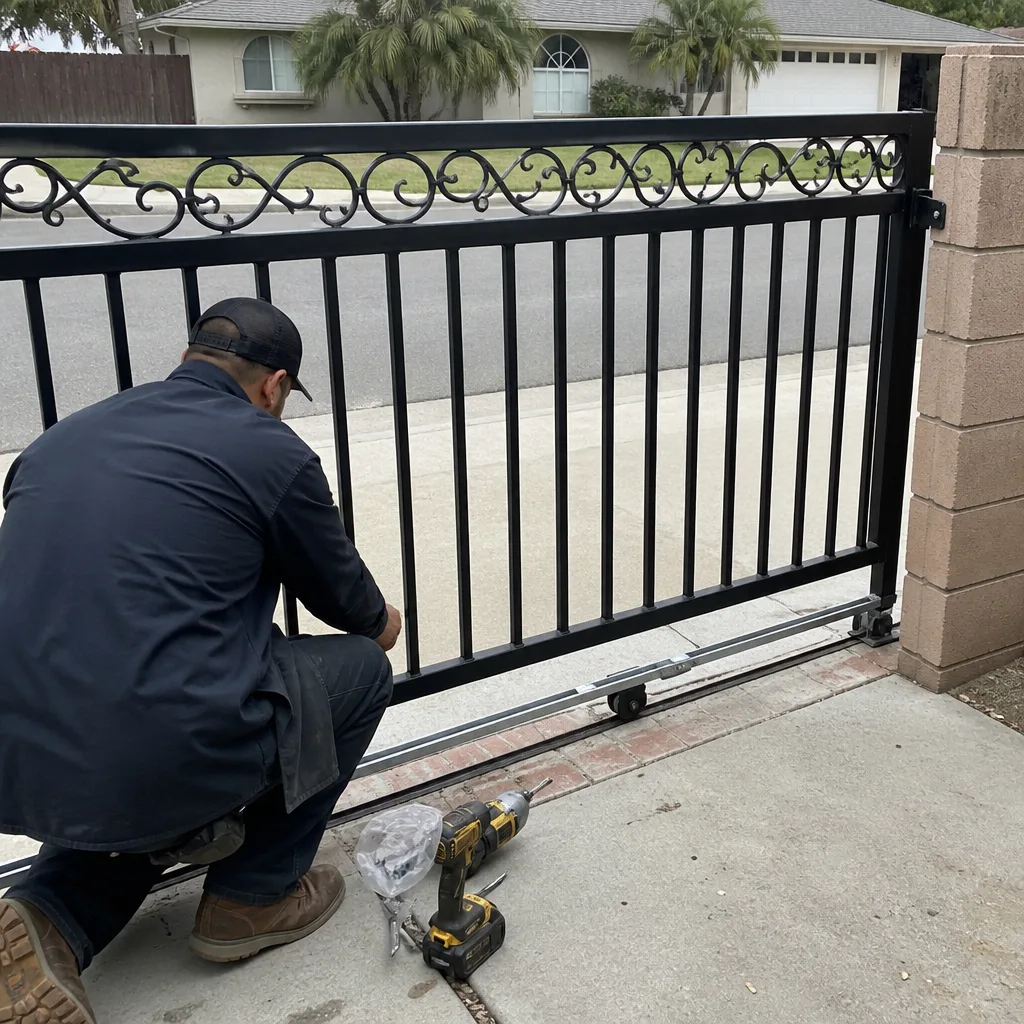 After
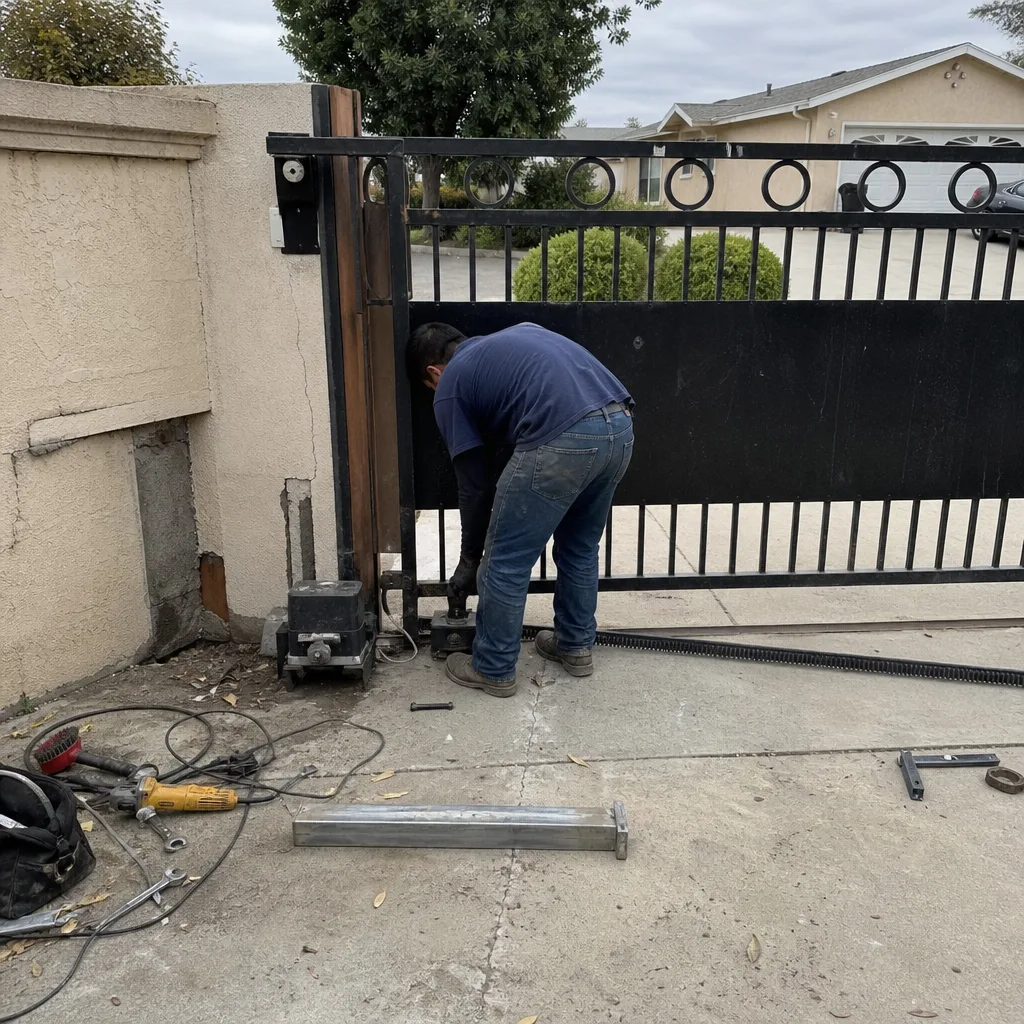 Before
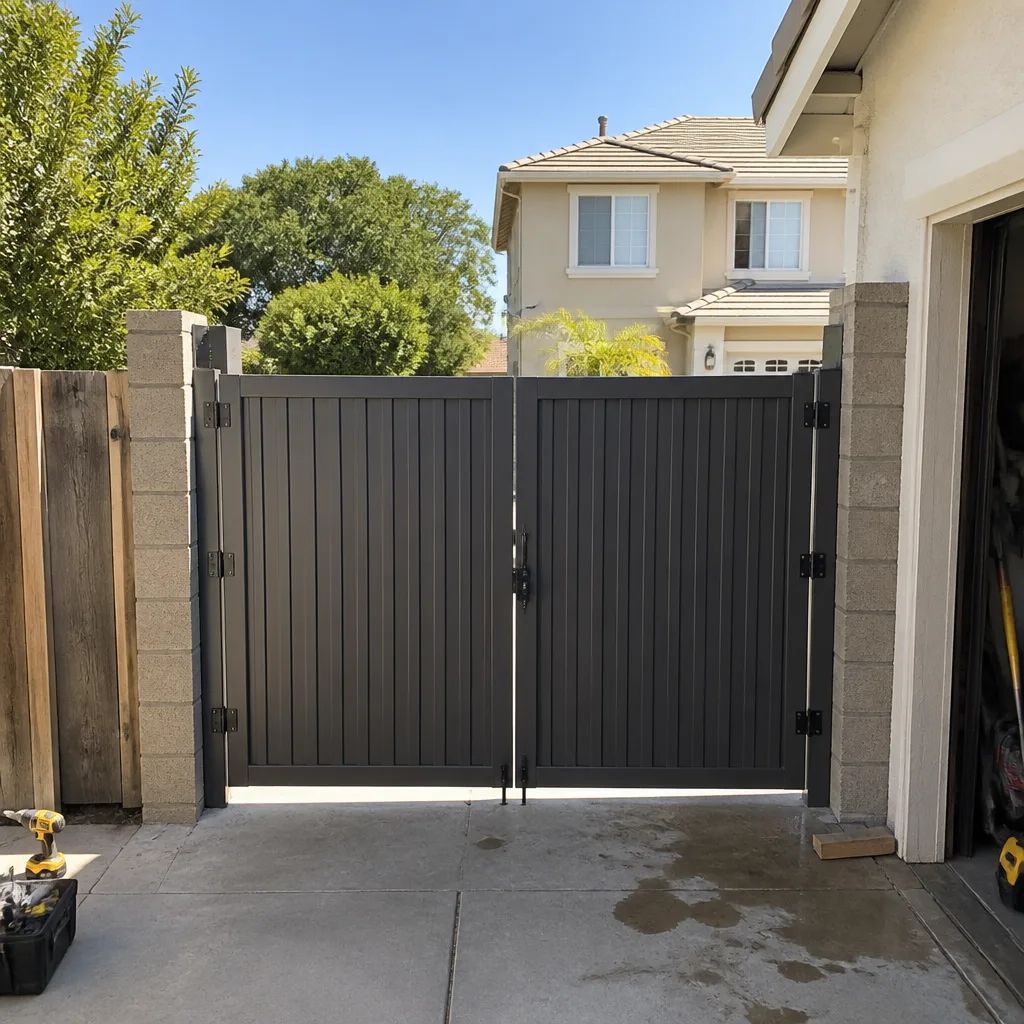 After
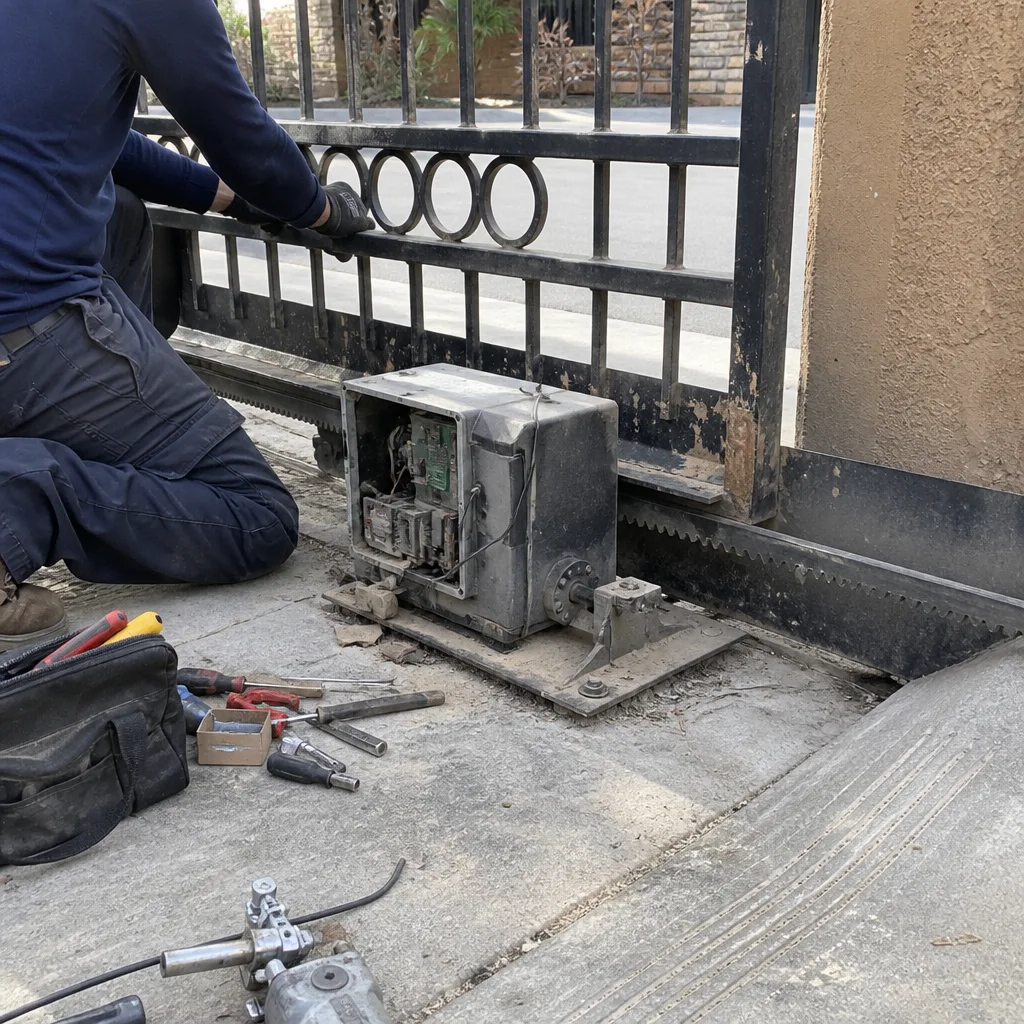 Before
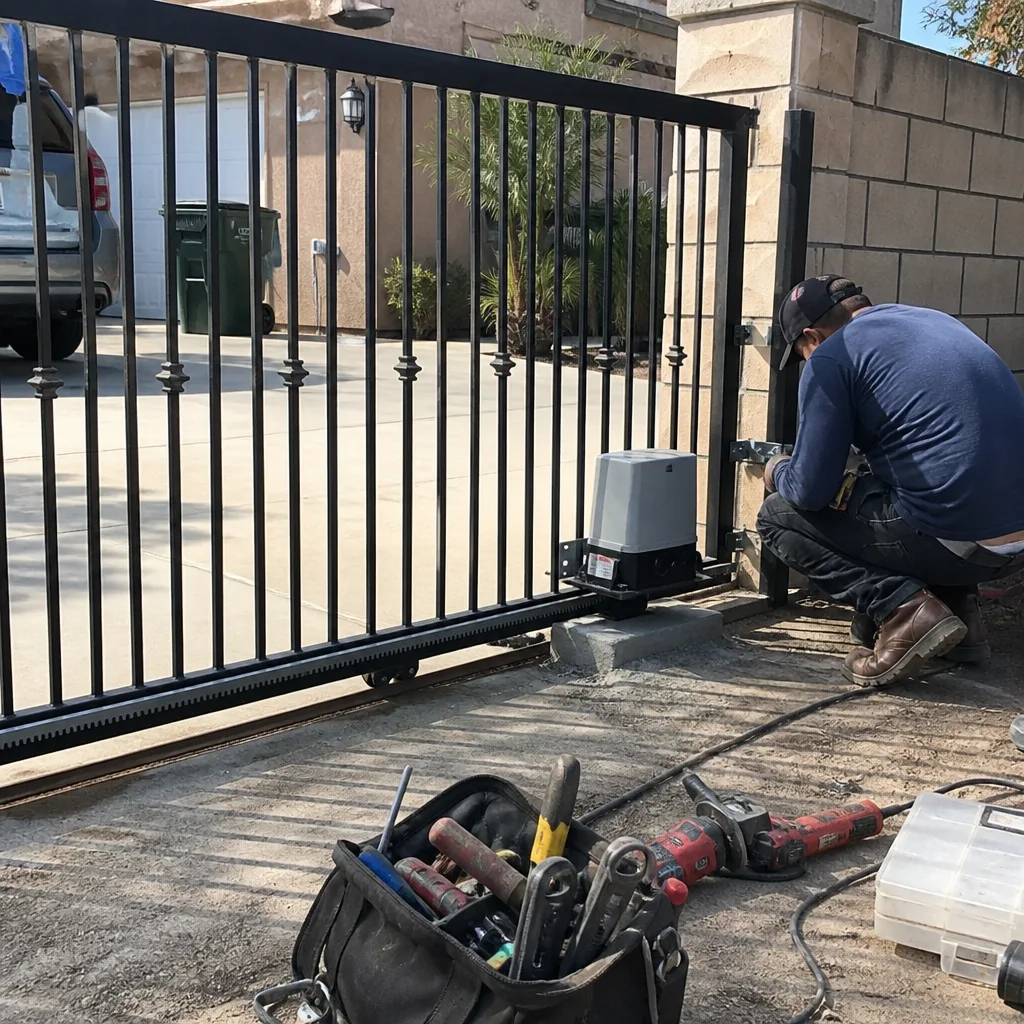 After
When to Call a Professional
You can adjust a hinge bracket or clear debris from a slide track yourself. What you should not do is open a control board cabinet, touch wiring, or disassemble a gate operator. These systems carry live voltage, the gate leaf itself weighs hundreds of pounds, and the tension on a spring or the torque on a chain drive can cause serious injury. If your gate is sparking, making a grinding noise, moving erratically, failing to close fully, or the safety loop isn’t detecting your car, call a specialist. Lexington Gate Repair offers free estimates in Chino. Call (866) 304-1321 and we’ll send a gate technician who knows your brand and can diagnose the issue on the first visit.
Frequently Asked Questions
Gate repair in Chino typically costs between $150 and $600 for most diagnostic and repair work, with more extensive repairs like control board replacement or actuator rebuilds running higher. The big variable is whether the problem is mechanical, electrical, or both. A hinge replacement is on the lower end. A BFT control board replacement is higher. The only way to know is a diagnostic visit. Call (866) 304-1321 for a free estimate, and the price is quoted and agreed before any work begins.
Most gate repairs don’t require a permit because they’re maintenance or replacement of existing components. New gate installations or electrical work like running a new power line to the operator may require a San Bernardino County or City of Chino permit depending on the scope. A licensed contractor should know when a permit is required and handle it as part of the job.
A straightforward repair like a limit switch adjustment or photo eye realignment takes one visit, usually under two hours. A control board replacement on a BFT or Linear operator may take longer if parts need to be sourced. The contractor should give you a time estimate during the diagnosis, and the parts availability for your specific brand is a good indicator of how experienced the contractor is with that brand.
It depends on the problem. If it’s a mechanical issue with parts on the truck, same-day repair is realistic. If it’s a specialized control board or a Viking actuator that needs to be sourced, you’re looking at a day or two. A specialist who works on your brand will be able to give you an accurate time frame after the diagnostic. Call (866) 304-1321 for an exact time estimate based on your gate’s symptoms.
A gate repair specialist works on gates exclusively, works on specific gate opener brands, and has seen the common failure modes for those brands hundreds of times, as detailed in our Choosing the Right Gate Repair Brand: A Buyer’s Guide for Chino. A general contractor may legally work on gates but doesn’t have brand-specific gate training or daily hands-on experience with operators. In a market like Chino, where the CSLB doesn’t license gate repair specifically, the brand knowledge is the actual qualification signal.
Lexington Gate Repair services nine gate opener brands: LiftMaster, FAAC, BFT, Linear, Viking, Ghost Controls, DoorKing, Elite, and Mighty Mule. That covers everything from entry-level residential operators like Ghost Controls and Mighty Mule to commercial systems from DoorKing, FAAC, and BFT. If your brand is on this list, we can diagnose it. Call (866) 304-1321 to confirm your specific model.
The Bottom Line
Hiring a gate repair contractor in Chino is not about finding someone who says yes. It’s about finding someone who can tell you why. The license checks, the brand questions, the insurance verification, the quote analysis, the warranty discussion: every one of these steps filters out generalists who might get the job done by luck, and leaves you with a specialist who gets it done by competence. Gate automation is not a handyman trade. It’s electromechanical work with safety systems, brand-specific failure modes, and liability exposure. The process in this guide takes an hour of your time. The alternative is paying twice: once for the wrong repair, and once for the right one. Lexington Gate Repair home to see how a gate specialist approaches the work, or call us at (866) 304-1321 for a free estimate on your gate repair in Chino.
Written by the team at Lexington Gate Repair, serving Chino since 2011.