
Last updated October 30, 2026
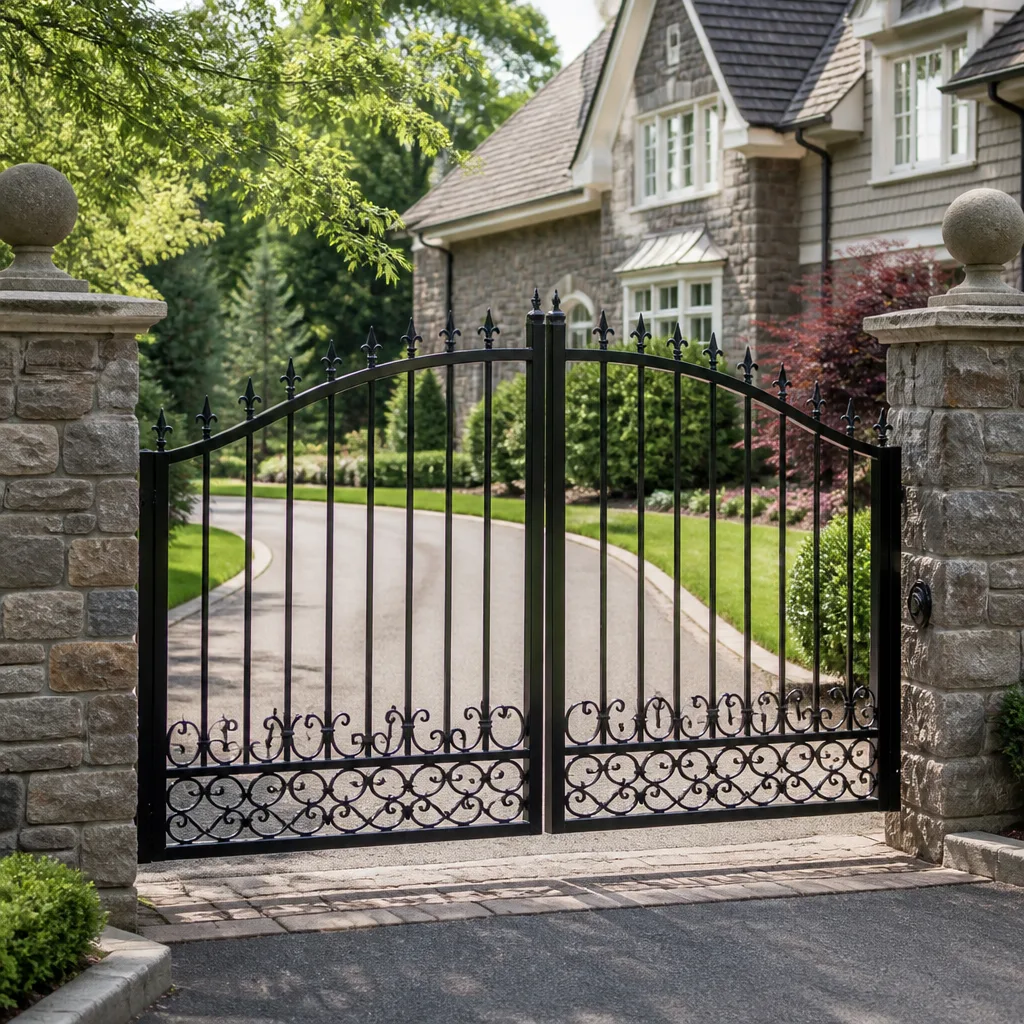 Wrought iron
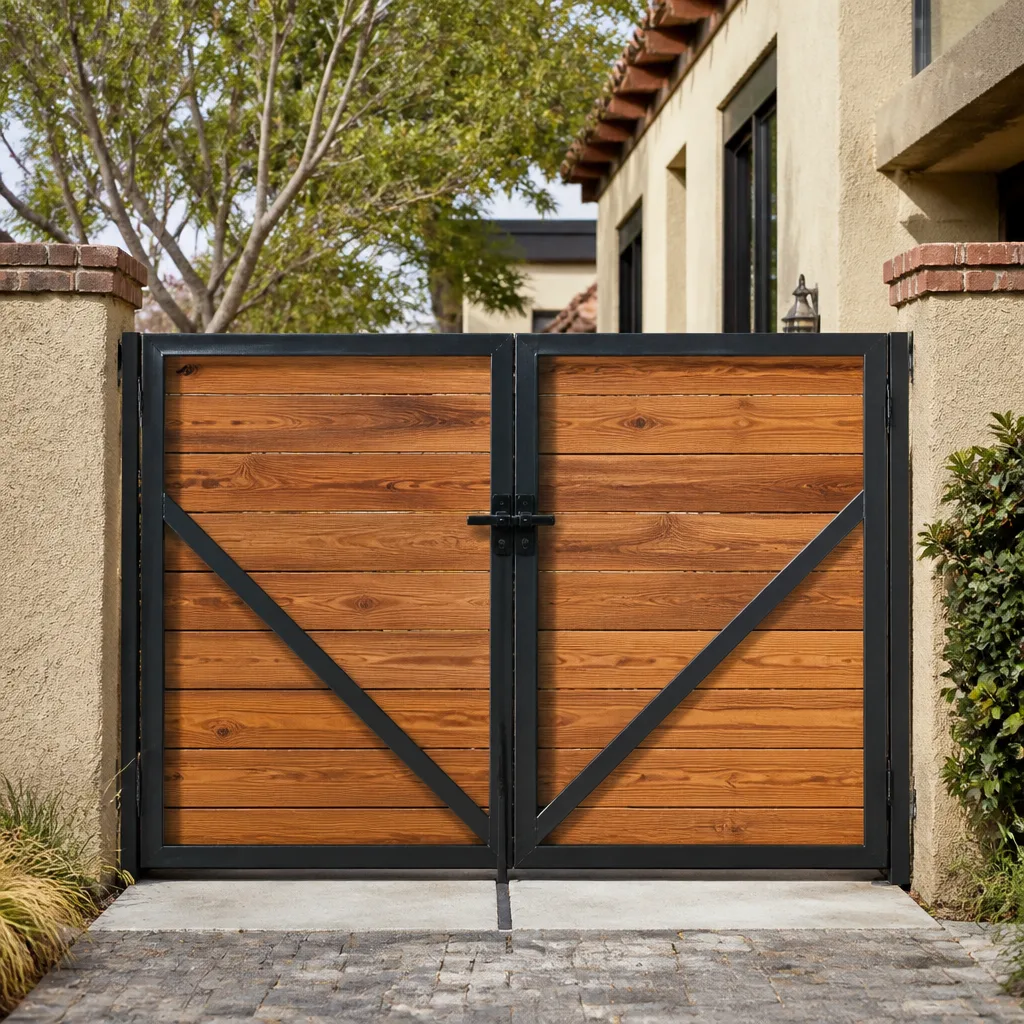 Wood & steel frame
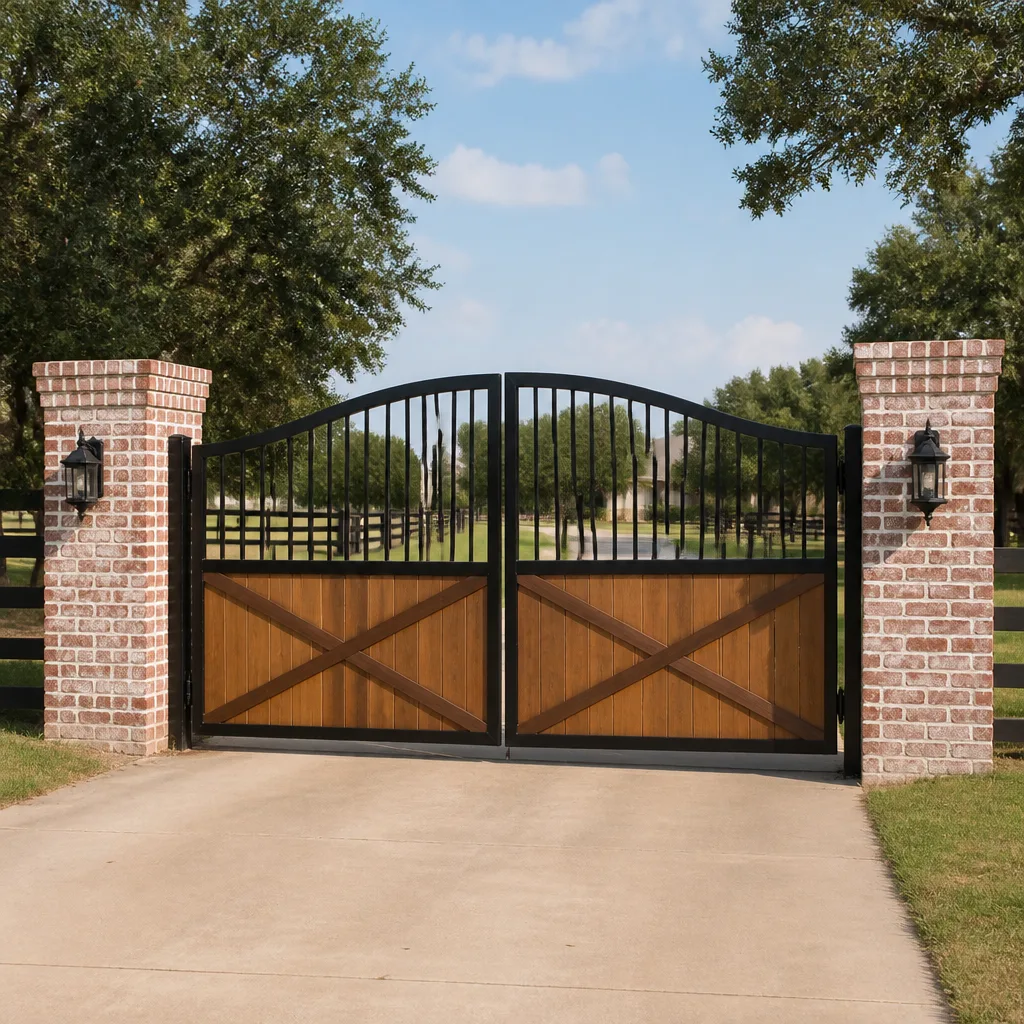 Farm & ranch
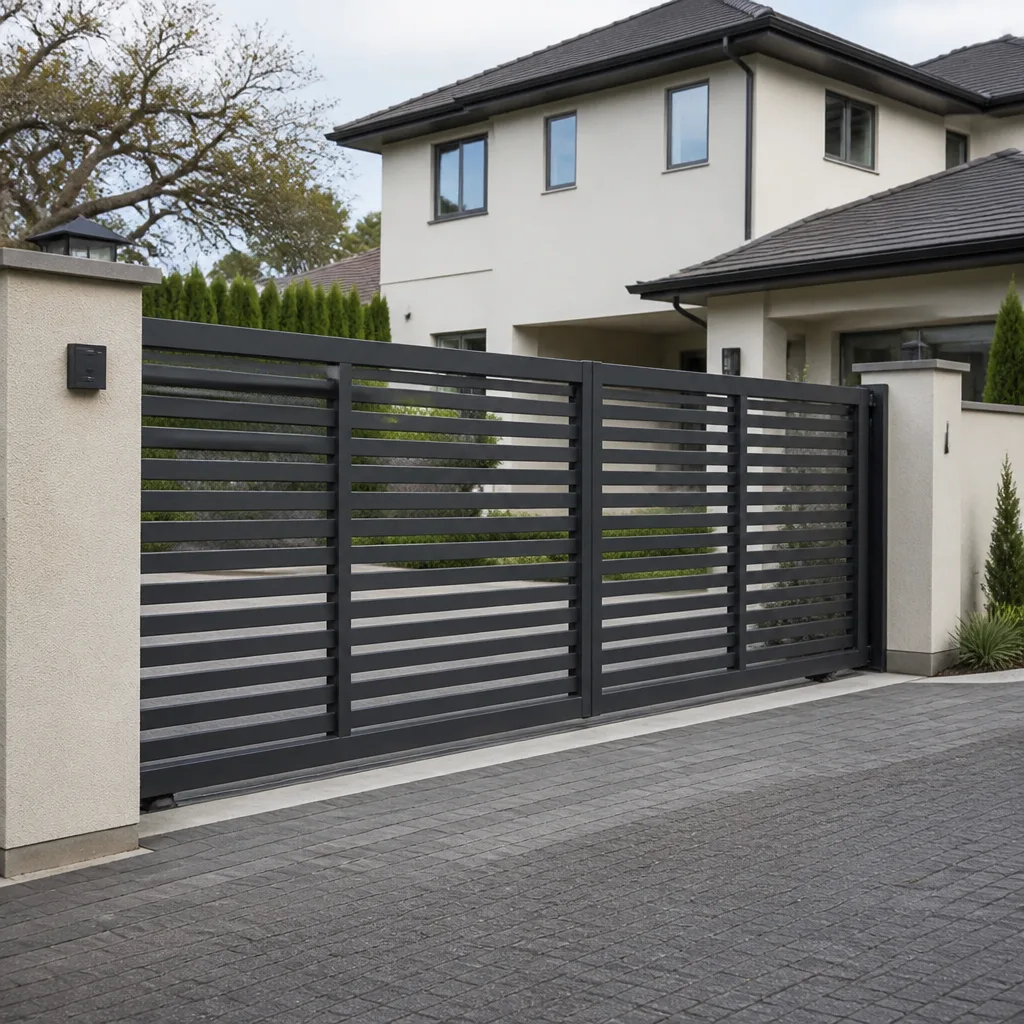 Sliding driveway gates
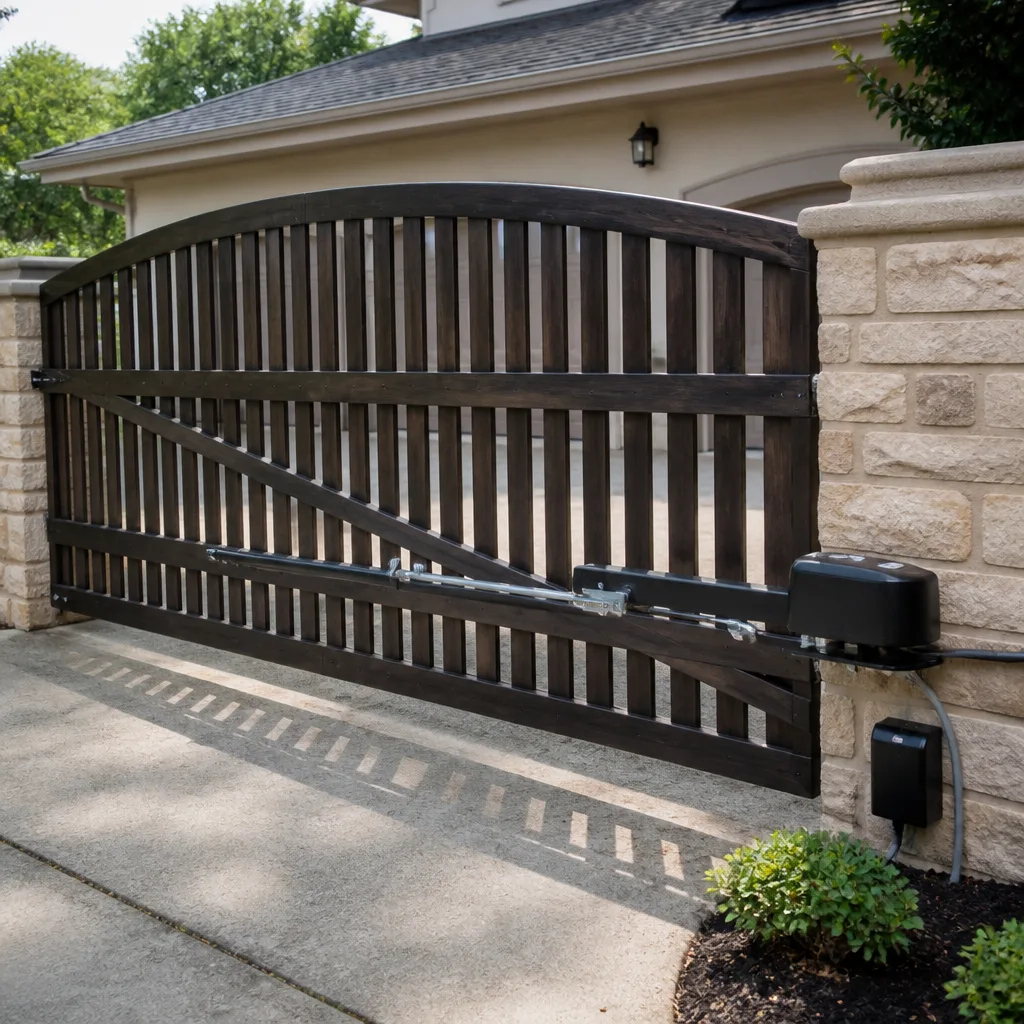 LiftMaster operators
Free on-site gate assessment - hinges, posts, and your LiftMaster or Nice gate operator checked before anything is quoted
The assessment is free and the quote is the invoice.
Get your free estimateChoosing the Right Gate Repair Brand: A Buyer’s Guide for Chino
Here’s a truth most gate owners in Chino learn the hard way: the cheapest gate operator to buy is often the most expensive to own. A lesser-known brand might save you $400 on the front end, but when its proprietary control board fails and that specific part sits on a container ship for five weeks, you’re staring at a non-functional gate that won’t secure your property, won’t let the Amazon truck in, and won’t stop the HOA from sending notices. This guide explains how to evaluate gate brands the way a working technician does: not by spec sheets or online star ratings, but by what happens when something breaks and how quickly it can be made right in Southern California.
Quick Answer
The best gate repair brand in Chino isn’t a single manufacturer, it’s the brand your local technician can actually service through our Gate Repair services with parts that are stocked or quickly sourced in Southern California. In our experience across Chino and the Inland Empire, LiftMaster, FAAC, BFT, Linear, Viking, Ghost Controls, DoorKing, Elite, and Mighty Mule all perform well when properly specified and maintained, but the right choice depends on your duty cycle, gate weight, and who will be answering the phone when it eventually needs service.
Styles & brands we work with
Table of Contents
- Parts Availability: What’s Stocked Locally vs. Special-Order
- Why Serviceability Matters More Than Consumer Reviews
- Matching Operator Class to Your Actual Usage Cycle
- Proprietary vs. Open-Architecture Control Boards
- Factory-Trained Certification vs. ‘Authorized Dealer’ Status
- What the Chino Market Actually Installs and Why
- The Real Cost of a Gate System: Installation vs. Ownership
- Common Mistakes to Avoid
Parts Availability: What’s Stocked Locally vs. Special-Order
When a gate operator fails, the clock starts. For most Chino homeowners, a broken automatic gate means an open driveway, a compromised property line, or a car that can’t get out in the morning. The single biggest factor in how long that disruption lasts is whether the required part sits on a distributor shelf in San Bernardino or Corona, or whether it needs to be ordered from a regional warehouse in Texas or a factory overseas.
Here’s what the parts landscape looks like for the major brands installed across Southern California:
- LiftMaster and Linear: These two brands have the deepest parts distribution in the Inland Empire. Control boards, limit switches, gear kits, and receiver logic boards are typically available same-day or next-day from multiple regional distributors. If a LiftMaster LA400 or Linear actuator fails, we can usually have the part in hand within 24 hours.
- FAAC and BFT: Both are Italian manufacturers with strong commercial reputations. Parts for current-model FAAC 400 series and BFT Deimos units are generally stocked by two or three specialty distributors serving the Los Angeles basin, with 1-3 day lead times. Older or discontinued FAAC models, like the 750 or 390, can be harder to source and sometimes require board-level repair rather than replacement.
- Viking and DoorKing: These brands skew toward commercial and multi-family applications. DoorKing parts are relatively available through a network of commercial access distributors. Viking, which is common on older HOA communities in Chino, has a more centralized parts channel; simple components ship quickly, but specialized boards can take 3-10 days.
- Ghost Controls and Mighty Mule: These are residential, DIY-oriented brands sold through big-box and online retailers. The parts channel is consumer-focused, which means replacement boards and arms are usually in stock at retail or available for direct warranty replacement. The tradeoff is that few independent technicians stock these parts on a service truck, so a repair in the field often means a second visit.
- Elite: A smaller player in the residential and light-commercial space. Elite parts are available through a limited distributor network, typically 3-5 days out in our experience. Not a problem if you plan ahead; a frustration if you’re in an emergency repair situation.
The takeaway for a Chino buyer: before you commit to a brand, ask the installing company or the technician you plan to use, “What do you stock for this brand, and what’s your typical parts lead time for repairs?” The answer tells you more about your future ownership experience than any marketing brochure ever will.
Why Serviceability Matters More Than Consumer Reviews
Consumer reviews for gate operators are nearly useless as a predictor of long-term reliability. Here’s why: most reviews are written in the first 90 days of ownership, before any component has accumulated meaningful wear. A five-star review for a Mighty Mule opener that’s been on a lightweight vinyl gate for two months tells you nothing about how that board will behave on a 700-pound iron gate in the Chino summer after four years of UV exposure and thermal cycling.
The metric that actually predicts ownership cost is serviceability: how many trained technicians in your area can diagnose and repair the brand, how fast parts arrive, and whether the manufacturer publishes technical documentation that allows a competent tech to solve problems without guesswork.
Brands with strong serviceability profiles share several characteristics:
- Technical documentation is public or technician-accessible: LiftMaster, FAAC, BFT, and Linear publish detailed installation and service manuals with wiring diagrams, diagnostic tables, and error code definitions. A technician who understands the brand’s logic can often diagnose a problem in 20 minutes instead of swapping parts blindly.
- Diagnostic feedback is built into the hardware: Most FAAC and BFT boards include LED diagnostic indicators or LCD readouts that report the exact fault: obstruction detected, limit not reached, photocell misaligned. This is the difference between a $180 service call and a $700 board replacement.
- Local technician density is high: When dozens of gate service companies in the Chino, Ontario, and Eastvale corridor work on the same brand, parts knowledge and field experience accumulate. That institutional knowledge means faster, more consistent repairs.
When we evaluate a gate system for a new client in Chino, the first question we ask is not “Who made it?” but “Who’s been working on it, and what parts are in it now?” A well-serviced mid-tier brand outperforms a neglected premium brand every single time.
Matching Operator Class to Your Actual Usage Cycle
The most common specification error we see in Chino is a residential-grade operator installed on a gate that cycles 40, 60, or 80 times a day. Homeowners think of their gate as “residential” because it’s on a house, but the math tells a different story. A family with two working adults, two school-age kids, a landscaper, a pool service, and regular delivery traffic can easily put 50+ open-close cycles on the gate daily. At that rate, a residential operator rated for 10-15 cycles per day is running at 300-500% of its design duty cycle.
Here’s how to think about operator class:
- Count your actual daily cycles. For one week, count every time the gate opens: each family car departure, each arrival, every delivery, every service worker. Include days when you host guests or when contractors are on-site. Most Chino homeowners underestimate by half.
- Add 25% for growth and edge cases. The neighbor’s kids walking home, the HOA inspector doing a drive-by, the UPS truck that needs a signature. If your count is 30, plan for 40.
- Match the operator’s continuous-duty rating to that number. A residential operator rated for 10-20 cycles per day will die an early death on a 40-cycle gate. A light-commercial or commercial-duty operator (like many FAAC, BFT, and Viking models) will run for a decade without complaint.
- Consider gate weight and wind load. A 600-pound steel gate becomes effectively heavier in the high winds that sweep through the Chino Hills area and the Santa Ana season. Undersized motors struggle against wind resistance, drawing excess current and burning out capacitors and contactors.
If your gate cycles more than 25 times a day, talk to a gate specialist about stepping up to a commercial-duty operator. The upcharge is modest; the longevity difference is not.
Proprietary vs. Open-Architecture Control Boards
Every automatic gate operator has a brain, and that brain is a control board. The board reads sensor inputs, manages the motor, controls the warning light and safety edges, and talks to your remote controls and any access system you’ve installed. When the board fails, the gate fails. The architectural design of that board, proprietary or open, determines what happens next.
Proprietary control boards are custom-designed by the manufacturer to work only with that manufacturer’s accessories, peripherals, and programming protocols. Ghost Controls and Mighty Mule, for example, use boards that lock out third-party safety edges or external receivers unless specifically designed for that ecosystem. The advantage is tight integration and predictable behavior at installation. The disadvantage appears when the product line is discontinued or the manufacturer changes ownership: the exact replacement board may be unavailable at any price.
Open-architecture boards accept industry-standard inputs and outputs. Many LiftMaster, Linear, and FAAC boards offer dry-contact inputs for third-party safety devices, programmable relay outputs for external lighting or intercom systems, and compatibility with generic 24V accessories. This flexibility means a technician in Chino can integrate the board with existing hardware from another brand, adapt it to a newer safety standard, or replace a failed component without replacing the entire system.
What this means for a buyer:
- If you plan to keep the property for 10+ years, favor brands with open-architecture boards.
- If you have an existing access control system, intercom, or keypad, verify compatibility before choosing an operator brand.
- Ask about the manufacturer’s record on backward compatibility. Some brands publish a clear policy: current boards replace the last two generations with minimal rewiring. Others silently orphan older hardware.
In Chino’s older housing stock, where gates and openers have been retrofitted and patched over decades, open-architecture boards are often the difference between a clean upgrade and a full rewiring.
Factory-Trained Certification vs. ‘Authorized Dealer’ Status
The phrase “authorized dealer” appears on countless gate company websites, but it means almost nothing in terms of technical competence. Becoming an authorized dealer typically requires a resale agreement, a minimum purchase commitment, and maybe an online product overview. It’s a commercial relationship, not a technical credential.
Factory-trained certification is a different thing entirely. It means a technician has completed manufacturer-specific training in installation, programming, diagnostics, and repair for a particular brand. The distinction matters because:
- Warranty repairs often require certified labor. Several manufacturers, including FAAC and BFT, will void or limit warranty coverage if the installing or servicing technician wasn’t factory-trained on the product. If your gate fails under warranty and the original installer can’t service it, you may be paying out of pocket for what should be a covered repair.
- Diagnostic speed is faster. A technician who’s completed factory training on Viking or BFT knows the system’s error codes, programming menu structure, and common failure modes. They’re not learning your gate on your dime.
- Correct parts are ordered the first time. Brand-specific training means the technician knows that a BFT Deimos BT uses a different limit switch assembly than a Deimos Ultra, even though the two operators look similar from the outside.
At Lexington Gate Repair, we carry factory-level training and service certification on nine gate opener brands: LiftMaster, FAAC, BFT, Linear, Viking, Ghost Controls, DoorKing, Elite, and Mighty Mule. That’s not a marketing line; it’s the practical reality of being able to walk up to any of those operators, identify the problem, and fix it without guesswork. When you’re interviewing gate service companies in Chino, ask pointedly: “Are your technicians factory-trained on my specific operator, or are they generalists who will be learning as they go?” The honest answer will tell you everything you need to know.
What the Chino Market Actually Installs and Why
The gate landscape in Chino reflects the city’s housing mix. The older neighborhoods near Central Avenue and the historic downtown area have a lot of chain-link swing gates with basic pad-mount operators, often from Linear or older LiftMaster models. The newer developments in The Preserve, Butterfield Ranch, and the College Park area feature heavy driveway gates with a mix of sliding and swing operators. The equestrian properties along the southern edges of the city, where lot sizes stretch past half an acre, lean toward commercial-duty operators because their gates are wider, heavier, and cycle more frequently.
What we consistently see across Chino:
- LiftMaster dominates residential installations due to brand recognition and deep parts availability. It’s not always the best technical choice for high-duty-cycle applications, but it’s rarely a wrong choice for a standard two-car driveway gate.
- FAAC and BFT appear frequently on newer, higher-end residential and light-commercial properties. These operators are well-engineered for continuous use and hold up well in the Chino heat, but they require technicians who understand their programming logic and hydraulic or electromechanical systems.
- Viking and DoorKing are the workhorses of HOAs and commercial properties. The planned communities that cover much of northern Chino rely heavily on these brands for entry gates, and when they go down, the HOA wants them fixed yesterday.
- Ghost Controls and Mighty Mule are common on DIY-installed gates. We service these as well, though we often find them under-specified for the gate weight or usage cycle they’re actually experiencing.
This market reality informs our advice: choose the brand that fits your property type and usage, not the one with the best marketing or the lowest price at the home center. If you’re already in a specific brand ecosystem and you’re happy with how it’s been serviced, stick with it. Replacing a working system solely to switch brands rarely makes sense.
The Real Cost of a Gate System: Installation vs. Ownership
Buyers fixate on the upfront purchase price of the operator, the gate itself, and the installation labor. But the cost that actually matters, the number that determines whether your gate system is a good investment or a slow hemorrhage, is total cost of ownership over 10 years. That’s the one thing no spec sheet shows.
A realistic cost model for a Chino driveway gate looks something like this:
- Standard residential slide or swing gate, steel or aluminum, 12-16 feet wide: $4,000 – $8,000 installed depending on gate weight, finish, operator choice, and whether new concrete or underground conduit is required.
- Residential-duty operator upgrade to commercial-duty: $1,500 – $3,500 additional at installation, often including a heavier gate hinge set or roller upgrade. That’s the insurance premium against early operator failure.
- Typical annual maintenance (lubrication, safety edge check, limit adjustment, battery backup test): $150 – $400 depending on system complexity and whether the gate is under a service contract.
- Typical major repair over 10 years (board replacement, motor rebuild, gear replacement): $400 – $2,500 depending on brand, part availability, and whether the technician can diagnose correctly the first time.
The single biggest variable in that model is the technician. A misdiagnosis can turn a $200 limit switch replacement into a $1,800 board swap. A correct diagnosis can make a repair almost trivially cheap. The brand you choose determines how easy it is for a technician to make the right call.
Working with a gate repair specialist in Chino who knows your brand means the difference matters on every service visit. If you’re considering a new gate or evaluating whether to repair or replace an existing system, a Chino electric gate repair service that stocks parts for your brand is the fastest path back to a working gate. And if your current operator has reached the end of its lifespan, a professional gate installation in Chino should start with a conversation about duty cycle, not a quote pulled from a catalog.
Common Mistakes to Avoid
- Buying on price alone. The $300 operator that lasts three years costs more per year than the $1,200 operator that lasts fifteen. This is especially true in Chino’s heat, where cheap plastic gearboxes fail systematically. Cheap operators are false economy on any gate that cycles more than ten times a day.
- Ignoring gate weight when choosing an operator. A Mighty Mule or Ghost Controls opener rated for a 16-foot gate at 550 pounds will not handle a 1,000-pound custom iron gate. Oversized gates on undersized operators are the most common cause of motor burnout we see in Chino’s newer subdivisions, where decorative steel gates are popular.
- Letting a fencing company install the electronics. Fence builders do excellent concrete and steel work, but wiring a gate operator safely requires specific electrical and low-voltage expertise. Time and again, we’re called to Chino properties where a well-built gate was paired with a badly executed electrical installation. If the post isn’t set with conduit stubs, the operator install becomes much more expensive.
- Choosing a brand because the neighbor has it. Your neighbor’s property might have a 10-foot aluminum gate on an 8-cycle-per-day duty cycle. Yours might be a 16-foot steel gate cycling 40 times daily. The same brand can be a perfect fit for one and a liability for the other. Match the operator to your usage, not to the driveway next door.
- Deferring maintenance until the gate fails. Gates are mechanical systems that live outdoors in Chino’s dust, heat, and occasional Santa Ana winds. Dried-out bearings, loose chains, and misaligned safety edges are cheap to fix early and expensive to fix late. A $200 annual service visit prevents a $1,500 emergency repair.
- Replacing a whole system when only one component failed. A failed control board doesn’t necessarily mean the motor, gearbox, and gate are also worn out. A qualified technician can often repair the failed component and extend the life of the rest by years. We always assess whether repair or replacement makes more sense before recommending the bigger ticket.
- Not verifying technician certification before scheduling service. The gate industry in Southern California is full of generalists who will “give it a shot.” For a gate that secures your property, that’s not acceptable. Ask if the tech is factory-trained on your specific opener brand before you book the call.
When to Call a Professional
Some gate issues are worth investigating on your own. If the gate is moving but making noise, or if the remote range is shorter than usual, you can check the obvious: batteries in remotes, leaves blocking the safety sensors, visible obstructions in the track. But if the gate is dead, if it opens halfway and stops, if the motor hums but doesn’t move, or if there’s visible damage to the operator arm or hinge posts, stop troubleshooting and call a gate specialist. These symptoms indicate mechanical or electrical failure that requires proper diagnosis, and continued operation attempts can worsen the damage. If the gate is currently open and won’t close, call immediately, a stuck-open gate is a security issue, not a convenience issue.
Lexington Gate Repair offers free estimates in Chino, call (866) 304-1321 if your gate is misbehaving, dead, or you’re considering a full system upgrade. For background reading, see The Complete Guide to Gate Repair in Chino. We’ll tell you honestly whether repair or replacement makes sense for your specific setup.
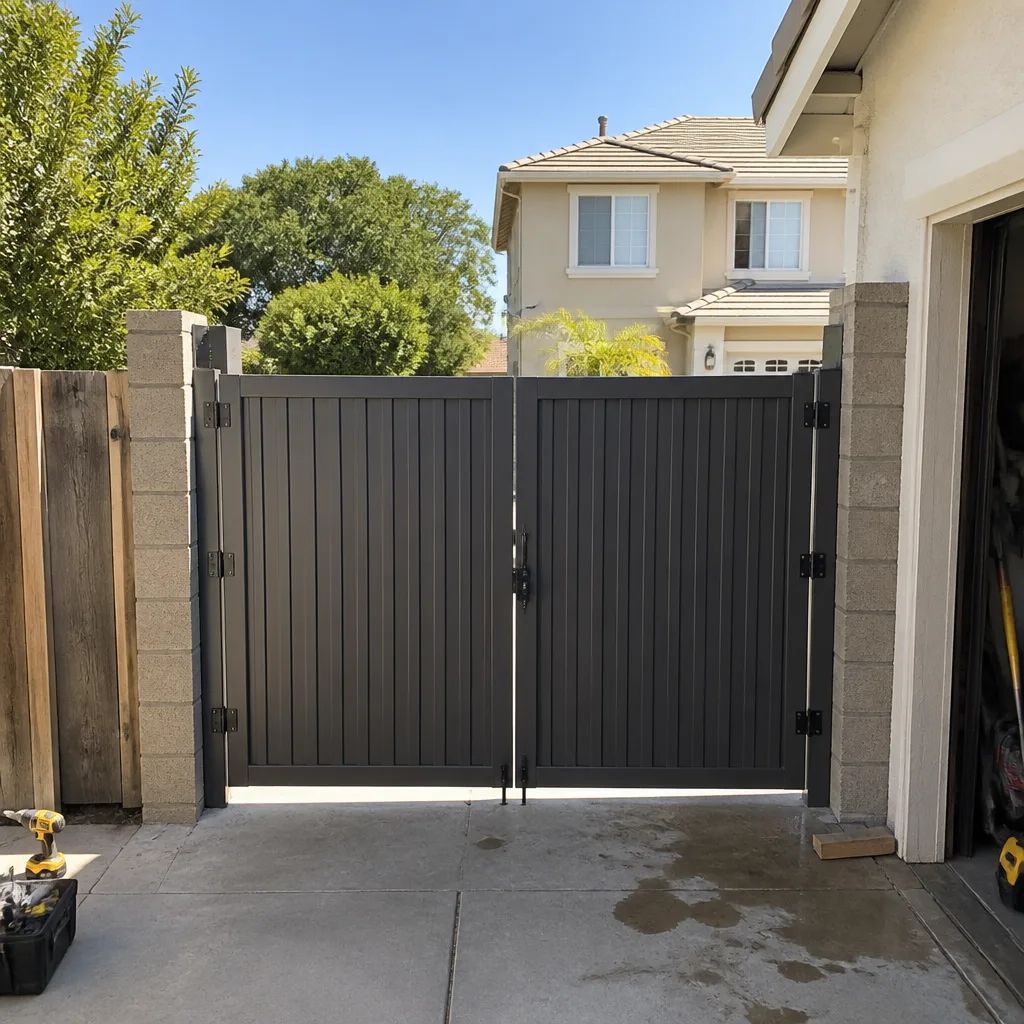
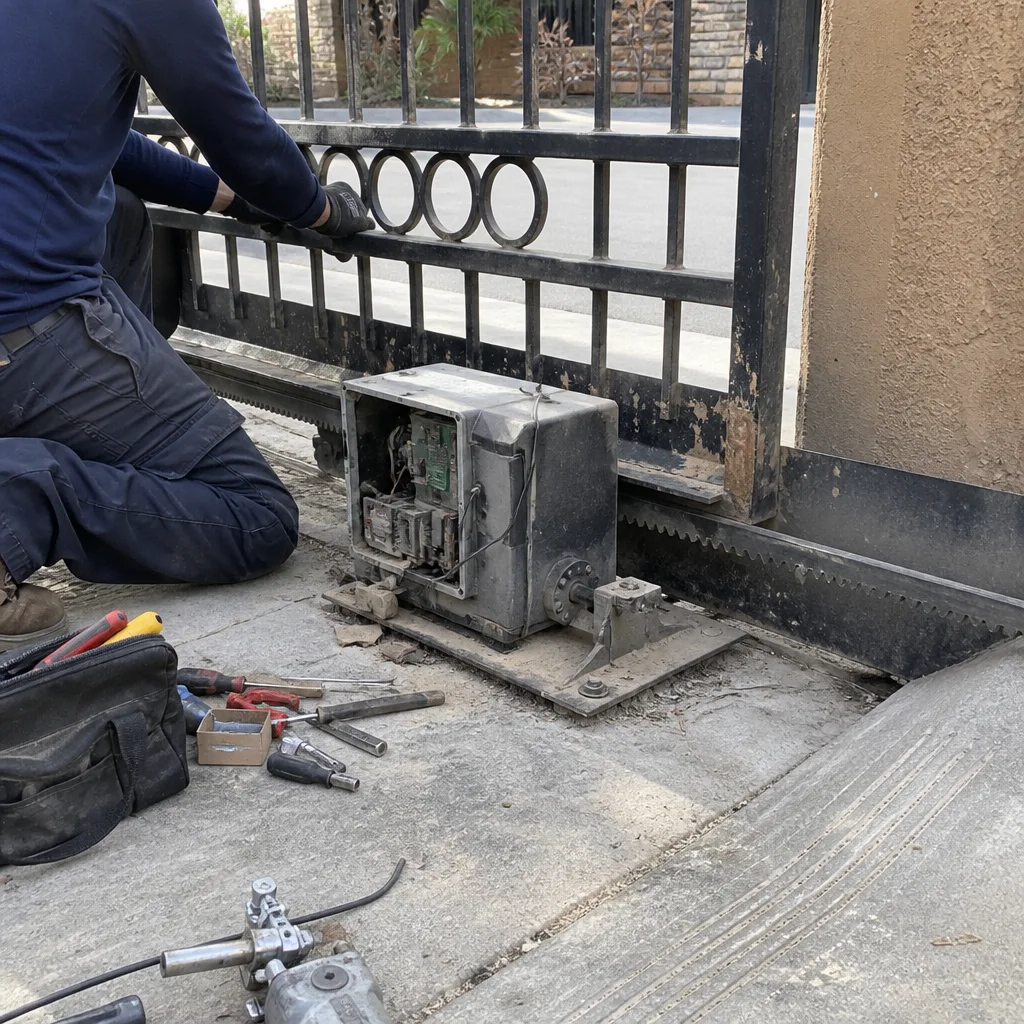
See the difference
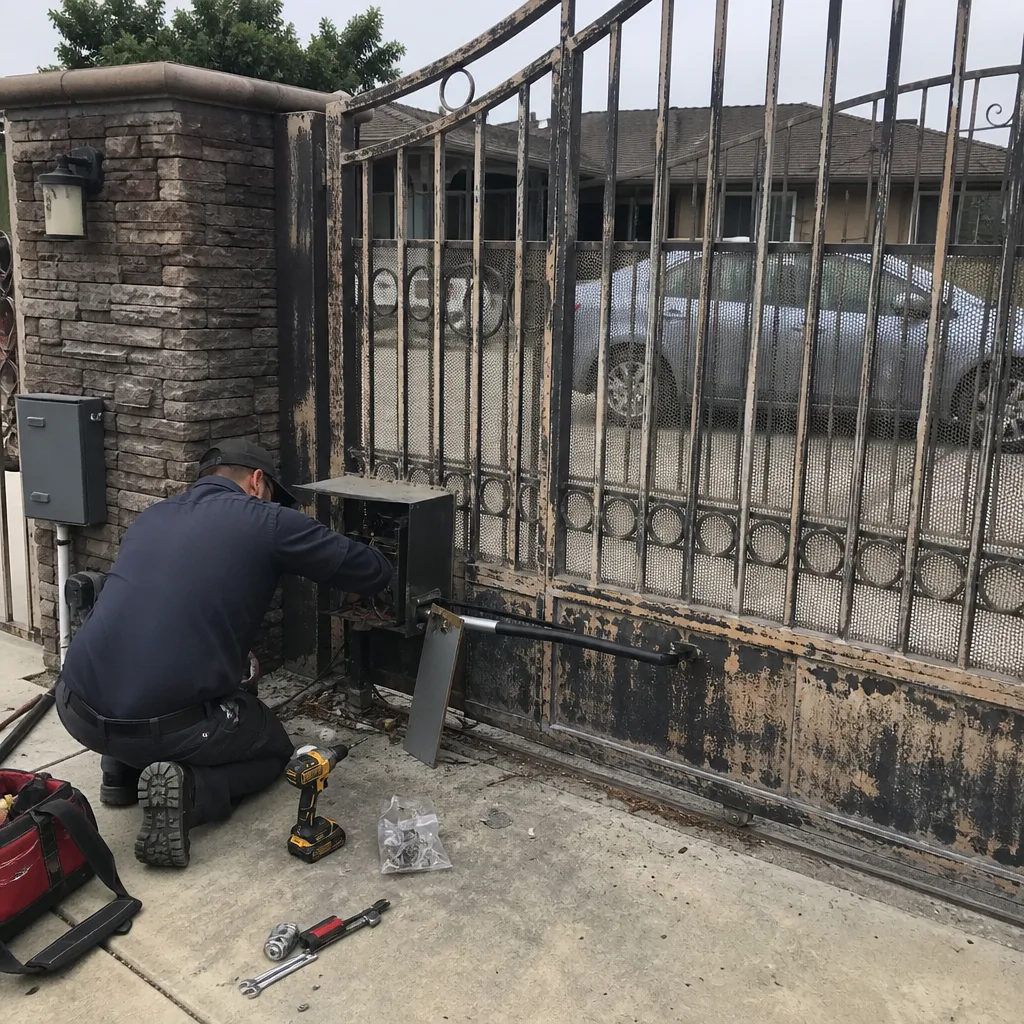 Before
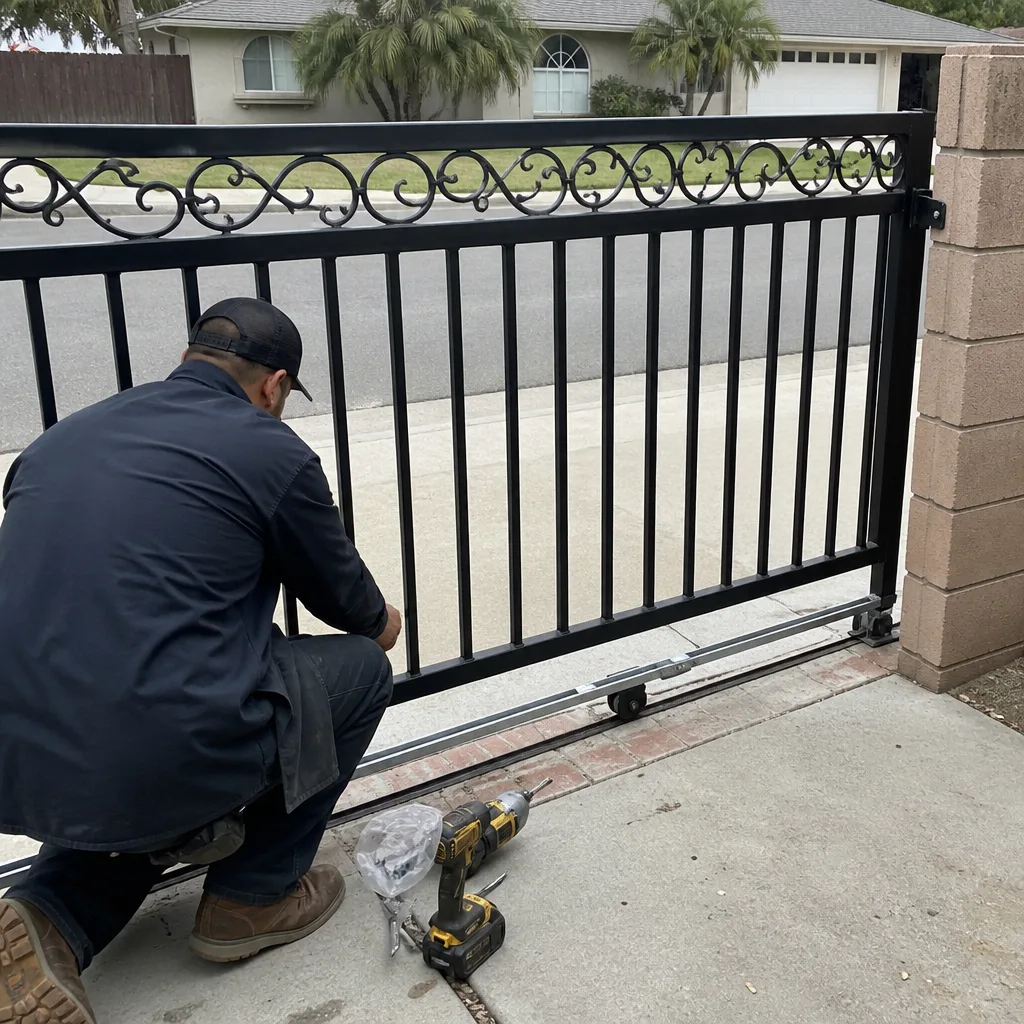 After
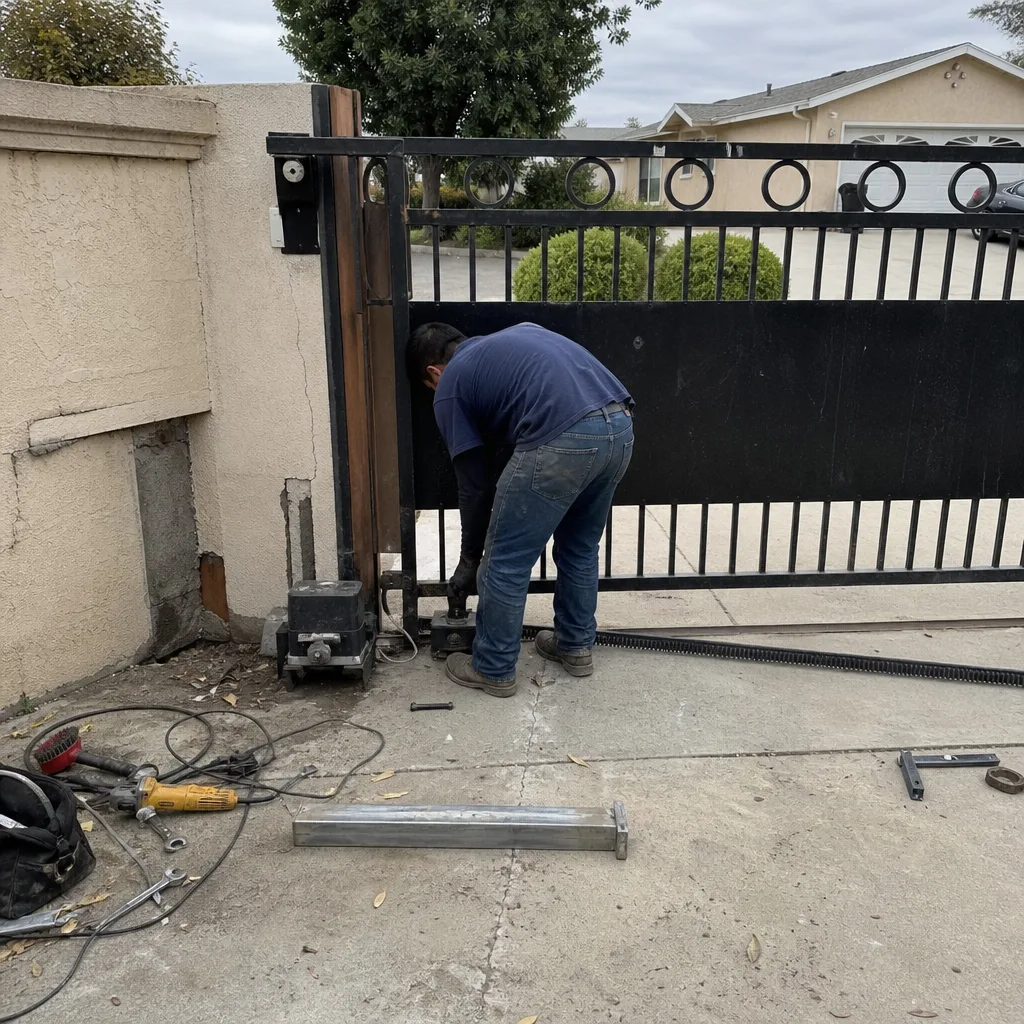 Before
 After
 Before
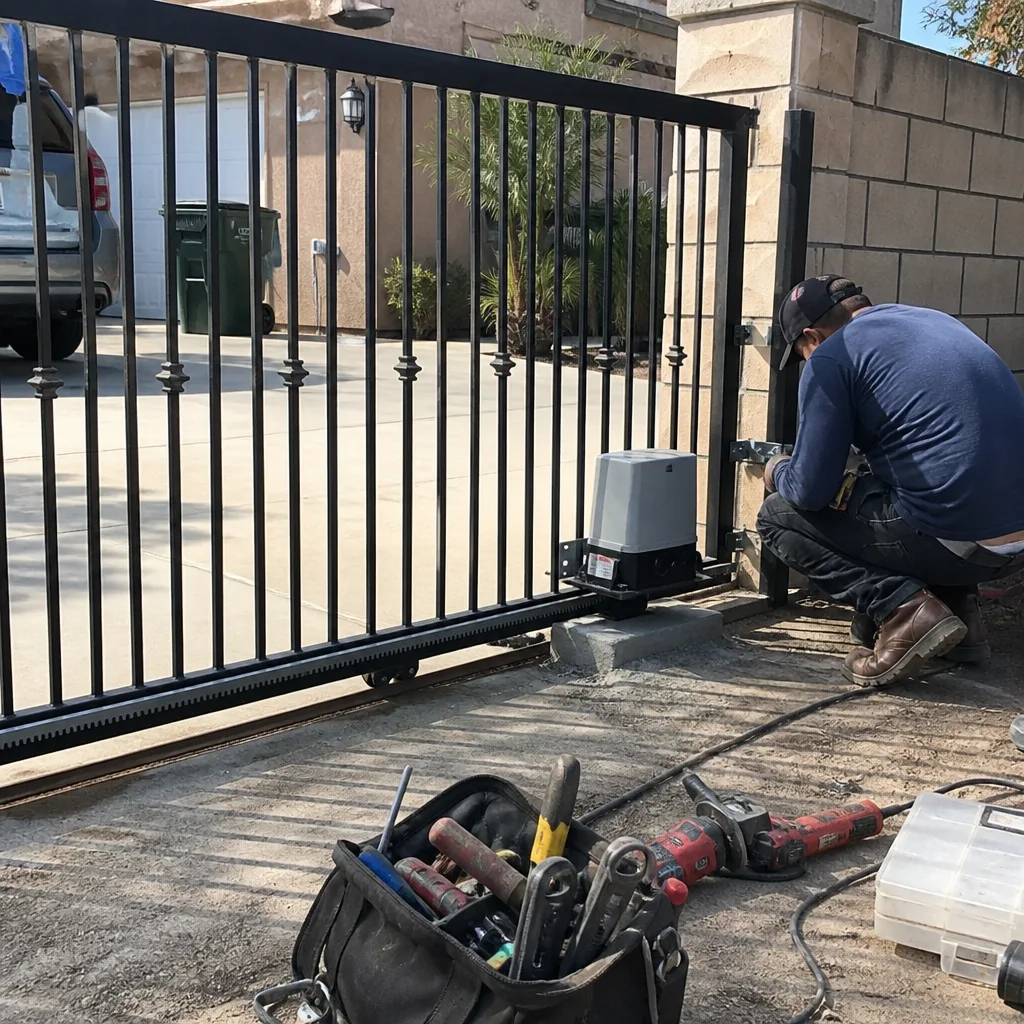 After
Frequently Asked Questions
For most Chino homes with a standard driveway gate cycling 10-20 times per day, LiftMaster and Linear are the most serviceable brands with the deepest local parts availability. For high-cycle or heavier gates, FAAC and BFT offer commercial-grade durability with good support in Southern California. The best brand is the one matched to your gate weight and usage, not the one with the most marketing.
A properly specified and maintained gate operator in the Inland Empire typically lasts 10-15 years for residential-duty models and 15-20 years for commercial-duty models. Chino’s heat, dust, and occasional high wind stress electrical components and mechanical parts; operators that lack continuous-duty ratings or are undersized for their gates fail significantly earlier, often within 3-5 years.
At Lexington Gate Repair, we service nine gate opener brands: LiftMaster, FAAC, BFT, Linear, Viking, Ghost Controls, DoorKing, Elite, and Mighty Mule, covering both residential and commercial systems. If your operator is from a brand outside this list, we’ll let you know upfront and help you understand your repair or replacement options. Call (866) 304-1321 to confirm your specific system.
Gate repair costs in Chino vary widely depending on the failure mode: a simple limit switch adjustment or safety sensor alignment might run $100-$200, a control board replacement $400-$900, and a motor or gearbox rebuild $600-$2,000. The price depends on the brand, the specific part required, and how quickly that part can be sourced. Lexington Gate Repair always quotes the repair cost before any work begins, so you’ll never be surprised by the invoice. Call (866) 304-1321 for a free estimate.
If the operator is more than 12-15 years old, the manufacturer has discontinued the product line, and parts are already special-order, replacement usually makes more financial sense than repeated repairs. But if the operator is under 10 years old, parts are available locally, and the gate itself is still in good shape, a targeted repair extends the system’s life at a fraction of replacement cost. We’ll always give you the straight answer based on parts availability and labor, not on which option earns us more money.
Yes. Lexington Gate Repair services commercial and HOA gate systems in Chino and the surrounding Inland Empire, including DoorKing, FAAC, BFT, and Viking access control operators. These systems require familiarity with safety loop detectors, telephone entry systems, and fire department access protocols. Our technicians work on both residential driveways and multi-family or commercial access points, and we understand the urgency that comes with a gate failure at an HOA entrance.
The Bottom Line
Choosing a gate repair brand in Chino is a ten-year decision disguised as a purchase. The operator you buy today determines who can service it tomorrow, how long you’ll wait for parts, and whether your gate holds up to daily use. Match the operator class to your real usage, not your assumptions. Choose a brand with parts stocked in Southern California and a service network that actually knows the equipment. Verify technician training before you commit. And when the gate inevitably needs attention, call a specialist who works on your specific brand, not a generalist who’ll figure it out as they go. Done right, your gate will quietly do its job for fifteen years. Done wrong, it’ll be the most annoying thing you own. Explore more guides & resources to keep your system running smoothly.
Written by the team at Lexington Gate Repair, serving Chino since 2011.