
Last updated October 30, 2026
 Wrought iron
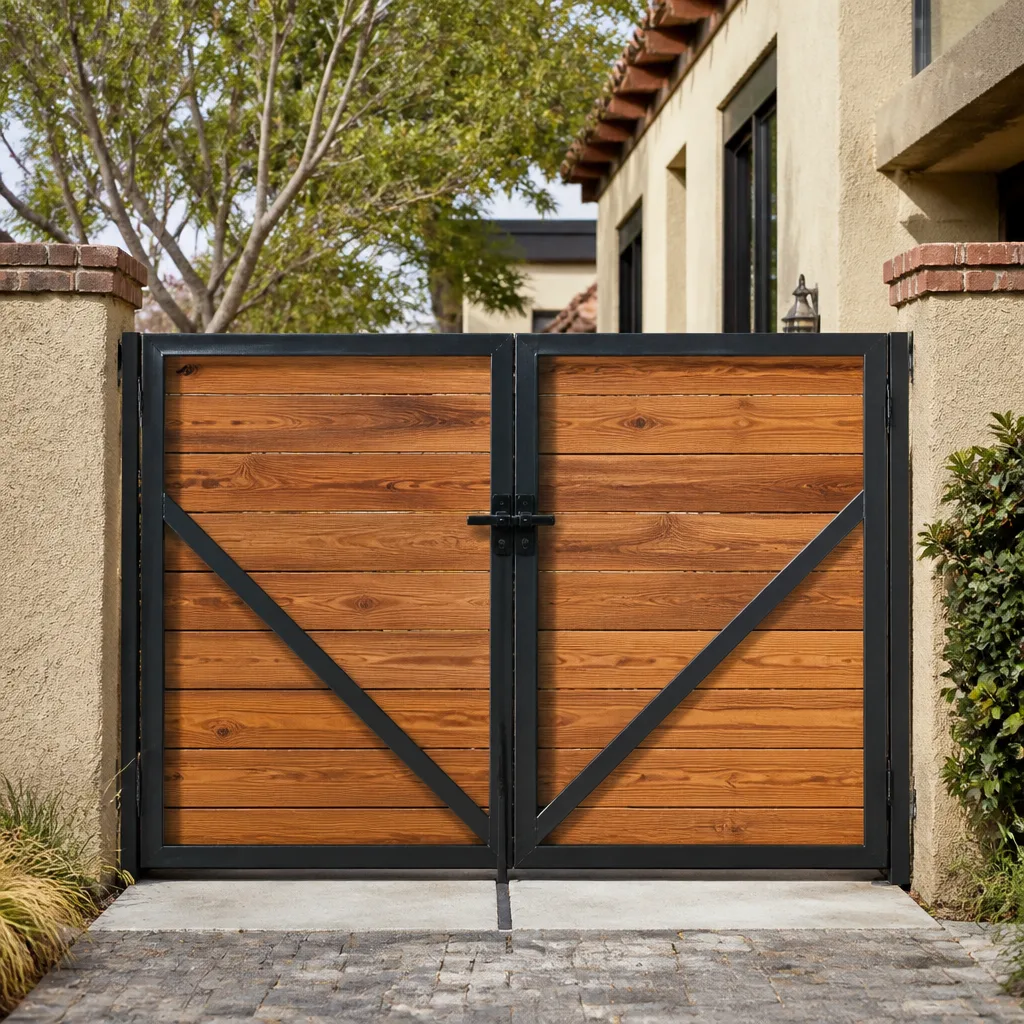 Wood & steel frame
 Farm & ranch
 Sliding driveway gates
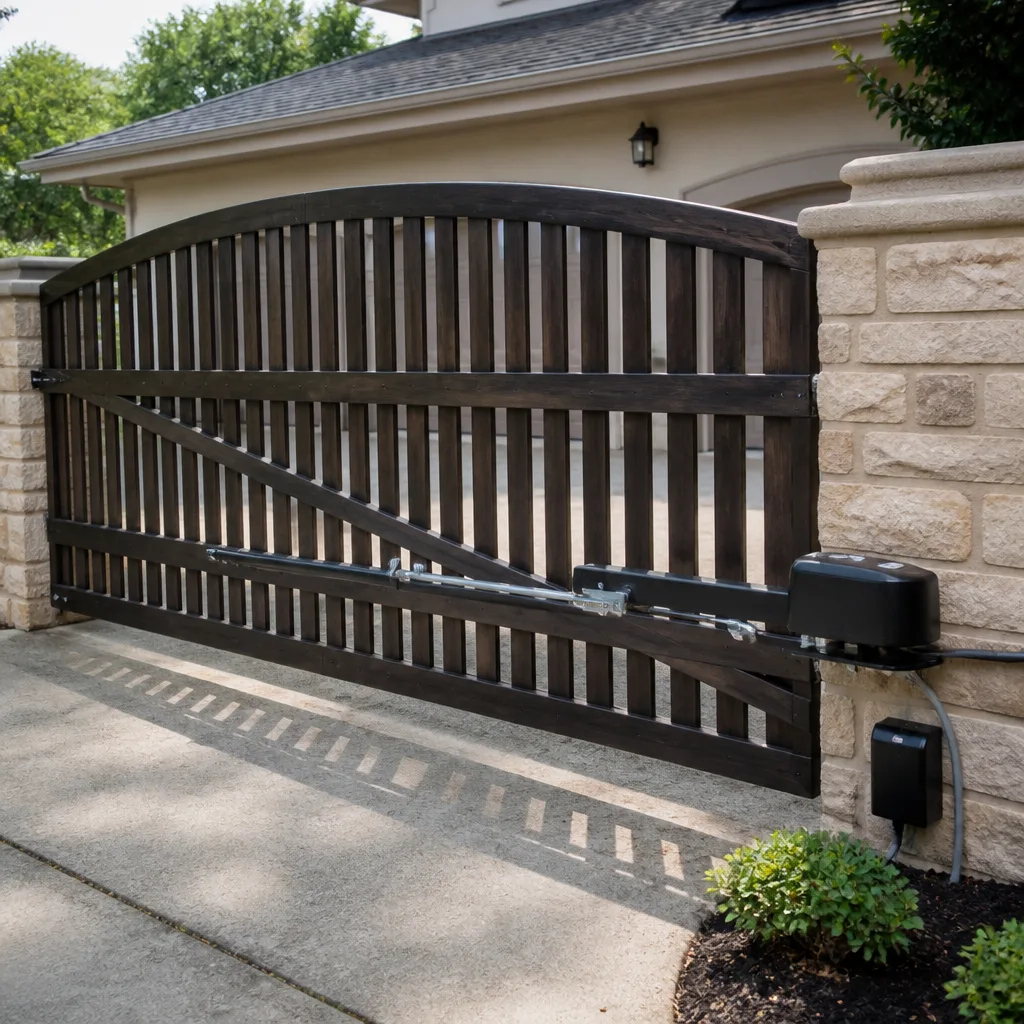 LiftMaster operators
Free on-site gate assessment - hinges, posts, and your LiftMaster or Nice gate operator checked before anything is quoted
The assessment is free and the quote is the invoice.
Get your free estimateSeasonal Gate Repair Care for Chino: Year-Round Homeowner’s Guide
Chino averages over 280 sunny days a year, which sounds like a gift for outdoor equipment until you understand what that sun actually does to an automatic gate system. The real story isn’t the heat itself. It’s the cumulative effect of UV radiation breaking down rubber seals, 100°F-plus radiant heat from pavement cooking control boards inside metal housings, and a brief but intense wet season that corrodes every component the dry months dried out. In our experience servicing gates across Chino, the failures follow a predictable calendar. This guide lays out exactly what to check each season, what you can handle yourself, and when it’s time to call a professional for Gate Repair on your specific opener brand.
Styles & brands we work with
Quick Answer
Seasonal gate maintenance in Chino means preparing for two real threats: the summer heat cycle that stresses electronics and dries out moving parts, and the winter wet season that corrodes hardware and shifts the ground under your gate posts. A homeowner can handle cleaning, lubrication, and visual inspections. Electrical diagnosis, opener programming, and any spring, cable, or hinge tension work should go to a gate specialist. Following this calendar prevents about 70% of the emergency repairs we see each year in Chino, as detailed in The Complete Gate Repair Guide for Chino Homeowners.
Table of Contents
- Why Chino’s Climate Demands a Different Gate Maintenance Calendar
- Spring: The Post-Rain Re-Alignment and Inspection Window
- Summer: Heat, Capacitors, and the Component Killers
- Fall: Santa Ana Winds, Debris, and Sensor Failures
- Winter: Rain Prep, Drainage, and Alkaline Soil Corrosion
- What a Chino Homeowner Can Reliably Do Each Season
- What Requires a Gate Technician (and Why)
- Brand-Specific Seasonal Notes for Chino Gate Systems
- Common Mistakes to Avoid
- When to Call a Professional
- Frequently Asked Questions
- The Bottom Line
Why Chino’s Climate Demands a Different Gate Maintenance Calendar
Most gate maintenance advice online is written for places with real winters: freeze-thaw cycles, snow load, road salt. None of that applies to Chino. What we deal with instead is a climate pattern that concentrates damage into two distinct periods, with a transitional season that creates its own set of alignment problems.
From June through September, Chino regularly hits triple-digit temperatures. The air temperature is only part of the equation. An automatic gate opener mounted on a steel post or brick column absorbs radiant heat from the driveway and the gate itself. A dark powder-coated gate panel can reach 140°F or higher in direct afternoon sun. That heat transfers directly into the opener housing, where control board capacitors and solder joints age at an accelerated rate. Rubber components, including the drive belt on linear arm systems and the weather seals around the motor, dry out and crack. Grease in the wheel bearings thins out and runs off.
Then comes the winter wet season. Chino’s alkaline soil, high in mineral salts, creates corrosion conditions that punish any exposed steel or untreated fasteners. When rain does arrive, even in the modest amounts typical of the Inland Empire, it finds every crack the summer created. Water gets into bearing housings, hinge pins, and the conduit running to the loop detector. The wet-to-dry transition in spring then causes measurable ground movement, particularly in neighborhoods with expansive clay soils like those found south of the 60 and east of Central Avenue.
This isn’t speculation. It’s the pattern we see year after year across Gate Repair in Chino service calls. The gates that get seasonal attention fail less, and when they do fail, the repair is usually minor. The gates that get ignored fail catastrophically, usually in August or January, always at the worst possible moment.
Spring: The Post-Rain Re-Alignment and Inspection Window
Spring in Chino is the single best time to catch problems before they become failures. The ground has just gone through its wet-to-dry transition, and any movement in the gate posts has already happened. This is when you set the stage for the entire year.
Why spring re-alignment matters in Chino specifically: The clay-heavy soils in much of Chino expand when wet and contract when dry. A gate that closed perfectly in November may drag by March, not because anything is broken, but because the post has shifted a fraction of an inch. This drag puts strain on the opener motor, wears hinge bushings unevenly, and if left uncorrected through summer, it can burn out a motor by July.
The spring inspection checklist for Chino homeowners:
- Run the gate through three full open-close cycles. Watch the gap between the gate and the ground at the latch end. It should stay consistent. If it changes through the arc, you have a sagging or shifted gate.
- Check the hinge pins. Grit and mineral deposits from winter rain get into hinge pivot points. Wipe the visible surfaces, then listen for grinding or squeaking during operation.
- Inspect the opener arm mounting bracket. Any rust staining around the bolts means moisture got in over winter. That’s a warning sign for internal corrosion.
- Look at the gate wheels or rollers. The dry-wet-dry cycle causes hairline cracks in polyurethane wheels. A cracked wheel will fail suddenly, usually when the gate is carrying a heavy load.
- Test the safety sensors. Wave a broom handle through the photo eye path while the gate is closing. It should reverse immediately. If it hesitates, the sensor needs service.
- Clear the drainage channels. Accumulated leaves and silt from winter rain can block the drainage path around the post base. Standing water is the enemy of every component below knee height.
This is also the time to book a professional inspection if your gate is more than five years old or if it made any unusual noises over winter. A Electric Gate Repair in Chino technician can catch a failing capacitor or a worn gear before it strands you during the summer heat.
Summer: Heat, Capacitors, and the Component Killers
Summer is when Chino gates die. It’s rarely dramatic; it’s almost always a slow degradation that ends in a sudden failure. The most common culprit: electrolytic capacitors on the control board. These components have a rated lifespan that is drastically shortened by sustained heat exposure. A capacitor rated for 10,000 hours at 85°F may only last 3,000 to 4,000 hours when the control board environment consistently exceeds 120°F, which happens regularly inside a dark opener housing on a Chino summer afternoon.
What heat actually does to each major component:
- Control board capacitors: Dry out, bulge, and eventually fail, causing intermittent operation or complete opener death.
- Wiring insulation: Becomes brittle and cracks, especially at connection points where vibration and heat combine.
- Motor thermal cutoff switches: Can become overly sensitive or fail entirely, either tripping constantly or not tripping when they should.
- Drive belts: Develop cracks and lose tension as the rubber compound degrades.
- Limit switches: Plastic housings warp slightly in extreme heat, changing the stop position of the gate.
- Battery backup units: Lead-acid batteries lose capacity faster in heat and can swell inside their housing.
The pre-summer checklist for Chino homeowners:
- Open the control box (with power off) and look for bulging capacitor tops. If any capacitor looks domed instead of flat, it needs replacement before it fails.
- Check for adequate ventilation around the opener housing. Landscaping that has grown up around the gate can trap heat. Trim back anything within two feet of the opener.
- Lubricate hinge pins and wheel bearings with a high-temperature lithium grease. Summer heat thins light oils, leaving metal-on-metal contact by August.
- Test the manual release mechanism. If you lose power or the opener fails, you need to know you can open the gate by hand. The manual release often seizes when lubricant evaporates.
- Listen for changes in motor sound. A motor that sounds labored on a 100°F day is telling you something. It should sound the same at 9 a.m. and 3 p.m.
One Chino-specific note: the radiant heat from asphalt and concrete driveways is substantially higher than grass or decomposed granite. A gate post set in an asphalt driveway expansion joint absorbs heat from the pavement through the metal. If your gate has started binding only on hot afternoons, thermal expansion is the likely cause, and it’s worth having the clearance checked before the metal permanently deforms.
Fall: Santa Ana Winds, Debris, and Sensor Failures
The Santa Ana wind season in Chino is the most common time for debris-caused gate failures, and most homeowners never connect the two. Here’s how it happens: sustained winds of 30 to 50 mph strip leaves, palm fronds, and loose landscaping material, blowing it directly into the path of your gate and into the sensors that control it. The gate isn’t damaged by the wind itself; it’s damaged by what the wind deposits.
The specific problems Santa Ana winds cause for Chino gates:
- Loop detector interference: Wind-blown metal objects, including aluminum cans and loose gate hardware, can trigger false activation on induction loop detectors, causing the gate to open and close randomly.
- Photo eye obstruction: Leaves and dust coating the photo eye lenses cause the gate to refuse to close, or to reverse mid-cycle, because the safety system thinks something is blocking the path.
- Debris in the track: For sliding gates, accumulated leaves and twigs in the track create drag that strains the motor and chews up the drive sprocket.
- Loose fasteners: The vibration from sustained wind loosens bolts on the gate panel, hinges, and opener mounting points. Loose bolts create play in the system, and play accelerates wear everywhere.
- Sensor misalignment: Strong gusts can push a gate slightly off its track or shift a photo eye bracket, breaking the beam alignment and putting the system into fault mode.
The fall checklist for Chino homeowners:
- After the first major Santa Ana event, clean the photo eye lenses. A soft cloth and glass cleaner work fine. This single step prevents more false faults than any other.
- Clear the gate track thoroughly. Remove all organic debris, check for small stones that worked their way in, and inspect the track for warping.
- Walk the gate perimeter and tighten every bolt you can access. Use a torque wrench if you have one. Loose hardware now becomes expensive wear later.
- Check the loop detector area. Look for any metal objects within a few feet of the driveway loop. Remove anything metallic that isn’t supposed to be there.
- Verify the gate’s wind rating. Gates installed in Chino should be rated for the wind loads they actually experience. If your gate flexes visibly in strong wind, it’s a structural issue, not a cosmetic one.
- Clear and improve drainage around gate posts. Standing water at the base of a post is the single most destructive condition for a gate system. Ensure water flows away from both the hinge post and the latch post.
- Inspect all exposed wiring and conduit. UV damage from summer plus moisture from winter equals short circuits. Look for cracked insulation and deteriorated conduit fittings.
- Apply a protective coating to exposed steel. Any bare or lightly coated steel surfaces should get a rust-inhibiting treatment before the rains begin. Do this in November, not January.
- Check the weather seals. The rubber gaskets around the control box and motor housing are your first line of defense against moisture. If they’re cracked or compressed flat, replace them.
- Test the battery backup. Winter storms bring power outages. If your gate has a battery backup, test it in November so it works when you need it. A battery that sat through summer heat often holds no charge by December.
- Inspect gate hardware for rust streaks. Any orange or brown staining indicates active corrosion. Address it now; by spring, the fastener may be too degraded to remove without drilling.
- Spring: Visual inspection of hinges and mounting hardware, cleaning photo eye lenses, clearing debris from the gate path, checking for post movement, testing manual release operation.
- Summer: Listening to motor sound through the day, checking control box temperature with the back of your hand (too hot to hold means ventilation needs improvement), lubricating hinge pins, trimming landscaping away from the opener.
- Fall: Post-wind debris cleanup, tightening accessible bolts, clearing the track, cleaning sensors, checking for loose metal near the loop detector.
- Winter: Improving drainage, applying protective coating to exposed steel, checking weather seals for cracks, testing the battery backup, looking for rust streaks.
- Any work involving gate springs or tension cables. The stored energy in a torsion spring or tension cable can cause serious injury if released improperly. This is absolutely not a DIY task.
- Control board diagnosis and replacement. Without understanding the specific board’s error codes and test points, you’re guessing. Guessing wrong turns a $300 board replacement into a $1,200 opener replacement.
- Opener motor service or replacement. Motor work involves electrical wiring, gear alignment, and torque settings that are specific to each brand and model.
- Photo eye and safety loop adjustments. Incorrectly adjusted safety systems can cause the gate to not reverse when it should, creating a serious entrapment hazard.
- Post replacement or re-setting. A shifted post is a structural problem requiring proper excavation, concrete work, and re-hanging of the gate. It’s beyond the scope of routine maintenance.
- Any electronic diagnosis on your specific opener brand. Each manufacturer uses different error codes, different test procedures, and different component specifications. A technician who knows your brand is much more likely to diagnose correctly the first time.
- Ignoring a noisy gate. A gate should not squeal, grind, thump, or clunk. Every unusual sound is a mechanical symptom that will get more expensive the longer it’s ignored. A grinding Linear opener in May becomes a stripped gear and full opener replacement by July if left alone.
- Lubricating with the wrong product. WD-40 is not a lubricant, and it’s actively harmful in gate hinges and bearings because it strips the protective grease and leaves bare metal exposed. Use a high-temperature lithium grease for metal-on-metal contact points.
- Power-washing the gate or opener. High-pressure water forces its way past seals and into bearings, control boxes, and wiring connections. A garden hose and soft brush do the same cleaning job without the damage. If you must power-wash, stay at least three feet from any electrical component.
- Blocking photo eyes with new landscaping. That hedge you planted in March looks great, but by August it may be blocking the safety beam, and the gate will refuse to close. Keep a clear line of sight between photo eye lenses year-round.
- Skipping the fall bolt-tightening. After a few Santa Ana events, gate fasteners are looser than they were in September. Every bolt that loosens adds play to the system, and play causes accelerated wear on every part that moves.
- Setting the gate to hold-open mode when it starts failing. When a gate starts acting up, some homeowners disable the automation and leave the gate open to avoid dealing with it. This eliminates your security, invites unauthorized access, and lets the underlying problem deteriorate. Fix the problem, don’t bypass it.
- Assuming a warranty covers environmental damage. Most gate opener warranties do not cover heat-related component failure or corrosion damage. The maintenance schedule matters more than the warranty paperwork. No gate manufacturer will replace a control board that cooked in an unventilated housing on a Chino driveway in August.
We see a spike in service calls every year after the first strong wind event of fall. The repairs are usually simple, but the frustration isn’t. A gate that won’t close reliably is both a security risk and a daily annoyance. Most of these calls are preventable with an hour of attention in October.
Winter: Rain Prep, Drainage, and Alkaline Soil Corrosion
Chino’s wet season is brief, but it punches above its weight when it comes to gate damage. The issue isn’t the volume of rain; it’s the interaction between moisture and Chino’s alkaline soil chemistry. The mineral salts in the soil create an electrolyte solution that accelerates galvanic corrosion wherever dissimilar metals touch. Steel bolts in aluminum frames, zinc-plated brackets on steel posts, copper wiring against aluminum housings: all of these junctions corrode faster in Chino soil than they would in neutral soil.
The winter preparation checklist for Chino homeowners:
One mistake we see repeatedly in Chino, especially in newer subdivisions with hardscape-heavy landscaping, is trimming back drainage-friendly ground cover for aesthetic reasons and inadvertently routing water toward the gate. If a hardscaping project changed the slope near your gate, check the drainage pattern during the first real rain. Water that pools near the post for even a few hours is doing damage.
What a Chino Homeowner Can Reliably Do Each Season
There’s a line between what you should handle yourself and what needs a gate specialist. Getting this wrong costs money. A homeowner with basic tools and reasonable mechanical aptitude can do the following tasks safely and effectively. Everything else goes to a professional.
Homeowner-safe tasks by season:
None of these tasks require opening the control board, touching high-voltage wiring, releasing spring tension, or working inside the opener mechanism. Those are the boundaries. Crossing them without proper training risks injury or creating a situation where a small problem becomes a full Gate Installation in Chino project.
What Requires a Gate Technician (and Why)
Some gate maintenance tasks are dangerous or require specialized knowledge. We mention this not to protect our business, but because we’ve repaired the aftermath of well-intentioned DIY work that went wrong. Gate springs and tensioning systems store enormous energy. Electric gate openers involve line voltage, circuit boards, and safety systems that must be adjusted correctly to prevent entrapment injuries. These are not tasks where you learn as you go.
Tasks that require a gate professional:
Lexington Gate Repair is a gate specialist, not a generalist, and you can find more guides & resources on our site. We work on LiftMaster, FAAC, BFT, Linear, Viking, Ghost Controls, DoorKing, Elite, and Mighty Mule systems, which means when we arrive at your Chino property, we already know your gate’s typical failure points and the correct parts for your model. That familiarity translates to faster diagnosis and fewer repeat visits.
Brand-Specific Seasonal Notes for Chino Gate Systems
Not all gate openers respond to Chino’s climate the same way. Knowing your brand helps you anticipate what to watch for. We service all nine major brands in common use across Chino, and each has its own seasonal pattern. Here are the brands we see most often in this market, with the specific failure modes that show up on our service calls.
FAAC systems are common in Chino HOA and commercial installations, and they’re generally well-suited to the heat. The weak point is the hydraulic fluid in FAAC’s hydraulic operators. It breaks down under sustained high temperatures, and the pumps start to whine before they fail. If you have a FAAC hydraulic system, listen for a change in pump sound during August. The sealed limit switches, while generally reliable, can accumulate fine dust that the Santa Anas deliver in quantity, causing intermittent stop positions in fall.
BFT systems show up frequently on Chino residential and light commercial gates. The BFT control boards are more sensitive to voltage fluctuations than some competitors, and Chino’s summer grid strain during peak air conditioning demand can cause board resets or fault codes. If you have a BFT unit, consider a surge protector if you don’t already have one. The BFT limit switch assemblies on slide gate operators also benefit from fall cleaning, since the micro switches are positioned low in the chassis where wind-blown debris accumulates.
Linear systems are workhorses, but their capacitor life in extreme heat is a known issue. If your Linear opener is more than five years old and has lived its life in direct sun, a preemptive capacitor replacement in spring is a smart investment. Linear’s plastic gear sets also wear faster in high heat, and a grinding noise during operation means the gear is stripping. Catching it early means a gear replacement. Catching it late means a new opener.
Viking systems are most common on heavy commercial gates and industrial access points in Chino. These are built for abuse and handle heat reasonably well. The seasonal vulnerability for Viking is in the plug-in loop detector modules and the photo eye housings, which can crack after years of UV exposure. Water enters through those cracks during winter rains, causing intermittent faults that are hard to reproduce. If your Viking system starts ghosting, check the photo eye housings for hairline cracks first.
For any of these brands, the best seasonal defense is the same: an annual inspection before summer, targeted attention after the first strong winds, and drainage verification before winter. The brand-specific knowledge matters most when something breaks. It’s also what separates a correct diagnosis from a parts-swapping exercise. We’ve repaired enough misdiagnosed gates to know that brand familiarity is not a sales line; it’s the difference between fixing the right thing the first time and making three trips to fix the same symptom.
Common Mistakes to Avoid
When to Call a Professional
Some situations are not seasonal maintenance; they’re repair or replacement events that need a trained gate technician. Call a professional if your gate is binding after you’ve cleared visible obstructions. Call if the opener trips its breaker repeatedly, if the gate reverses without an obstruction, or if the control board shows error codes you don’t understand. Call if the gate has come off its track, if a hinge has separated, or if the post is visibly leaning. These are structural or electrical failures, and they get worse with time. Lexington Gate Repair offers free estimates in Chino, and you can reach us at (866) 304-1321. We diagnose the actual problem, explain what’s needed, and quote the price before any work begins. No guesswork, no upsell, no pressure.
Frequently Asked Questions
Twice a year: once in spring for post-rain re-alignment and once in fall before winter moisture arrives. The spring service catches ground-movement issues from the wet-to-dry transition, and the fall service addresses Santa Ana wind damage and prepares drainage and seals for rain. Homeowners can handle the visual inspections and cleaning themselves; the electrical and mechanical checks should involve a gate specialist.
A basic seasonal inspection and tune-up for a residential automatic gate in Chino typically runs $150 to $300 depending on the opener brand and gate configuration. That’s the price for inspection, cleaning, lubrication, and adjustment. If repairs are needed, the quote comes separately and is always agreed on before work starts. Call (866) 304-1321 for an exact estimate; it’s free.
Thermal expansion. The metal gate panel, hinges, and posts all expand in the summer heat, and the afternoon temperature spike on a Chino driveway can be enough to close a clearance gap that was acceptable in the cool morning. This is especially common with steel gates mounted on steel posts set in concrete or asphalt. The fix is adjusting the hinge clearances to accommodate the expansion range, which is a job for a gate technician.
You can check the basics: breaker position, visible wiring damage, obstruction in the gate path, and cleanliness of the photo eye lenses. Anything beyond that, including opening the control board, testing capacitors, or adjusting safety sensors, is work for a trained professional. Gate openers involve line voltage and safety systems that must be set correctly to prevent entrapment. Incorrect adjustment can create a dangerous gate and void your warranty.
Santa Ana winds in Chino damage gates primarily through debris, not direct wind force. Leaves, palm fronds, and loose materials get blown into the gate track, photo eyes, and loop detector areas, causing obstructions and false faults. The sustained vibration also loosens fasteners and can shift photo eye brackets out of alignment. After each strong wind event, clear debris from the gate path and check sensor alignment.
Fall, specifically October and November. The extreme heat has passed, the ground is stable after the summer dry period, and you’ll get the new gate settled before winter rain arrives. Spring replacement is possible but means your new gate settles through the wet-to-dry transition, which can cause minor alignment shifts and require a follow-up adjustment. If your current gate is beyond repair, a Gate Installation in Chino can be planned to fit your seasonal timeline.
Most gate opener warranties cover manufacturing defects, not environmental damage. A control board that fails from sustained heat exposure in an unventilated housing is generally considered environmental damage and may not be covered. The best protection is annual maintenance that catches heat-related component stress before failure. A $200 seasonal service can prevent a $600 board replacement.
The Bottom Line
Chino gates don’t fail randomly; they fail on a schedule set by the climate. The heat cycle stresses electronics and dries out seals from June through September. The Santa Anas deposit debris and loosen hardware in October and November. Winter rain finds every crack and corrodes metal in Chino’s alkaline soil from December through March. Spring ground movement then shifts everything back out of alignment. If you work with this calendar instead of against it, your gate will run more reliably and cost you less over its lifespan. The tasks split cleanly: routine cleaning, lubrication, and inspection are homeowner work. Anything involving springs, electronics, safety systems, or brand-specific diagnosis goes to a specialist. Call Lexington Gate Repair at (866) 304-1321 for a free estimate on seasonal maintenance or any gate repair in Chino.
Written by the team at Lexington Gate Repair, serving Chino since 2011.
See the difference
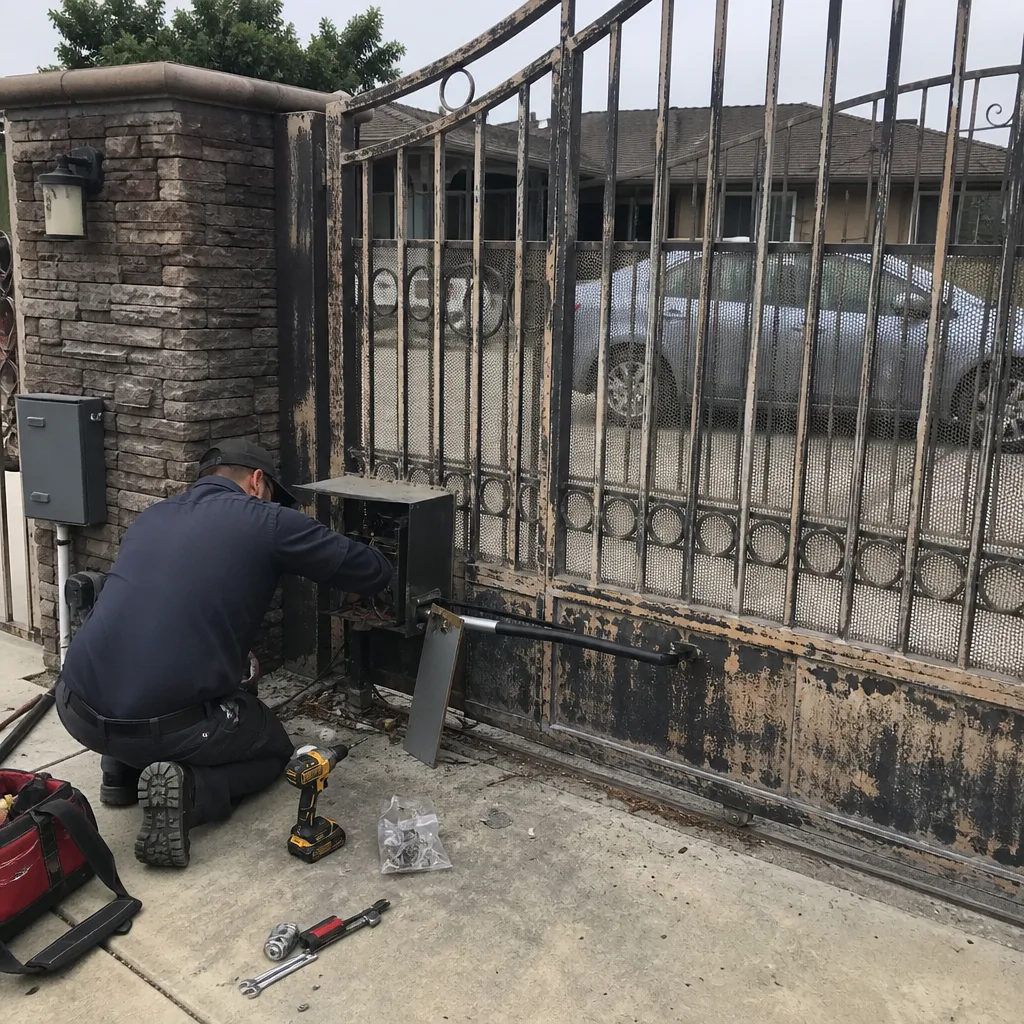 Before
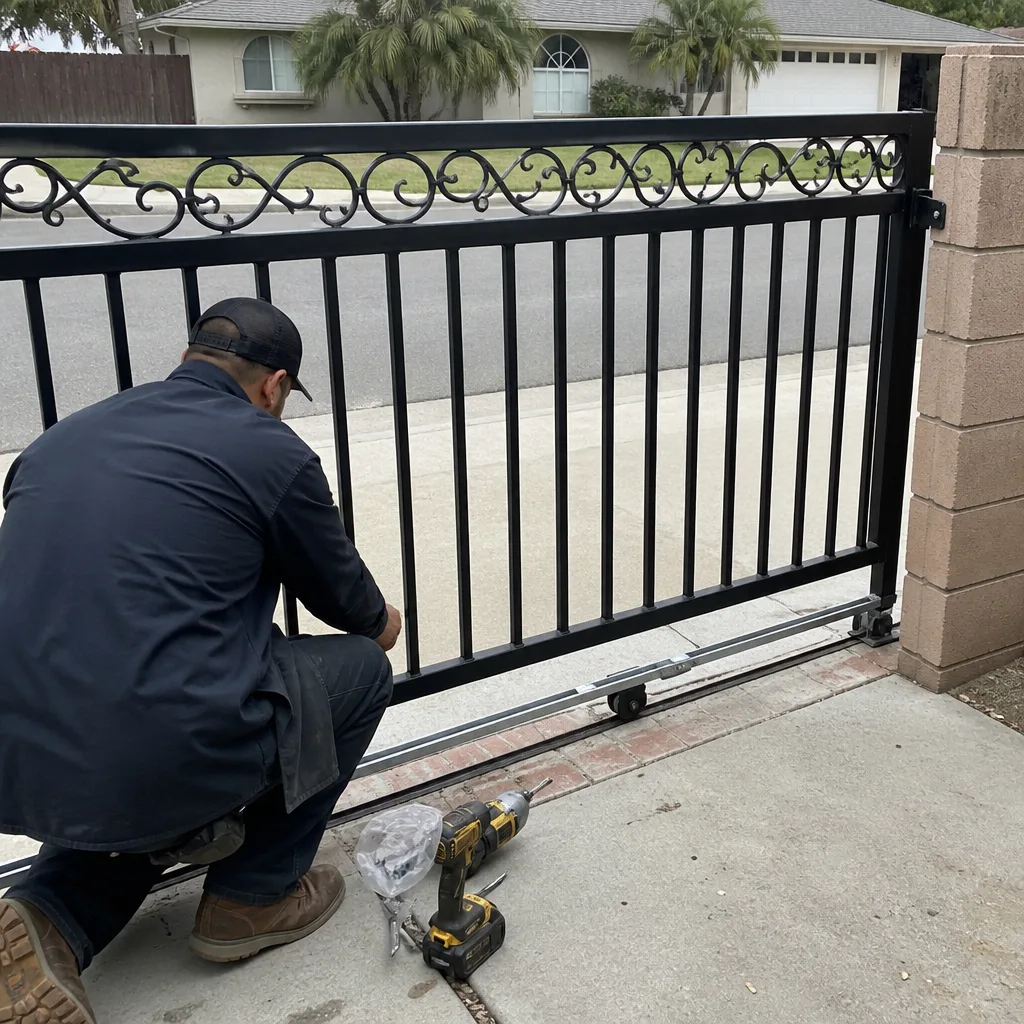 After
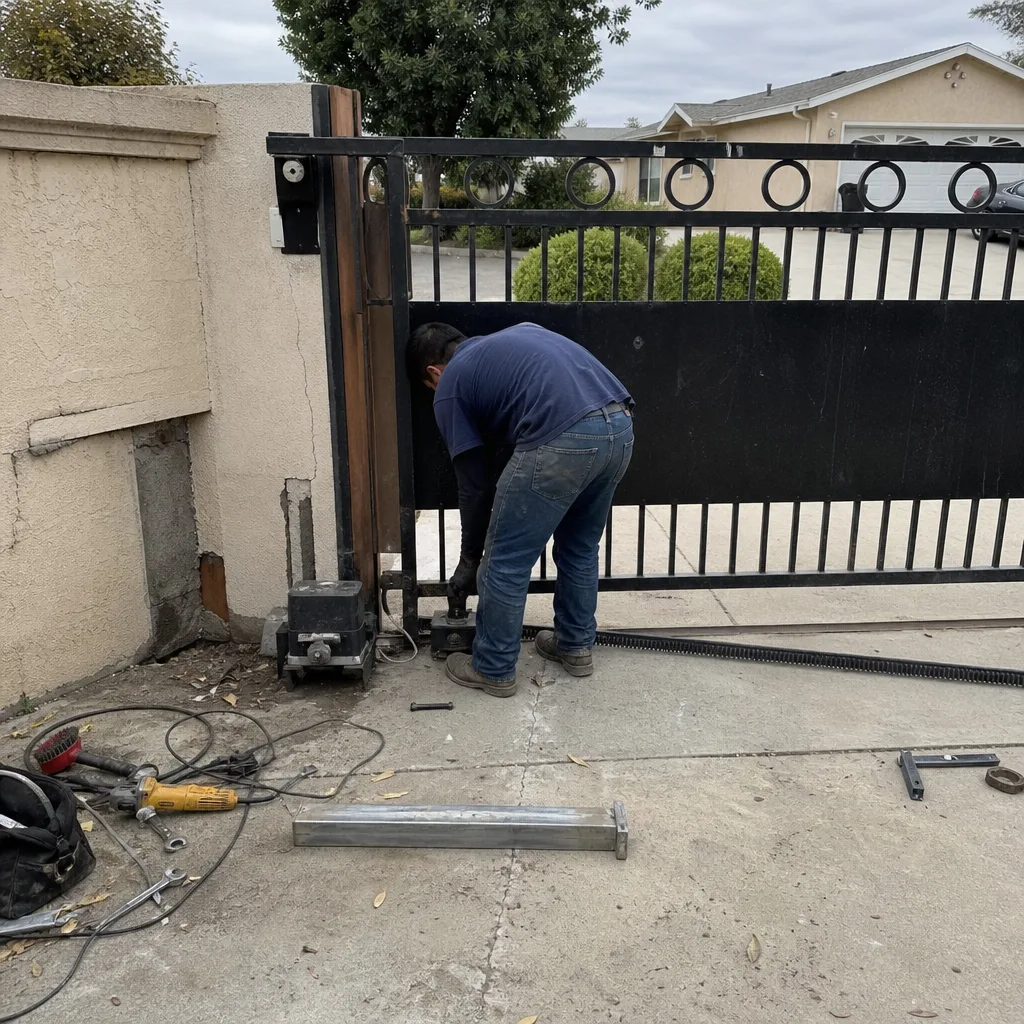 Before
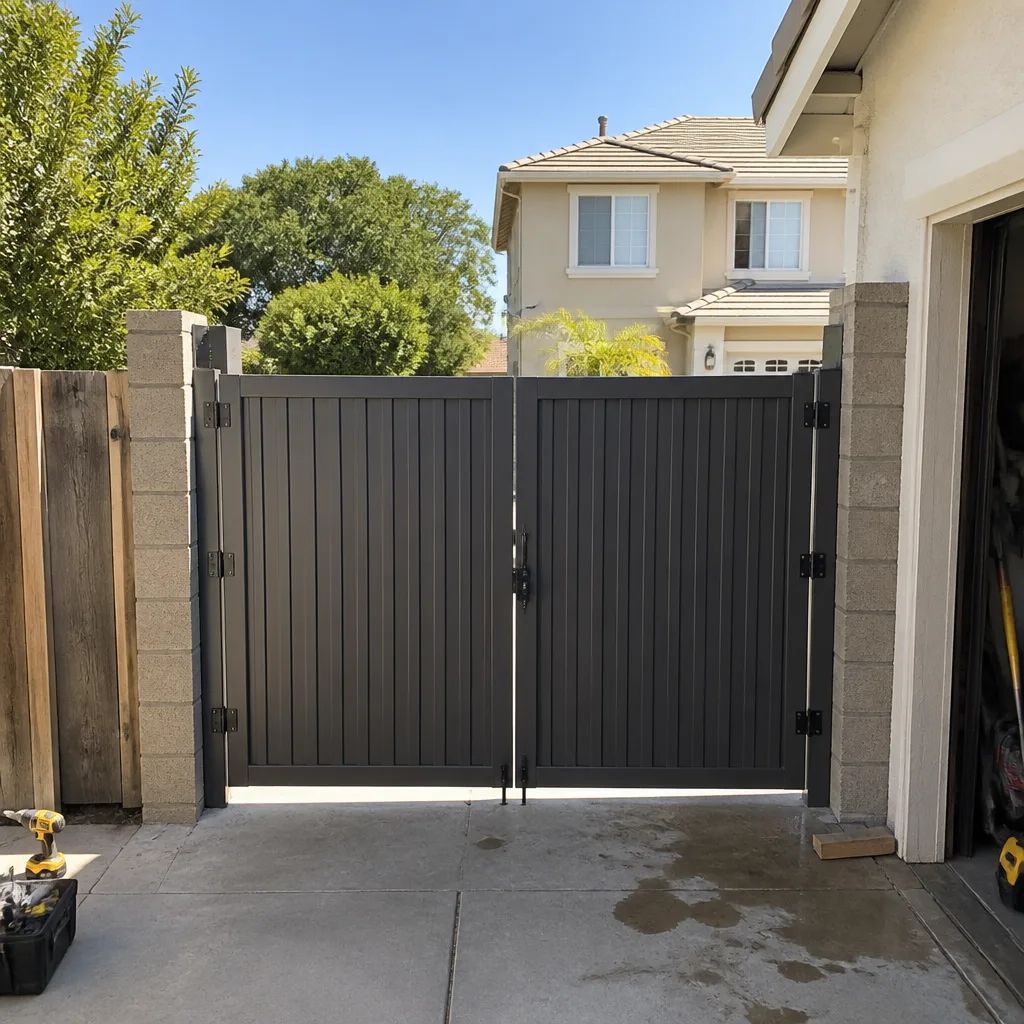 After
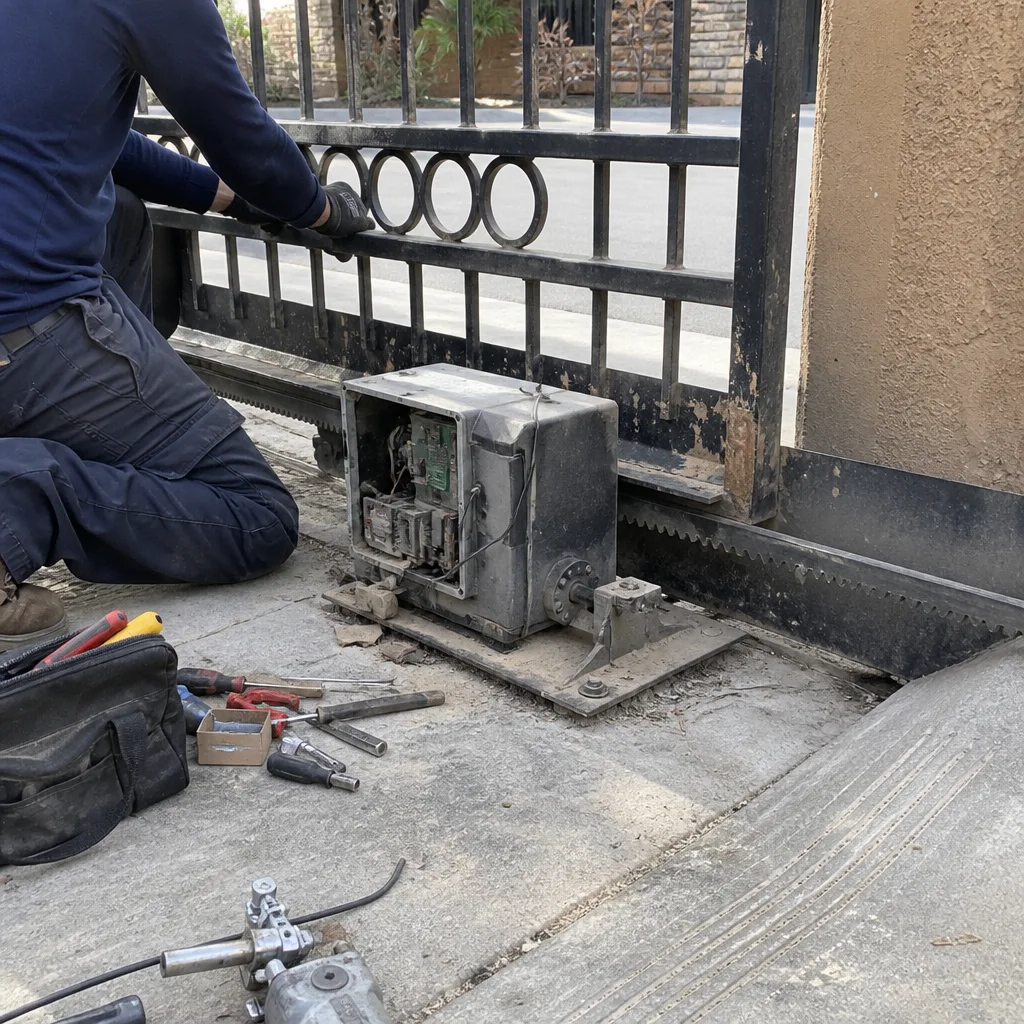 Before
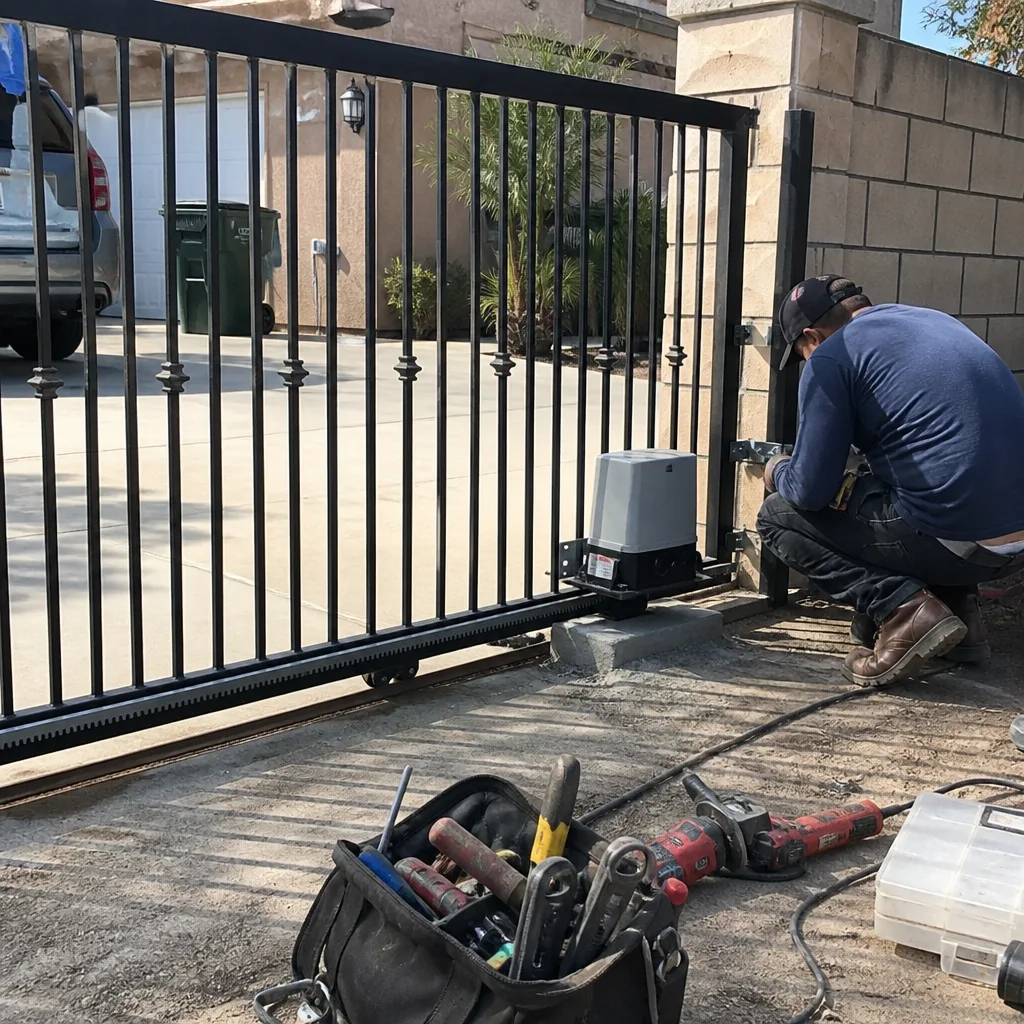 After