
Last updated October 30, 2026
 Wrought iron
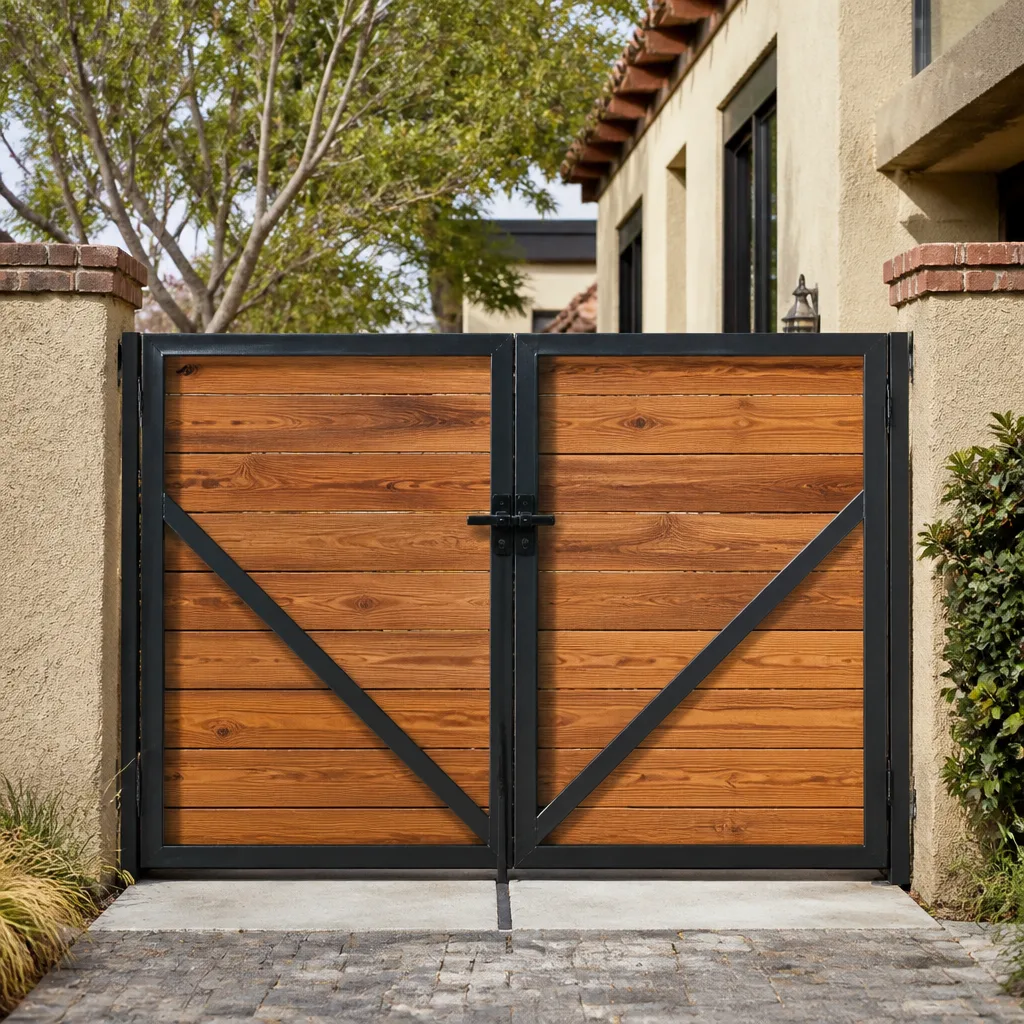 Wood & steel frame
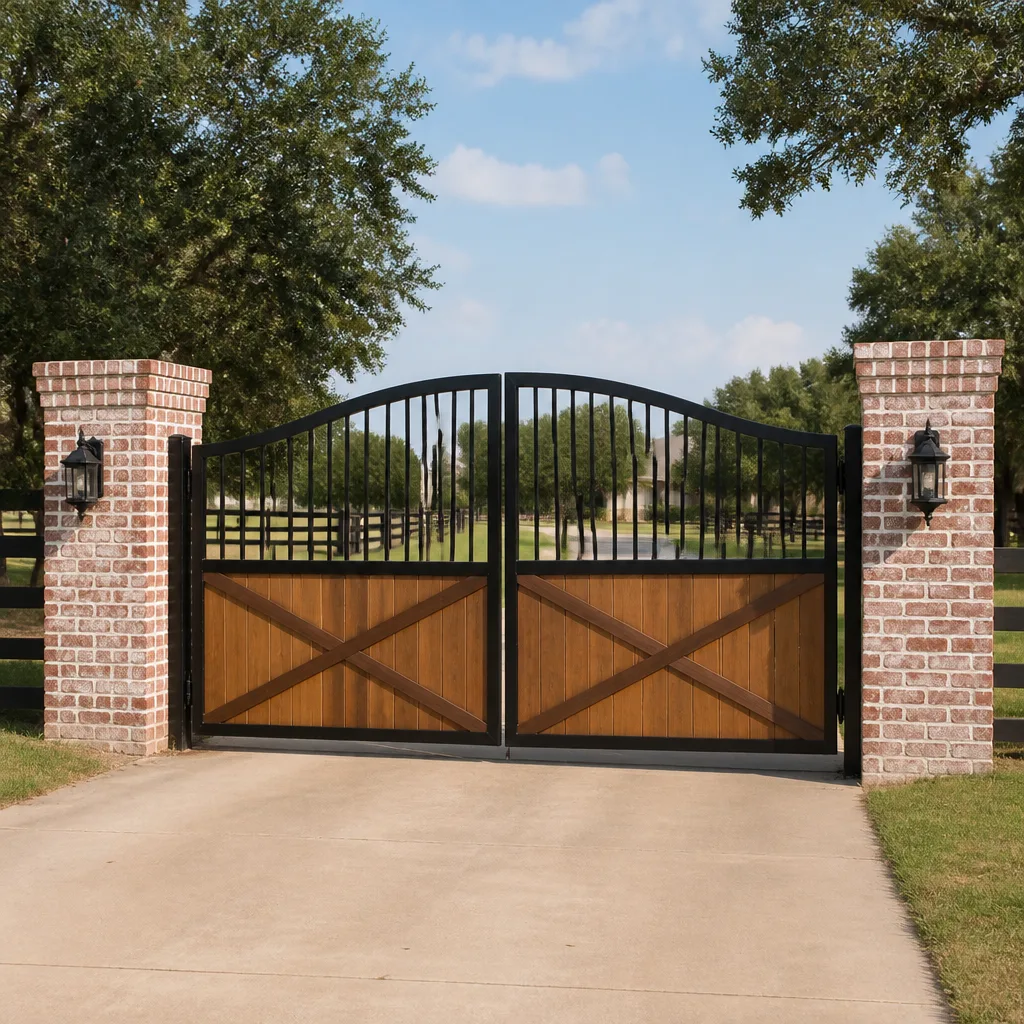 Farm & ranch
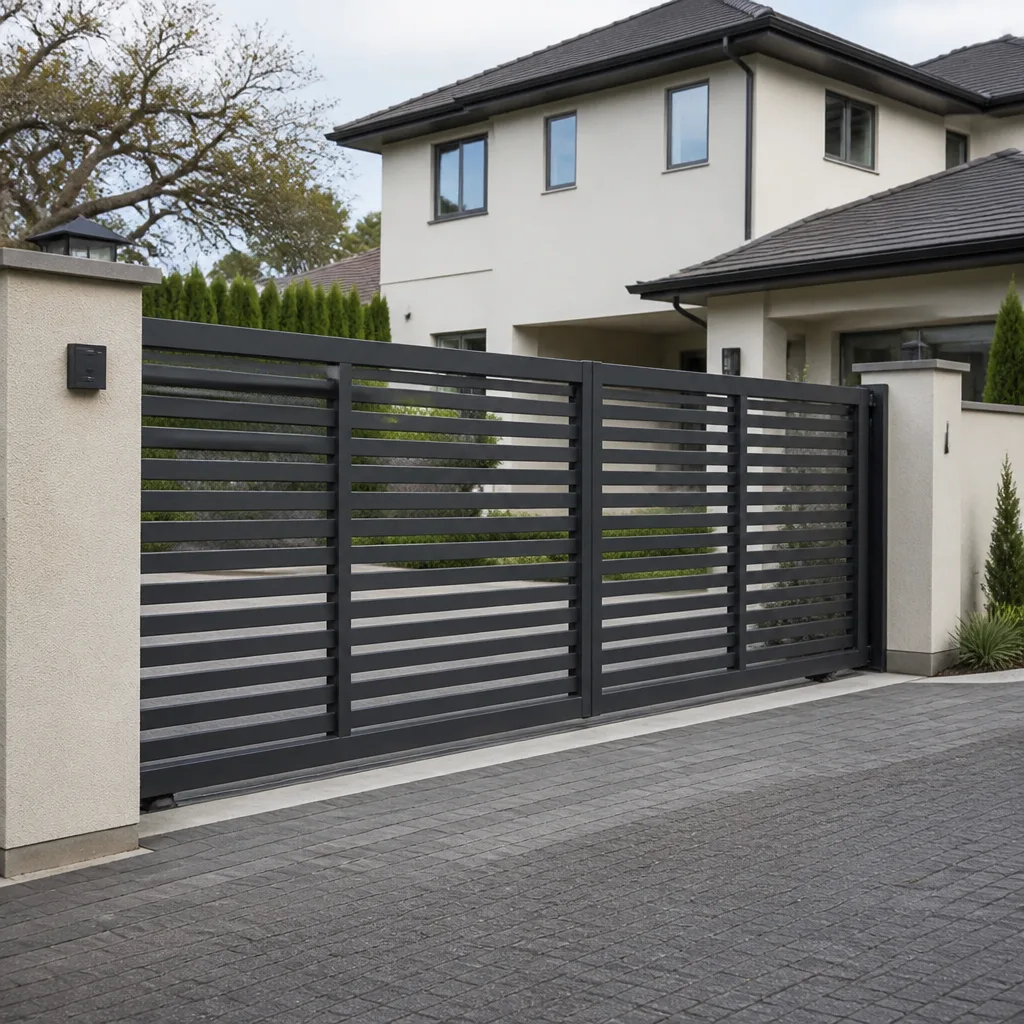 Sliding driveway gates
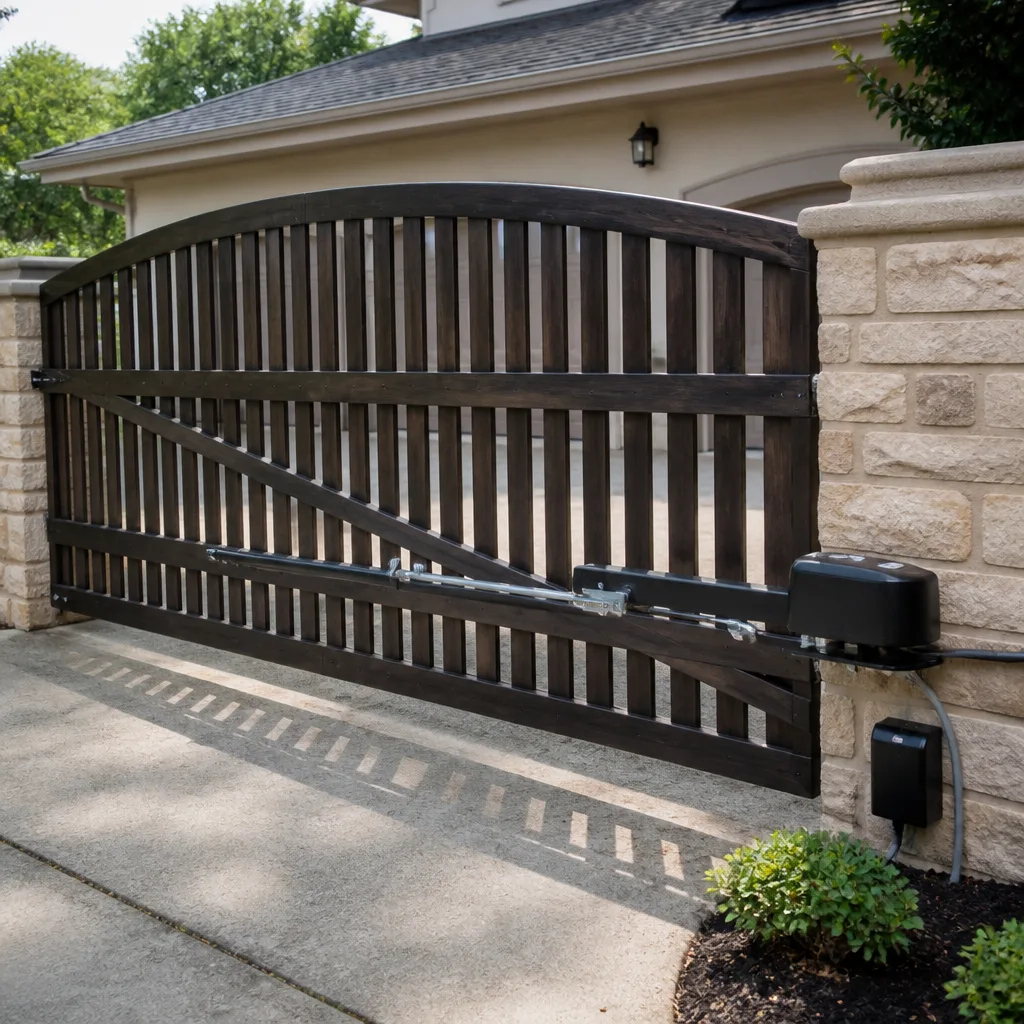 LiftMaster operators
Free on-site gate assessment - hinges, posts, and your LiftMaster or Nice gate operator checked before anything is quoted
The assessment is free and the quote is the invoice.
Get your free estimateDIY vs Professional Gate Repair: The Chino Homeowner’s Decision Guide
California’s UL 325 standard makes the gate installer legally responsible for entrapment protection on every automatic gate system. The moment a Chino homeowner bypasses a safety reversal, disconnects a photo eye, or incorrectly resets force limits after a weekend repair, that legal responsibility transfers to them, and most never realize it until something goes wrong. This guide walks through which gate repairs are genuinely safe to do yourself, which ones create liability you don’t want, and how to tell the difference before you pick up a wrench.
Styles & brands we work with
Quick Answer
DIY gate repair makes sense for a narrow set of cosmetic and mechanical fixes like tightening hinge bolts, clearing debris from a track, or replacing a gate wheel. But for anything involving the operator, electrical components, safety sensors, or structural welds on an automatic gate in Chino, professional repair is the only responsible choice, because a mistake in those areas creates an entrapment hazard or voids your manufacturer warranty under California’s UL 325 requirements.
Table of Contents
- What California UL 325 Means for Chino Homeowners
- Repairs That Are Genuinely DIY-Safe
- Repairs That Create Safety and Liability Risk
- How DIY Programming Errors Cause Sensor Failures
- When DIY Parts and Lubricants Void Your Warranty
- Cost Breakdown: The 5 Most Tempting DIY Repairs
- What a Professional Catches That a YouTube Video Misses
- Common Mistakes to Avoid
- When to Call a Professional
- Frequently Asked Questions
- The Bottom Line
What California UL 325 Means for Chino Homeowners
UL 325 is the national safety standard for automated gate operators, and California enforces it with more teeth than most states. The standard requires that every automatic gate system include entrapment protection: photo eyes or edge sensors that detect an obstruction and reverse the gate before it crushes or pins someone. It also requires that installers test and document these safety devices before a system goes into service.
Here’s what most Chino homeowners don’t realize: UL 325 doesn’t just apply to the original installation. It applies to any modification, adjustment, or repair that affects the operator or its safety circuit. If you replace a control board on a DoorKing operator and you don’t properly recalibrate the force settings, you’ve now created a system that violates UL 325, and you’re the responsible party. In Chino’s neighborhoods, from the equestrian properties off Euclid Avenue to the newer developments around The Preserve, automatic gates are common on both residential driveways and small commercial properties. That means enforcement isn’t abstract. If an incident occurs, the question of who last touched the operator determines who carries the liability.
The practical takeaway is straightforward: cosmetic repairs and simple mechanical fixes on the gate itself are usually fine to handle yourself. Repairs involving the operator, the control board, the safety sensors, or the electrical wiring are where the line gets drawn, and it’s drawn for a reason.
Repairs That Are Genuinely DIY-Safe
Not everything needs a service call. Some gate repairs are genuinely within reach for a competent homeowner, and doing them yourself saves money without creating risk. The key distinction is whether the repair touches the automated system or just the physical gate structure.
Here are repairs we consider DIY-safe for most Chino homeowners:
- Tightening hinge bolts and bracket hardware. Gate hinges work loose over time, especially on heavy steel gates that cycle dozens of times a day. A socket set and a few minutes usually resolve it. This is purely mechanical.
- Clearing debris from a sliding gate track. Chino’s dry, windy conditions push sand, leaves, and gravel into slide tracks constantly. A stiff brush and a shop vacuum clear it. No electricity involved.
- Replacing a worn gate wheel or roller. If you can identify the correct replacement part and the gate is properly secured before you work, this is a manageable job. The risk is only to your back, not to the safety system.
- Lubricating hinges and chain-drive rails. Using the correct lubricant on the mechanical parts only. Never spray anything into the operator housing.
- Repainting or rust treatment on steel gates. Chino’s summer heat and occasional Santa Ana dust storms accelerate rust on exposed metal. Surface prep and paint are safe DIY territory.
- Tightening a sagging gate’s tension rod or turnbuckle. This adjusts the physical gate frame, not the operator. It requires a pattern of small adjustments, but it’s learnable.
Notice what’s not on this list: anything involving the motor, the control board, the wiring, the remote programming, or the safety sensors. Those are the repairs where the risk isn’t just a broken gate. It’s a gate that looks fixed but will not reverse when a child or pet is in the way.
Repairs That Create Safety and Liability Risk
This is the list most online guides gloss over. These repairs are not just difficult. They’re dangerous, either because of the immediate physical hazard or because of the liability they create under UL 325. A professional gate repair in Chino exists specifically because these jobs demand specialized knowledge and equipment.
Repairs to leave to a trained professional:
- Replacing or rewiring the control board. Every brand has different error codes, terminal layouts, and programming sequences. A Viking board is not wired like a Ghost Controls board. Incorrect wiring can fry the board on power-up or, worse, leave the safety inputs unpowered so the gate ignores photo eye signals.
- Adjusting force limits or obstruction sensitivity. This is the single most dangerous DIY error we see. Setting force limits too high so the gate “stops stalling” means it will now push through an obstruction. That’s the exact failure UL 325 exists to prevent.
- Replacing safety photo eyes or edge sensors. These components must be aligned and tested under specific conditions. A misaligned photo eye can fail silently, meaning the gate operates but the safety circuit is dead.
- Working on tension or torsion springs on cantilever gates. These carry enormous stored energy. A spring releasing under load can cause severe injury or death. We never recommend a homeowner touch gate springs.
- Replacing or splicing underground loop detector wires. Loop detectors are buried in the driveway and connected to the operator. A bad splice causes intermittent vehicle detection, which can make the gate start closing on a car entering or leaving.
- Any repair that requires opening the operator housing. Even replacing a “simple” capacitor means the unit is opened, and the capacitors inside gate operators hold a charge that can shock you even with power disconnected.
These are the jobs where the true cost of a mistake isn’t measured in dollars. It’s measured in liability, injury risk, and the possibility of a gate that appears to work correctly while its safety system has been silently compromised.
How DIY Programming Errors Cause Sensor Failures
Entrapment sensors in automatic gates don’t fail loudly. They fail silent. A homeowner resets their Ghost Controls opener after a power outage, runs through what looks like a programming sequence, and the gate opens and closes. Everything seems fine. What they don’t know is that the photo eye input has been disabled or the force setting has reverted to a factory default that’s too aggressive for their gate’s weight.
We’ve seen this pattern repeatedly across Chino’s gated communities and larger residential properties. The most common trigger is a DIY attempt to fix a gate that “keeps stopping halfway” or “reverses for no reason.” The homeowner searches online, finds instructions for adjusting force limits, and cranks the setting up until the gate stops reversing. The problem is, the gate was reversing because the photo eye was correctly detecting an obstruction, or the force limit was correctly set for safety. By overriding the safety threshold, the homeowner has fixed the symptom and created the hazard.
Here’s what often happens with DIY programming on specific brands:
- Viking operators have distinctive diagnostic codes and programming sequences. Incorrectly entering program mode can reset the operator to factory settings that are not appropriate for a non-standard gate weight or length.
- DoorKing systems commonly found in HOA and commercial settings in Chino use complex relay logic. A homeowner who replaces a DoorKing board and wires it based on a generic YouTube video often discovers the mag-lock, the loop detector, and the safety edges are now all non-functional because the relay assignments are wrong.
- Elite operators use proprietary diagnostics that report as flashing LED patterns. Homeowners commonly misread these codes and replace the wrong component, leaving the actual fault unresolved.
The deeper issue is that UL 325 requires annual testing of the entrapment protection system. A professional repair includes that testing as part of the job. A DIY repair almost never does, because the homeowner doesn’t know what “testing” actually requires: a calibrated force gauge, obstruction testing at multiple points along the gate’s travel, and verification that the reverse function triggers within the required response time.
When DIY Parts and Lubricants Void Your Warranty
Every gate operator manufacturer writes warranty language that’s easy to skip and expensive to ignore. The pattern is consistent across the industry: opening the operator housing, using non-approved parts, or failing to follow documented maintenance procedures voids the warranty. Homeowners routinely discover this after the fact.
On a newer LiftMaster or Elite operator still under coverage, a DIY control board replacement with a generic aftermarket part will void the warranty immediately. The same applies to using the wrong lubricant. Spraying WD-40 into a chain drive or operator mechanism attracts dust and breaks down the factory grease, causing premature wear that the manufacturer will identify as neglect. Even something as simple as replacing a gear with a “compatible” part from an online seller can void coverage, because the manufacturer cannot verify the part meets their torque and material specifications.
The financial stakes are real. A replacement operator for a typical residential driveway gate in Chino runs from $800 to $3,500 installed, depending on the brand and gate weight. A commercial DoorKing or Viking operator system is often $4,000 to $10,000 or more. Losing a warranty to save $150 on a DIY part substitution is a trade most homeowners would not make if they understood it clearly.
The other warranty issue is documentation. Manufacturers require proof of professional installation and repair when processing warranty claims. A homeowner who repairs their own operator and later has a failure has no service record to show. The manufacturer’s position is predictable: without documentation, the claim is denied.
Cost Breakdown: The 5 Most Tempting DIY Repairs
The DIY argument is usually about money. So let’s look at the actual numbers for the five repairs homeowners most often attempt themselves, comparing parts cost, tool investment, realistic time, and what a professional repair in Chino typically costs.
1. Replacing a gate opener remote or keypad. This is genuinely DIY friendly. A replacement remote for LiftMaster or Ghost Controls systems runs $25 to $60, and programming instructions are straightforward. Your time investment is 15 minutes. A professional would charge $75 to $150 for the same job, mostly as a service call fee. Verdict: DIY makes sense, but only for remotes and keypads that are simple add-on programming, not board-level changes.
2. Replacing a worn gate wheel. A replacement wheel costs $15 to $45. The job requires jacking the gate, unbolting the old wheel, and installing the new one. Realistic DIY time is 1 to 2 hours. A professional charges $120 to $250 including the part. Verdict: DIY is reasonable if you have the tools and patience. The risk is dropping a heavy gate off its support, which can bend the track or damage the gate frame.
3. Replacing a photo eye sensor. A replacement photo eye costs $40 to $90 online. But here’s the catch: the sensor must be aligned, wired correctly at the control board, and tested under UL 325 conditions. A professional charges $180 to $350 for this repair, including verification. Verdict: DIY is tempting on price, but a misaligned photo eye means your gate has no entrapment protection and no visible sign of the failure. The safety risk makes this a professional job.
4. Replacing a control board. A replacement board costs $150 to $500 depending on the brand. But the board must be programmed for your specific gate’s weight, travel distance, and safety configuration. A professional repair costs $350 to $900 including parts and recalibration. Verdict: DIY only if you have factory documentation and are comfortable with the liability. Most homeowners spend more fixing their mistakes than the professional repair would have cost.
5. Replacing an operator motor or gear assembly. The part costs $100 to $400. But this is invasive work inside the operator housing, with exposed capacitors and precision adjustments afterward. A professional charges $250 to $600 for the labor on top of parts. Verdict: Not worth the risk. The capacitive discharge alone is dangerous, and the calibration afterward is not something you learn from a video.
The pattern in these numbers is that the savings shrink as the complexity grows. The cheap and simple jobs are genuinely cheap to DIY. The expensive jobs are expensive because they require expertise, and that expertise is what you’re actually paying for.
What a Professional Catches That a YouTube Video Misses
A YouTube video shows you a procedure. It cannot show you everything else that’s wrong with your gate, and it cannot tell you which of several possible failures is actually causing your symptom. That’s the gap professional diagnosis fills.
When we do an electric gate repair in Chino, we’re not just replacing the failed part. We’re checking the entire system for conditions that contributed to the failure or will cause the next one. A gate that’s burning out operator motors isn’t just a motor problem. It’s usually a gate weight distribution problem, a track misalignment, or a hinge that’s binding and forcing the operator to work harder than it should. Replacing the motor without addressing the root cause means another motor failure in six months.
Here’s what a professional looks for that a video won’t mention:
- Gate balance and weight distribution. A properly balanced gate should move with minimal effort even with the operator disengaged. If it doesn’t, the operator is doing double duty and wearing out faster.
- Track condition and gate level. In Chino’s soil, which shifts with seasonal moisture from irrigation and winter rains, gate posts can move slightly. A 1/4-inch shift at the post means significant misalignment at the gate’s far end.
- Wiring and connection corrosion. Automatic gate systems in Chino’s dry climate don’t usually suffer from moisture corrosion, but connections can loosen from daily temperature swings and vibration. Loose connections cause intermittent failures that are nearly impossible to diagnose over the phone.
- Safety system function under load. Testing a photo eye with the gate moving at full speed is different from testing it with the gate stationary. We test under actual operating conditions.
- Wear on specific components you didn’t ask about. A technician who knows what a healthy Viking or DoorKing operator looks like will spot a failing capacitor, a worn gear, or a dying transformer before it fails completely.
That’s the real value of a specialist. We’re not learning on your gate. We know what these systems look like when they’re working correctly and when they’re not, because we see them every day across Chino, from residential driveways to commercial properties.
Common Mistakes to Avoid
- Using the wrong lubricant on the chain or rail. Household spray lubricants break down factory grease and accelerate chain wear. Use only the lubricant specified by the manufacturer, applied sparingly.
- Disconnecting the photo eye to “fix” a reversing gate. A gate that keeps reversing is trying to tell you something. A gate that doesn’t reverse is the thing UL 325 exists to prevent. Never bypass a safety sensor.
- Attempting spring or counterbalance adjustment without training. Gate springs store enormous energy. A sudden release can cause serious injury. This is a hard line: don’t touch gate springs.
- Buying a replacement board based on price instead of compatibility. A “compatible” board from an unknown seller may work for a week and then fail in a way that damages other components. The savings never justifies the risk.
- Ignoring the warning signs of gate sag or imbalance. A gate that’s getting harder to open, scraping on one side, or making new noises is telling you something is wrong. Ignoring it turns a $200 repair into a $2,000 repair.
- Replacing an operator when the problem is really the gate. We see this in Chino regularly. A homeowner assumes the opener is dead, buys a new one, and installs it, only to find the new operator struggles with the same problem. The gate itself was the issue all along.
- Skipping the post-repair safety test. Replacing a part is not the same as verifying the safety system works. A professional repair includes UL 325 testing. A DIY repair almost never does.
When to Call a Professional
If your gate involves an automatic operator and the problem is anything beyond a loose bolt or dirty track, call a professional. That includes any issue with the motor, the control board, the sensors, the wiring, or the safety reversals. If your gate is on a residential property in Chino with children or pets, or if it’s a commercial gate serving vehicle traffic, the stakes are even higher. A gate that closes on a car is a liability. A gate that closes on a person is a tragedy. When a repair turns out to mean replacement, working with a company that handles both gate repair and gate installation means you’re not left coordinating two contractors. Lexington Gate Repair offers free estimates in Chino. Call (866) 304-1321 to schedule one.
Frequently Asked Questions
Gate repair in Chino typically costs $180 to $900 depending on the issue. Simple fixes like wheel replacement or track cleaning run $120 to $250. Control board replacement runs $350 to $900 with parts and programming. Full operator replacement runs $800 to $3,500 for residential systems and $4,000 to $10,000 for commercial systems. Every repair we quote gets a firm price before work begins. Call (866) 304-1321 for a free estimate.
Emergency gate repair in Chino is available for most operator and mechanical failures. We prioritize calls where the gate is stuck open or closed, creating a security exposure or blocking access. Call (866) 304-1321 and we’ll tell you honestly when we can be there.
We repair operators from nine major manufacturers: LiftMaster, FAAC, BFT, Linear, Viking, Ghost Controls, DoorKing, Elite, and Mighty Mule. That includes residential systems like Ghost Controls and Mighty Mule, commercial and HOA systems like DoorKing and FAAC, and high-end residential brands like Viking and Elite. If you have a gate operator from one of these brands, we can diagnose it correctly the first time.
No, for anything involving the operator, control board, wiring, or safety sensors. Gate operator repair creates entrapment hazards under UL 325 if not done correctly, and the liability falls on whoever made the last modification. Mechanical fixes on the gate itself are fine for DIY. Operator work is not.
Chino’s building department requires permits for new gate installations and significant structural modifications. Repairs to existing operators and gates generally do not require a permit. We recommend checking with the city for your specific project, but we handle the paperwork for installations we perform. For guidance on the Lexington Gate Repair home page, you’ll find a full breakdown of services and how we approach permitting on gate projects.
Most residential gate repairs in Chino are completed in 1 to 3 hours once the parts are on hand. Control board replacements and sensor repairs are typically same-day jobs. Full operator replacements may require a second visit if the exact unit needs to be ordered for your gate’s specifications.
The Bottom Line
The DIY vs. professional question for gate repair in Chino comes down to one thing: does the repair touch the automated safety system? If it’s mechanical and external, like a bolt, a wheel, or a track, doing it yourself is reasonable. If it involves the operator, the wiring, the sensors, or the programming, a professional repair is not just smarter. It’s the only responsible choice under California’s UL 325 liability framework. The savings from a DIY repair disappear quickly when you account for warranty losses, misdiagnosis, and the risk of a gate that doesn’t reverse when it should. For homeowners who want the repair done right the first time, with the price agreed before work starts, call (866) 304-1321 for a free estimate.
Written by the team at Lexington Gate Repair, serving Chino since 2011.
See the difference
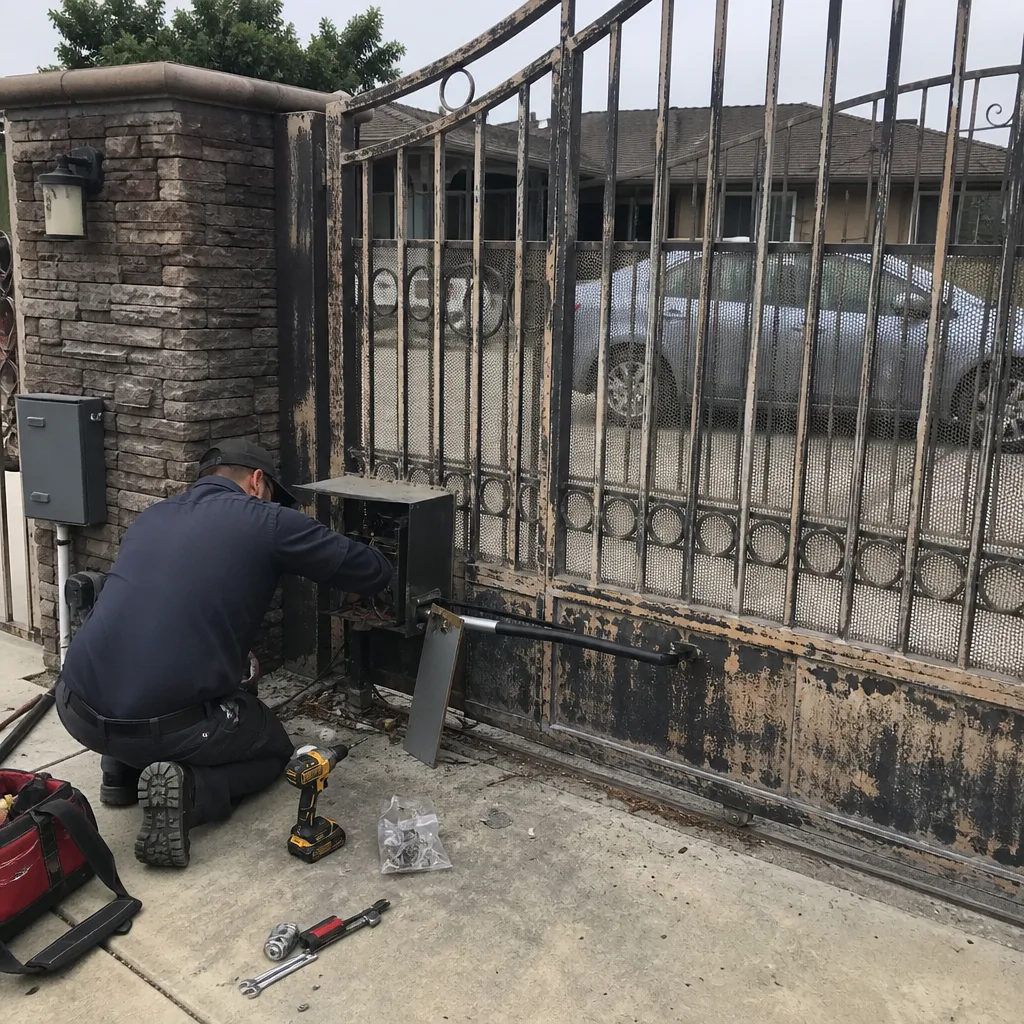 Before
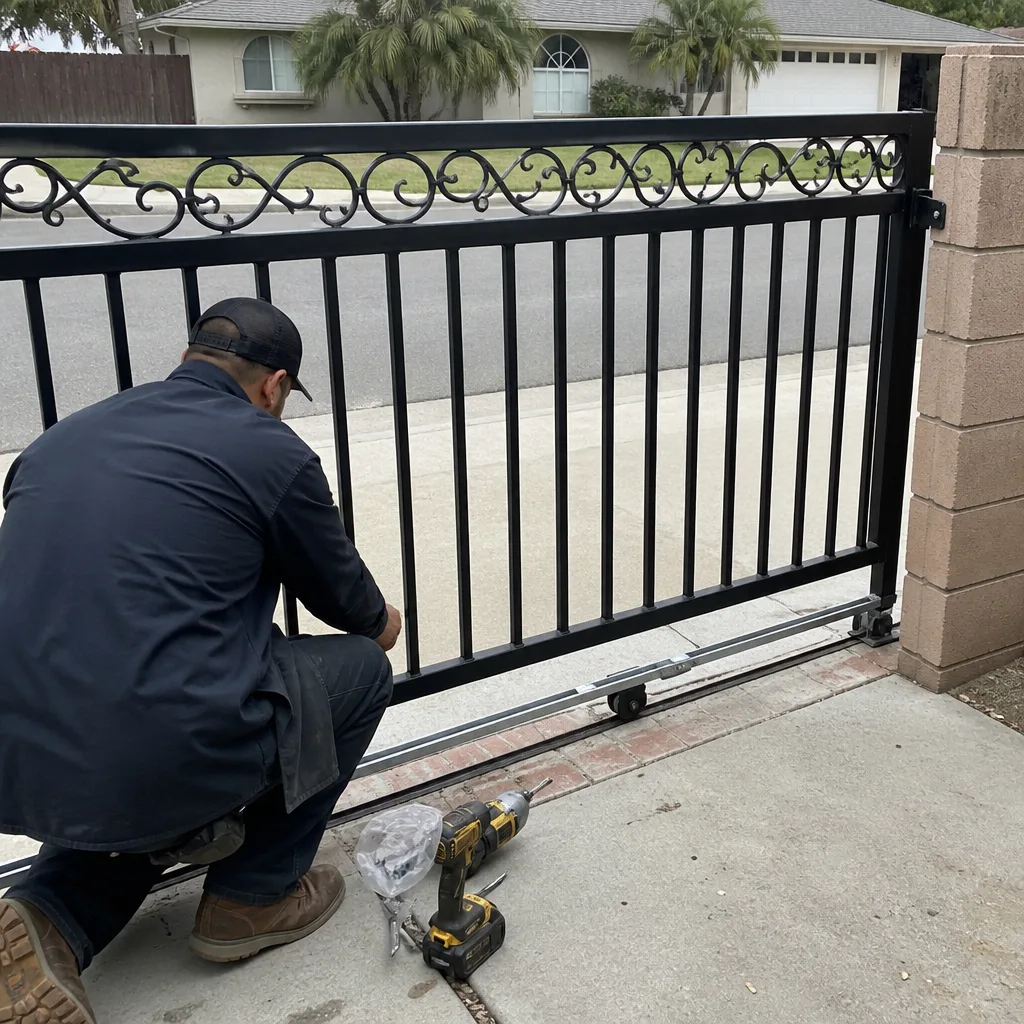 After
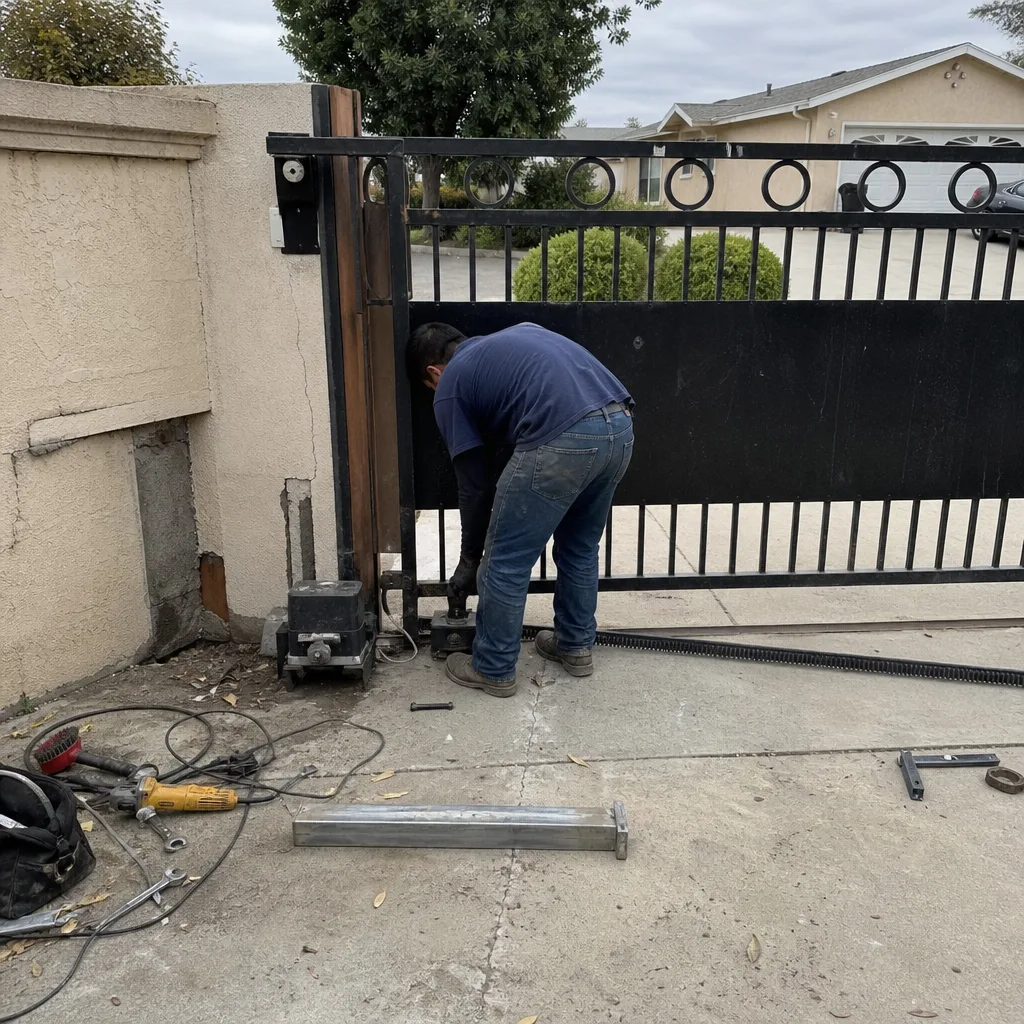 Before
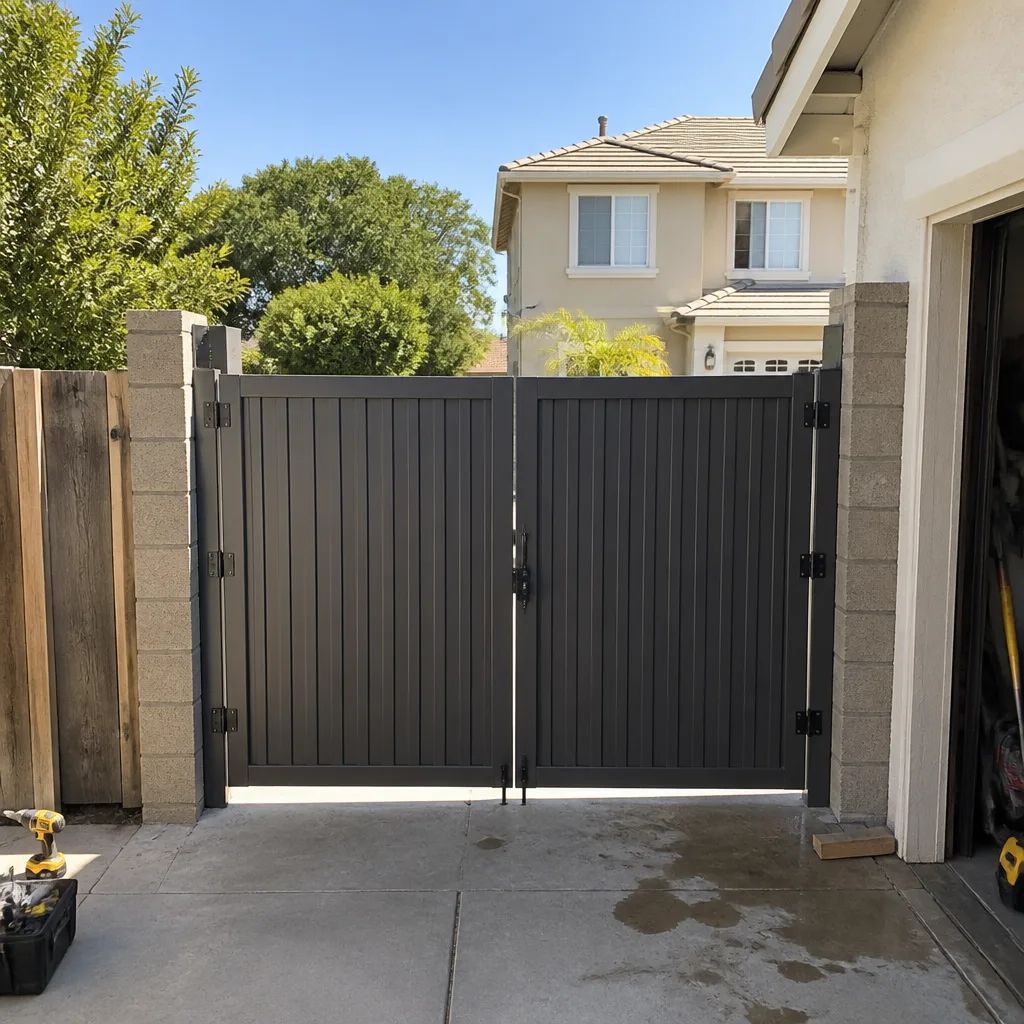 After
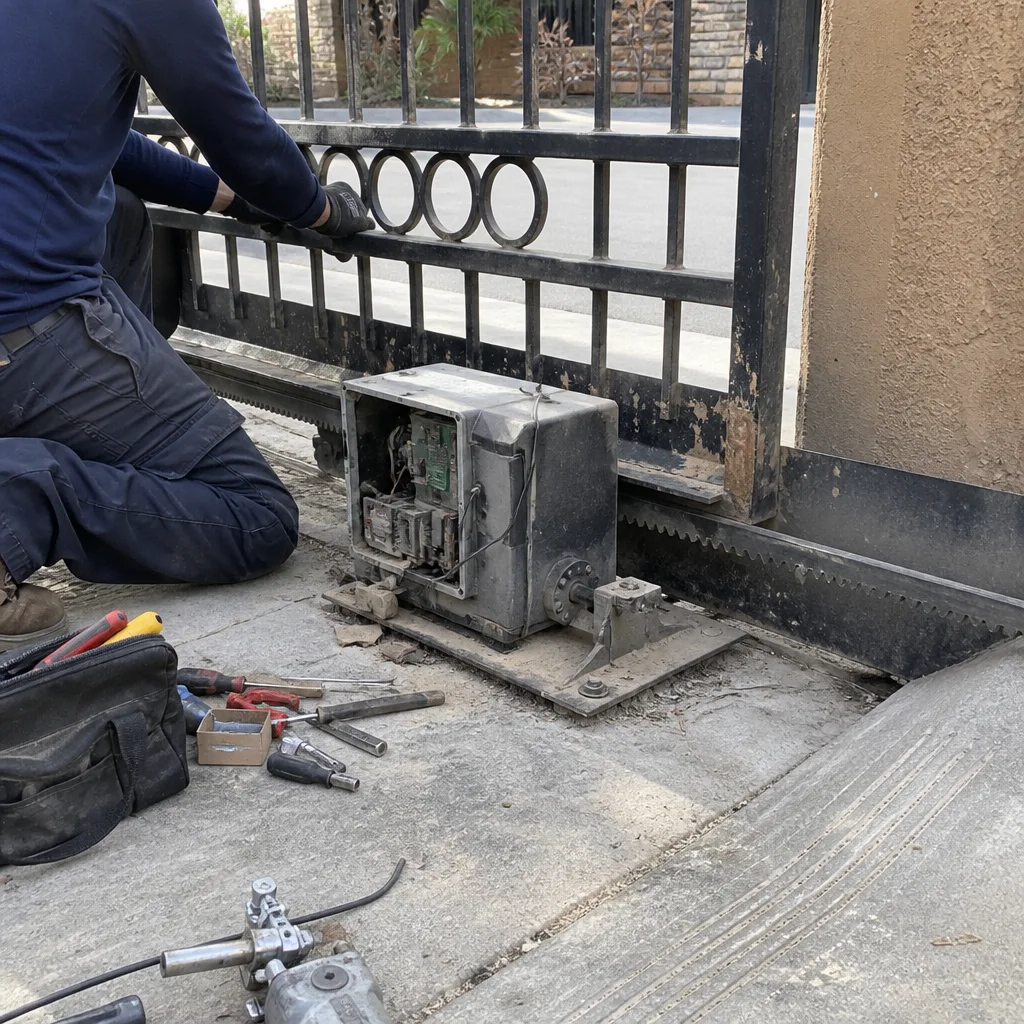 Before
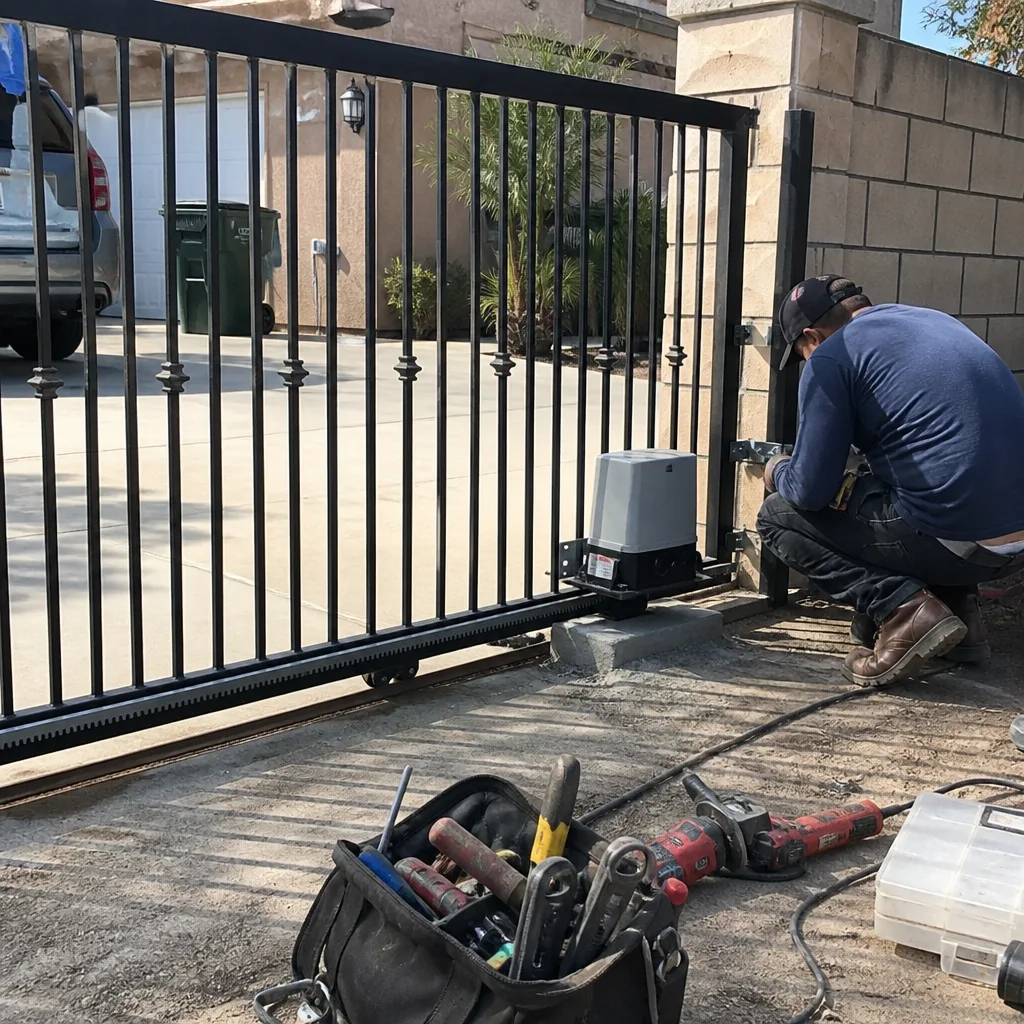 After