
Last updated October 30, 2026
 Wrought iron
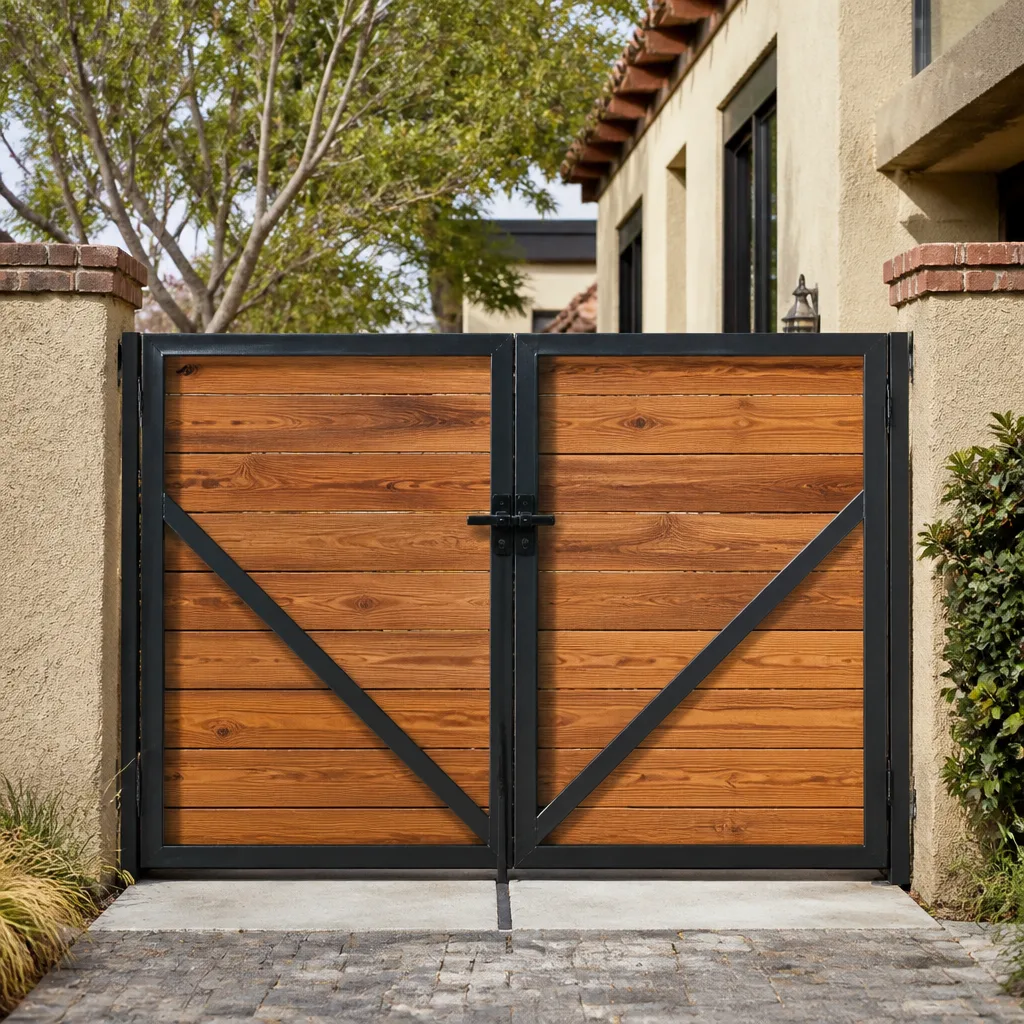 Wood & steel frame
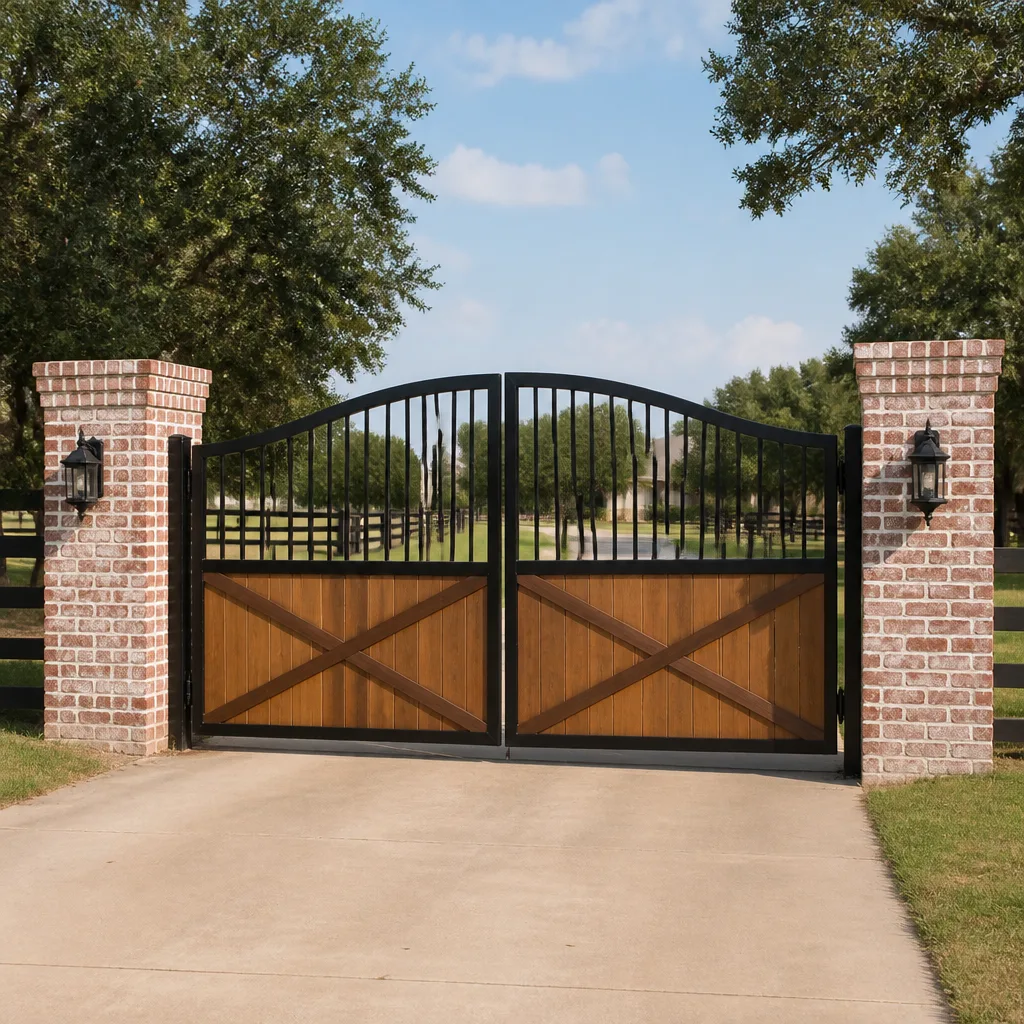 Farm & ranch
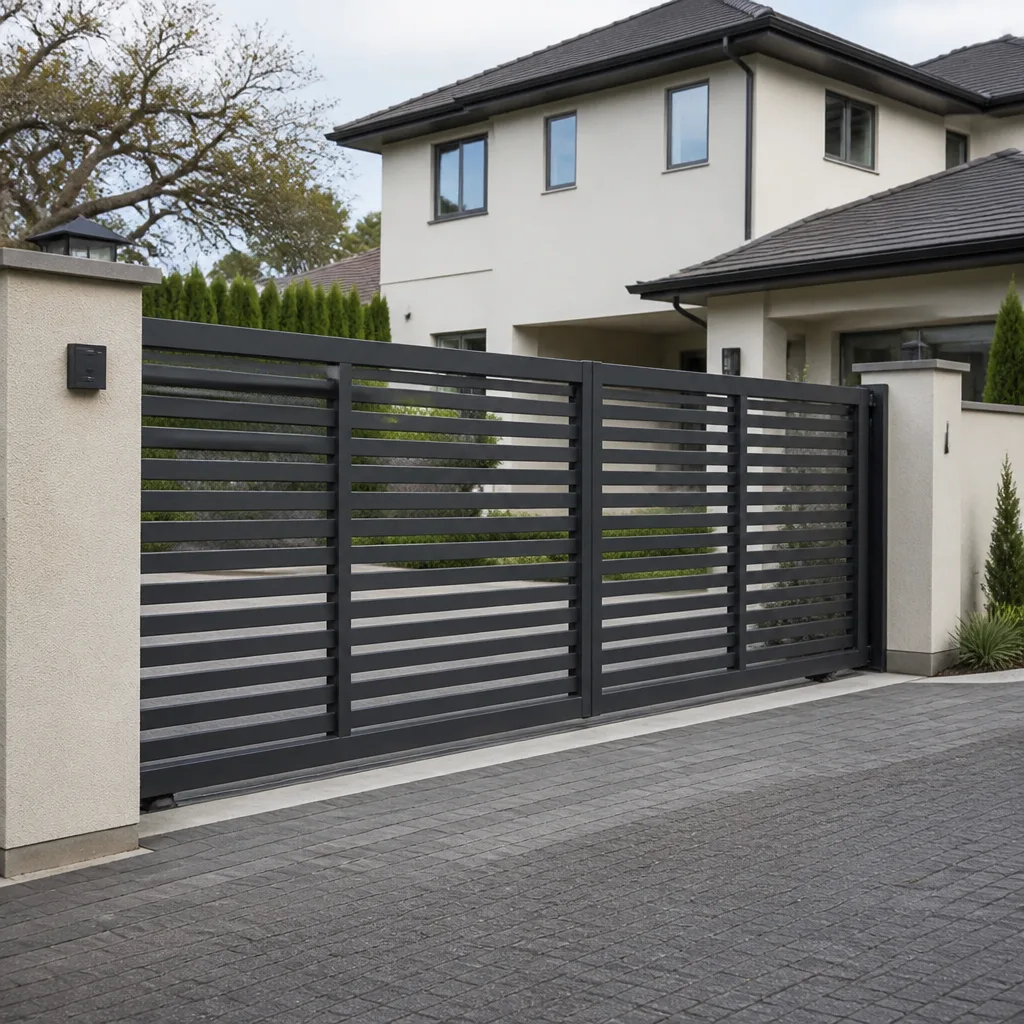 Sliding driveway gates
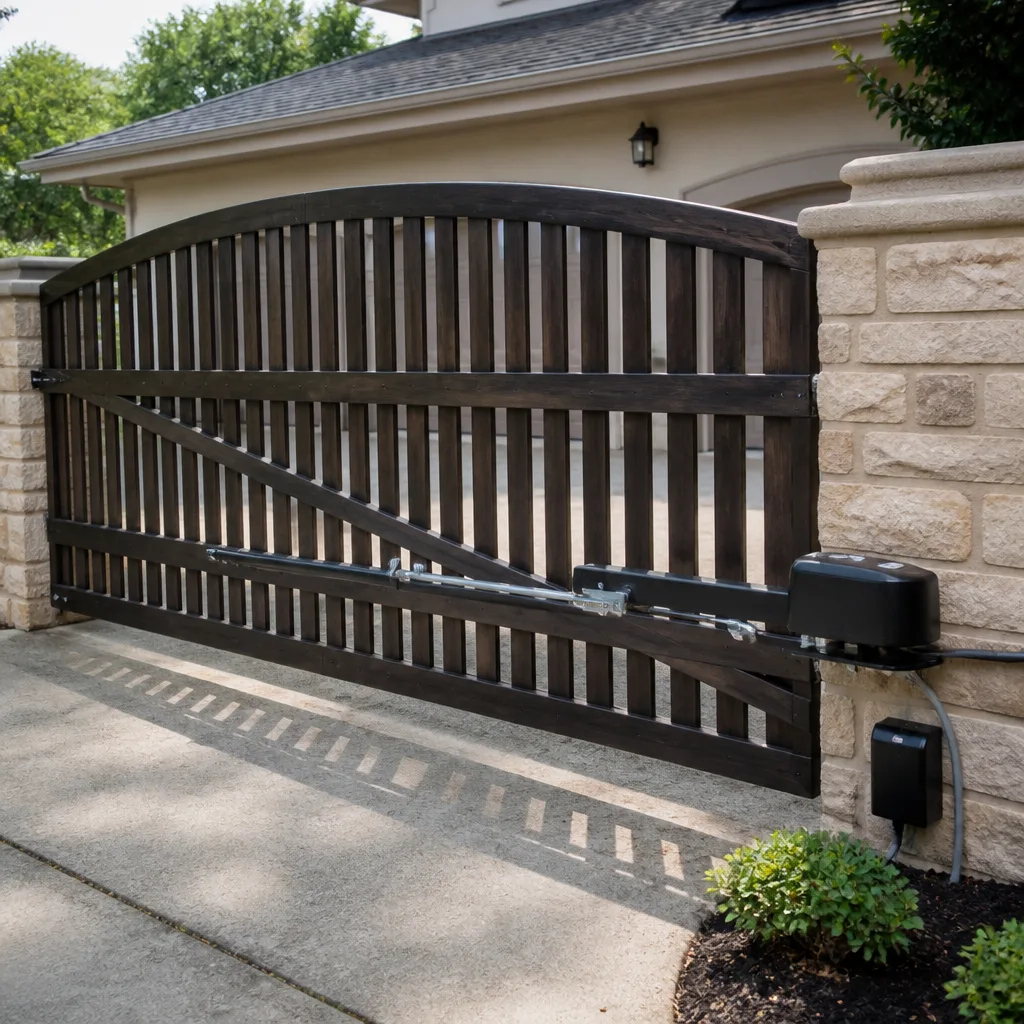 LiftMaster operators
Free on-site gate assessment - hinges, posts, and your LiftMaster or Nice gate operator checked before anything is quoted
The assessment is free and the quote is the invoice.
Get your free estimateGate Repair Warning Signs: A Chino Homeowner’s Reference Guide
Most gate repair guides in Chino recycle the same three warnings: grinding noise, slow movement, remote won’t work. By the time you’re reading about those, you’ve already missed the window for a $90 fix and you’re looking at a $900 operator replacement. A gate that takes two seconds longer to open than it did six months ago isn’t “just slow” – it’s a motor drawing higher amperage under mechanical resistance, and that pattern ends in a burned-out operator if you ignore it. This guide covers the early signals that show up weeks or months before the loud, obvious failure. Signals you can spot without tools, without a service call, and without knowing anything about how gate openers work. We’ll tell you what to watch, what it means, when it’s still cheap to fix, and when you should call someone who works on your specific brand. Written from years of field experience repairing gates across Chino, from the older neighborhoods off Pipeline Avenue to the newer HOAs near the Preserve.
Styles & brands we work with
Quick Answer
Gate repair warning signs in Chino fall into three categories: mechanical resistance (grinding, resistance, heat, slow movement), electrical strain (nuisance reversals, delayed response, needing two remote presses), and structural shift (loose hinge bolts, cracking at post bases, subtle lean). If you catch the first category early, repairs typically run under $200. If you wait until the motor burns out, you’re replacing an operator, not repairing it. We’ve seen Chino homeowners save thousands by catching a misaligned hinge in month one instead of month eight.
Table of Contents
- Your Gate’s Baseline: The Diagnostic You Already Have
- Warning Noises vs. Failure Noises: What You’re Actually Hearing
- Electrical Warning Signs: Reversals, Delays, and What Your Remote Is Telling You
- Structural Early Warnings: Cracks, Leans, and Hinge Binding
- The “Two Press” Problem: What a Gate That ‘Works Fine’ Is Actually Telling You
- Brand-Specific Error Codes and What They Mean
- When to Repair vs. When to Replace: The Cost Threshold
- Common Mistakes to Avoid
- When to Call a Professional
- Frequently Asked Questions
- The Bottom Line
Your Gate’s Baseline: The Diagnostic You Already Have
Every automatic gate in Chino has a baseline: how long it takes to open, how it sounds, how the remote responds. Most homeowners never think about it until something changes. That’s the mistake. Your gate’s normal operation is a diagnostic tool, and it’s free to use.
Here’s what to establish this week, before you need it:
- Time the full open cycle. Stand at your driveway and hit the remote. Count the seconds from the moment the gate starts moving to the moment it stops. Write that number down. Do it again tomorrow. If the time creeps up by more than a second or two over a month, something is creating mechanical resistance.
- Listen at the operator head. Not while it’s running – while it’s stopped. A healthy gate operator hums quietly or makes no sound at all. A motor drawing excessive current under load will make a faint electrical hum even at rest. That hum is heat building in the windings, and heat is what kills motors.
- Feel the operator housing. After the gate completes a full open-close cycle, put your hand on the operator housing (the box that drives the gate). It should be warm at most. If it’s hot, the motor is working harder than it was designed to. In Chino’s summer heat – where ambient temperatures above 100°F are routine in August – an overheating operator fails faster because there’s no cool air to dissipate the heat.
- Watch for hesitation. A gate that pauses for a half-second before reversing direction, or hesitates when the remote is pressed, is showing early signs of a control board issue or a limit switch that’s drifting out of adjustment.
This baseline costs you nothing and takes five minutes. It tells you exactly when “normal” became “not normal.” And in our experience, the homeowner who catches the drift early is the one who pays for a hinge adjustment instead of a new operator. For a broader look at what repairs typically involve, see our gate repair guide for Chino homeowners.
Warning Noises vs. Failure Noises: What You’re Actually Hearing
Most guides lump all gate noises together as “grinding sounds.” That’s like a doctor telling you all chest pain is a heart attack. There are distinct phases, and the phase you’re in determines the cost of the fix.
Phase 1: The Warning Noise (Intermittent Grinding or Squeaking)
This is the sound that comes and goes. You hear it on cold mornings but not in the afternoon. You hear it when the gate opens but not when it closes. You hear it at one specific point in the travel, not the whole way.
What it usually means:
- A hinge or roller bearing that’s beginning to bind but hasn’t seized. The intermittent nature means lubrication is still working part of the cycle.
- A chain or belt that’s slightly loose and catching on the sprocket at one point in the rotation.
- A limit switch that’s momentarily contacting when it shouldn’t.
- Debris – gravel, twigs, a sprinkler head – that’s intermittently in the track path.
Phase 1 noises are almost always fixable for under $200. Often under $100. The key is not waiting.
Phase 2: The Failure Noise (Constant Scraping or Metallic Grinding)
This sound doesn’t come and go. It’s there every cycle, the whole cycle. If you can hear it from inside your house with the windows closed, you’ve moved past warning and into failure.
What it usually means:
- A bearing has seized and the shaft is now grinding against the housing.
- A gear inside the operator has stripped teeth and metal is circulating through the gearbox.
- The gate has sagged enough that it’s physically dragging on the ground or the track.
- A wheel has broken off or come loose, and the gate is riding on its frame.
Phase 2 is operator replacement territory. Not always – sometimes a seized wheel is a $40 part and an hour of labor. But when you hear constant metal-on-metal grinding from inside the operator, the gearbox is eating itself, and no amount of grease reverses that.
In Chino, the dry climate means less rust than coastal areas, but dust is a real factor. Fine particulates from the Santa Ana winds work their way into unsealed bearings and act as a grinding compound. We see more bearing failures in gates facing east toward the foothills than in gates shielded from the wind by homes or walls.
Electrical Warning Signs: Reversals, Delays, and What Your Remote Is Telling You
Electrical problems announce themselves earlier than mechanical ones, and the signals are quieter. Most Chino homeowners dismiss them as “glitches” until the gate simply won’t open one morning.
Nuisance Reversals
A nuisance reversal is when the gate starts to close, then reverses back to open without anything in the path. It does this because the safety sensor thinks something is in the way. In the early stages, it’s intermittent – once a week, then twice, then every few cycles.
What causes it:
- A photo eye that’s drifted out of alignment and occasionally fails to see its reflector.
- A safety edge that’s cracked or worn and sending false obstacle signals.
- A ground loop detector that’s picking up interference from a new power line or surge.
- Moisture intrusion into a sensor housing – rarer in Chino’s dry climate, but sprinkler overspray does this.
The point: your gate reversing for “no reason” is never no reason. It’s an electrical component talking to you. Listen before it stops talking entirely and the gate refuses to close at all.
Delayed Response
This is the one that gets ignored the most. Press the remote. Wait. Nothing happens for one second. Then the gate starts moving. Or press the remote, and the gate starts, stops, then starts again.
That delay is your receiver or control board struggling to process the signal. In the best case, it’s a weak remote battery – the cheapest fix in gate repair, and we routinely hear from Chino homeowners who replaced a $15 circuit board instead of a $4 battery because they misdiagnosed it themselves. In the worst case, it’s capacitor degradation on the control board, which is the early stage of board failure. The delay is the warning. The dead board is the failure. The gap between them is usually 4 to 8 weeks.
Control Board Warning Signs
Most gate openers from the major brands have built-in diagnostic indicators: blinking LEDs, display codes, or audible beep patterns. The codes are brand-specific, but the pattern is universal – if you see a light blinking that didn’t blink before, something is being reported.
We work on nine brands of gate operators, and the early electrical warning patterns differ meaningfully. A Viking system tends to show intermittent relay chatter before a board fails. Linear systems often have a diagnostic LED that changes blink rate. Ghost Controls and Mighty Mule skew toward simpler homeowner-installed systems where a flashing status light is usually the first and only warning. DoorKing – common in Chino’s commercial and HOA installations – typically shows error codes on the display that are specific enough to direct a technician to the exact component. Treat those lights and codes as information, not decoration.
For more detail on electrical systems, see our electric gate repair guide for Chino.
Structural Early Warnings: Cracks, Leans, and Hinge Binding
Structural gate problems are the most expensive to fix because they’re usually ignored the longest. A gate that weighs 400 pounds puts constant stress on its hinges, posts, and the ground those posts sit in. In Chino, the soil adds a wrinkle: the clay-heavy ground expands and contracts with moisture, and even in a dry climate, irrigation runoff around post footings creates movement that a concrete slab driveway never sees.
Hairline Cracks at Post Bases
Walk out to the post that holds your gate. Look at where the metal or wood post meets the concrete footing or the surrounding ground. If you see hairline cracks in the concrete, or if the post has shifted even a quarter-inch from its original position, the foundation is moving.
This is the single most important structural warning sign, and it’s the one competitors’ guides miss entirely. A quarter-inch shift at the base translates to a full inch of misalignment at the latch end of a 16-foot gate. That inch means the gate no longer meets the latch cleanly, which means the operator has to push harder to seat it, which means the motor runs hotter, which means… you see where this goes.
Hairline cracks are the cheapest stage to address. You may only need a post reinforcement bracket or, in more advanced cases, a new footing pour. Wait until the post visibly leans, and you’re often replacing the post, the hinges, and sometimes the gate leaf itself.
Hinge Binding Before Visible Sag
Stand at the hinge side of the gate while it opens. Watch the gap between the gate and the post. If that gap changes as the gate moves – wider at one point, narrower at another – the hinges are binding unevenly. The gate hasn’t sagged visibly yet, but it’s starting to.
Binding hinges put load on the operator that it wasn’t designed for. Think of it this way: the operator is rated to move a certain weight through a certain arc with a certain mechanical advantage. When a hinge binds, that mechanical advantage drops, and the motor compensates by drawing more current. More current means more heat. More heat means a shorter motor life. Every time.
The Lean You Can’t See From Your Car
Most people only look at their gate from the driver’s seat, and from that angle, a slight lean is nearly invisible. Get out and sight down the top rail from the latch end. A gate that’s plumb will look like a straight line receding from you. A gate that’s leaning will show a subtle curve or a visible drop at the far end.
In Chino, we see this most often on gates installed before the 2000s, when post footing standards were shallower and gate weights were lighter. A modern 16-foot steel gate weighs 400 to 600 pounds. A 1990s footing dug 18 inches deep was never designed for that load. When a Chino homeowner adds an automatic opener to a gate that was originally manual, that’s when the old footing starts to fail. The opener adds mechanical force to a structure that was only designed to swing freely. If you’ve added an opener to an older gate in Chino, check your post bases this week.
The “Two Press” Problem: What a Gate That ‘Works Fine’ Is Actually Telling You
This might be the most common early warning sign we see in Chino, and almost no one calls us for it. The conversation usually goes like this:
“How long has the gate needed two button presses?”
“Oh, months. It’s fine, it opens.”
It’s not fine. Here’s what’s happening.
When you press the remote button the first time and nothing happens – then you press it again and the gate opens – one of three things is occurring:
- The receiver is missing the first signal. This happens when the receiver is drifting out of spec, the antenna is damaged, or interference from a new source (a neighbor’s new gate remote, a new wireless device, a new power line) is degrading the first signal. The second press breaks through because the signal timing happened to align. This is an electrical problem that gets worse.
- The control board is slow to wake. Some boards enter a low-power standby mode between cycles, and as capacitors age, the wake-up time stretches from milliseconds to seconds. Your first press wakes the board; your second press opens the gate. This is the warning sign that the board is reaching end of life.
- The motor is drawing too much current on startup. A motor with failing bearings or a gate with increasing mechanical resistance pulls more amps at the moment of startup. The control board’s current-limiting circuit may trip on the first attempt, reset, and allow the second attempt through. Your second press isn’t opening the gate – it’s benefiting from the board having reset after the first press tripped the limit.
None of these are “just how remote controls work.” A healthy gate responds to the first press, every time. If yours needs two, something is talking to you. Call before the conversation turns into a dead operator on a Monday morning when you need to get to work.
If you’re at the point where repair is no longer a question but replacement is on the table, see our guide on gate installation in Chino for what a new system involves.
Brand-Specific Error Codes and What They Mean
One advantage of working on nine brands of gate operators is knowing that “the light is blinking” means different things depending on whose equipment you’re looking at. Here’s what to know about the brands we service most often in Chino, focused on the early signals that show up before the gate fails.
Linear
Linear openers are common on Chino residential gates, particularly older installations. The diagnostic LED on the control board communicates different states through blink patterns: steady versus flashing, fast versus slow. The early warning sign we see most often is a slow, rhythmic blink that homeowners mistake for normal operation. It’s not. Slow blink on a Linear board typically means the unit is in a soft error state – often limit switch drift or a failing obstruction sensor. It will still operate, which is why it gets ignored. Then it stops operating.
Viking
Viking systems show up on both residential and light commercial installations. The distinguishing early warning with Viking is relay chatter: a faint, rapid clicking from the control board when the gate is idle. If you stand next to the operator and hear clicking when nothing is supposed to be happening, that’s a relay oscillating, and it’s the precursor to a board failure. We’ve seen Viking boards chatter for three weeks before dying, and we’ve seen them chatter for two days. The point is that the sound is never normal.
Ghost Controls and Mighty Mule
These two brands dominate the DIY residential market, and they share a similar warning profile: a status LED that changes from green to red, or begins flashing when it was previously steady. Both brands rely heavily on the homeowner reading the manual’s diagnostic section. The problem is that by the time the LED goes red, the system is usually already locking out. The earlier warning is subtler: the gate moves a fraction slower, or hesitates at the start, because the internal diagnostic is working harder to maintain battery charge or compensate for a weakening motor. If your Ghost Controls or Mighty Mule opener has been installed for several years and the open time has crept up, that’s the LED about to go red.
DoorKing
DoorKing systems are the workhorses of Chino’s commercial and HOA gate installations. They differ from residential-grade openers in that they display specific error codes – usually a number on a small screen or a series of LED flashes – that map to exact components. The early warning signs with DoorKing are less about noise and more about inconsistent operation: a gate that occasionally stops mid-cycle and requires a manual reset, or a unit that intermittently loses its programming. Those are usually the first signs of a failing circuit board or a power supply issue, and because DoorKing systems control access for entire communities, the failure of one component affects dozens of residents at once.
What unifies all of these brands is the same principle: the warning appears before the failure. The brand determines what the warning looks like. The homeowner determines whether it’s seen or ignored.
When to Repair vs. When to Replace: The Cost Threshold
Every gate repair in Chino eventually reaches a decision point: fix what’s there, or replace it. The decision usually isn’t about sentiment – it’s about math.
Here’s the framework we use when advising Chino homeowners:
Repair makes sense when:
- The operator is under 8 to 10 years old and the failure is a component (capacitor, limit switch, gear set) rather than the board or motor itself.
- The gate structure is sound – posts plumb, hinges aligned, no hairline cracking – and the problem is isolated to a wearable part.
- The brand is one that still has strong parts availability. All nine brands we service – including Linear, Viking, Ghost Controls, and DoorKing – have parts ecosystems, but the age of the specific model matters more than the brand name.
- The repair cost is under 50% of the cost of a comparable new system.
Replacement makes sense when:
- The operator is 12+ years old and the failure is the motor or control board. In Chino’s heat, a 12-year-old motor is already living on borrowed time. Putting a $400 board into a 14-year-old operator is often throwing good money after bad.
- The gate structure itself has failed: post base cracked, gate leaf rusted through, hinges worn beyond adjustment. A new operator on a failing gate just moves the problem.
- The existing system no longer meets your needs – if you’re adding access control, a keypad, or smartphone integration, and the current board can’t support it.
The advantage of calling a company that does both repair and installation is that you get an honest recommendation, because there’s no incentive to push you toward one when both are on the table. If your gate can be repaired for $180, that’s what we tell you. If it needs a $2,500 replacement, you’ll see exactly why on the invoice, not as a surprise after the work is done.
Common Mistakes to Avoid
- Ignoring the slow-open creep. The most common mistake we see in Chino is homeowners rationalizing a slower gate as “just age.” It’s not just age. It’s resistance, and resistance is killing your motor a little more each week. Catch it early and you’re paying for a hinge adjustment. Wait and you’re paying for an operator.
- Greasing a binding hinge instead of fixing the underlying misalignment. Lubricating a hinge that’s binding because the gate has shifted gives you a few quiet weeks. The hinge goes back to binding, the motor goes back to straining, and you’ve bought time without solving the actual problem.
- Replacing the remote battery when the problem is the receiver. If your remote needs a new battery every few months, the battery was never the problem. The receiver is drawing it down, or the remote is failing, or both. A gate that eats batteries is telling you something about its electronics.
- Ignoring the blinking diagnostic LED because the gate still works. The diagnostic light is the gate’s check engine light. It’s blinking for a reason. Pretending it isn’t there doesn’t make the code go away; it makes the eventual repair more expensive.
- Assuming the gate can wait because it’s “not critical” this month. A Chino gate that fails in August, when temperatures are hitting 105°F and you’ve got contractors coming to the house, is a bigger problem than the same failure in February. We schedule more emergency calls in July and August than any other months, and most of those emergencies were warnings in March.
- Hiring a generalist to save money. A handyman who “works on gates sometimes” doesn’t know a Linear diagnostic blink from a Viking one, and doesn’t stock parts for either. You pay for the learning curve twice: once in the misdiagnosis and once in the correct repair. A gate specialist diagnoses it correctly the first time because it’s all they do.
When to Call a Professional
If you’ve identified any of the warning signs in this guide – the slow-open creep, the intermittent noise, the two-press remote, the hairline crack at the post base – call before the warning becomes a failure. Specifically, call a gate specialist, not a generalist. The brands we service – Linear, Viking, Ghost Controls, DoorKing, and five others – each have their own diagnostic quirks, and someone who works on all of them sees patterns that a general contractor misses. Lexington Gate Repair offers free estimates in Chino – call (866) 304-1321 to schedule a diagnostic visit. We’ll tell you what’s wrong, what it costs to fix, and whether repair or replacement makes more sense. The price is quoted and agreed before any work starts.
Frequently Asked Questions
The earliest signs are a gate that opens slower than it did six months ago, an operator housing that’s warm or hot to the touch after a cycle, a remote that needs two presses, or an intermittent grinding noise at one specific point in the travel. Any of these means the gate is telling you something. All of them together is a gate that’s likely weeks from failure.
Early-stage repairs in Chino – hinge adjustments, limit switch replacements, sensor realignment – typically run $90 to $250. Mid-stage repairs like gear replacements or circuit board swaps run $300 to $700 depending on brand. A full operator replacement runs $1,200 to $2,800 installed, and a complete gate and operator replacement starts around $3,500. For an exact quote, call (866) 304-1321. Estimates are free.
Two-press operation means the receiver is missing the first signal, the control board is slow to wake from standby, or the motor is tripping the current limiter on startup. It’s never normal, and it gets worse. The fix depends on which of those three causes it is, which is why brand-specific diagnosis matters.
Some things are DIY-safe: cleaning photo eye lenses, replacing remote batteries, clearing debris from the track. The dangerous parts – anything involving high-tension springs, electrical wiring, or a gate that weighs hundreds of pounds – should be left to a professional. A gate under tension can move faster than you can react, and the injuries are severe. If you’re not sure, call and ask before touching it.
In Chino’s climate, a residential gate opener typically lasts 8 to 12 years, and a commercial opener lasts 10 to 15 with proper maintenance. The heat is the killer: elevated summer temperatures accelerate motor wear, capacitor failure, and board degradation. Openers installed in direct sun with no shade covering fail faster than those in shaded locations. Regular inspection of the warning signs in this guide can extend that life by catching small problems before they compound.
We service nine brands: LiftMaster, FAAC, BFT, Linear, Viking, Ghost Controls, DoorKing, Elite, and Mighty Mule. That covers most residential and commercial installations in Chino. If you’re not sure what brand you have, the operator housing has a label – or take a photo of the unit and send it to us. We’ll identify it and tell you honestly whether it’s repairable.
The Bottom Line
Your gate gives you warnings for weeks or months before it fails. The slow-open creep, the warm operator housing, the two-press remote, the intermittent noise, the hairline crack at the post base – these are all information. The question is whether you act on it when the fix is $150 or react to it when the replacement is $1,500. In Chino, where summer heat punishes neglected equipment, the timeline between warning and failure is shorter than in milder climates. Establish your gate’s baseline this week. Check it monthly. And when something changes, call a specialist who works on your specific brand, not someone who’s figuring it out on your dime. Lexington Gate Repair handles gate repair in Chino, electric gate repair, and new gate installation – the full arc from early warning to full replacement, under one roof. Call (866) 304-1321 for a free estimate, and we’ll tell you exactly what’s wrong and what it costs before any work begins.
Written by the team at Lexington Gate Repair, serving Chino since 2011.
See the difference
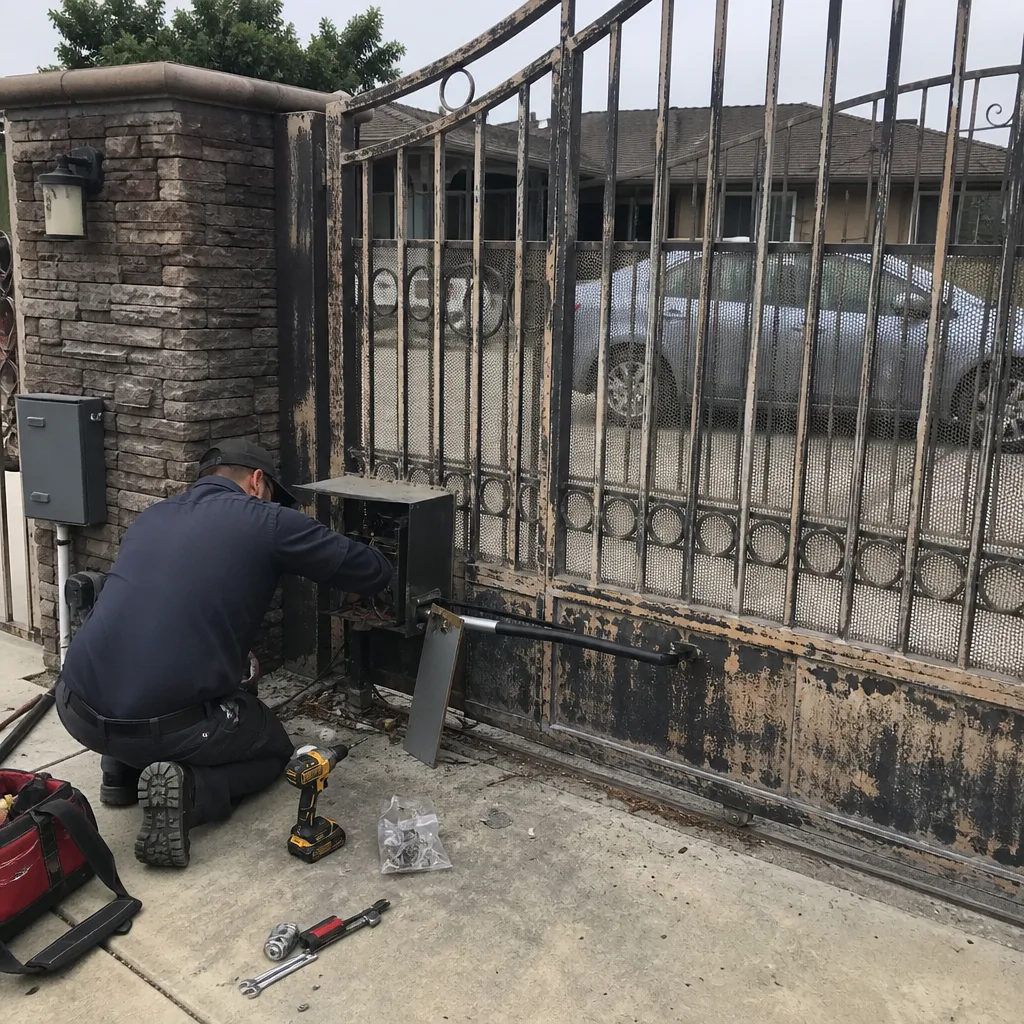 Before
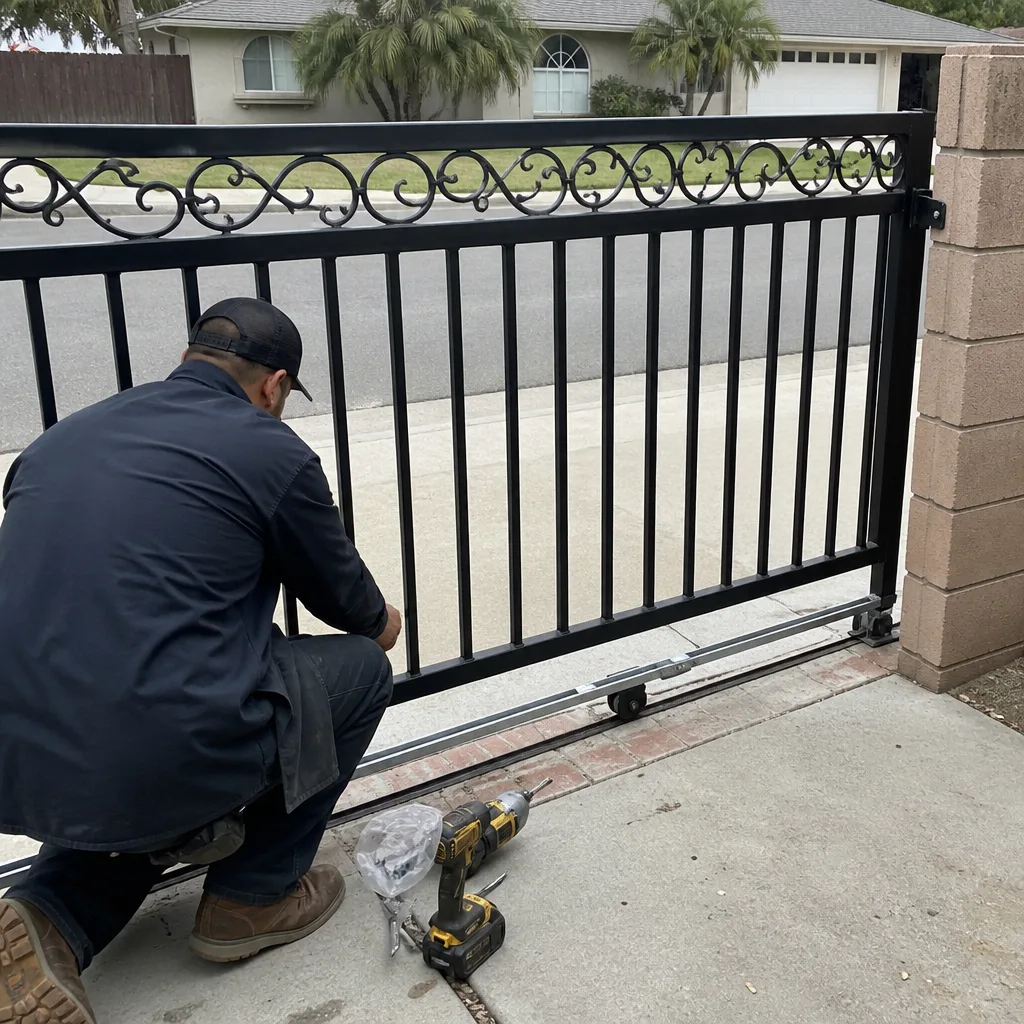 After
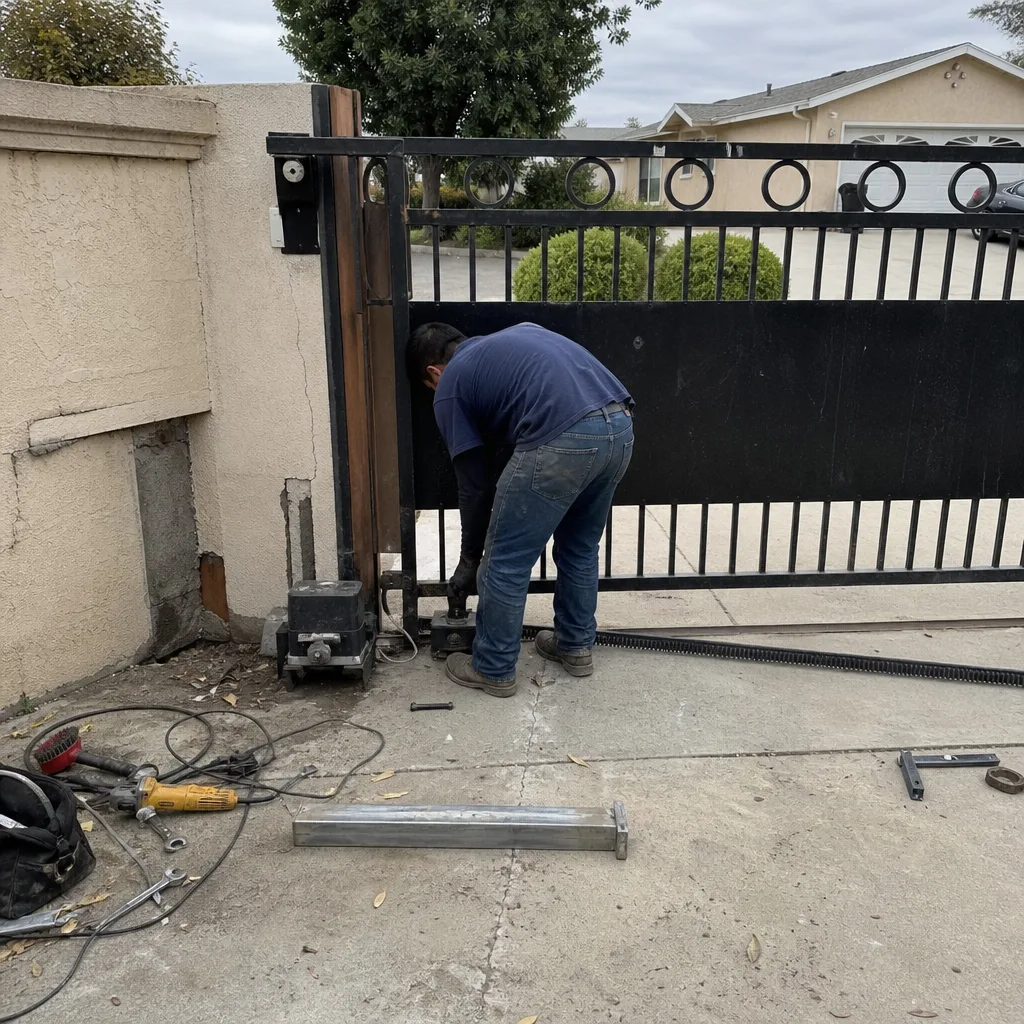 Before
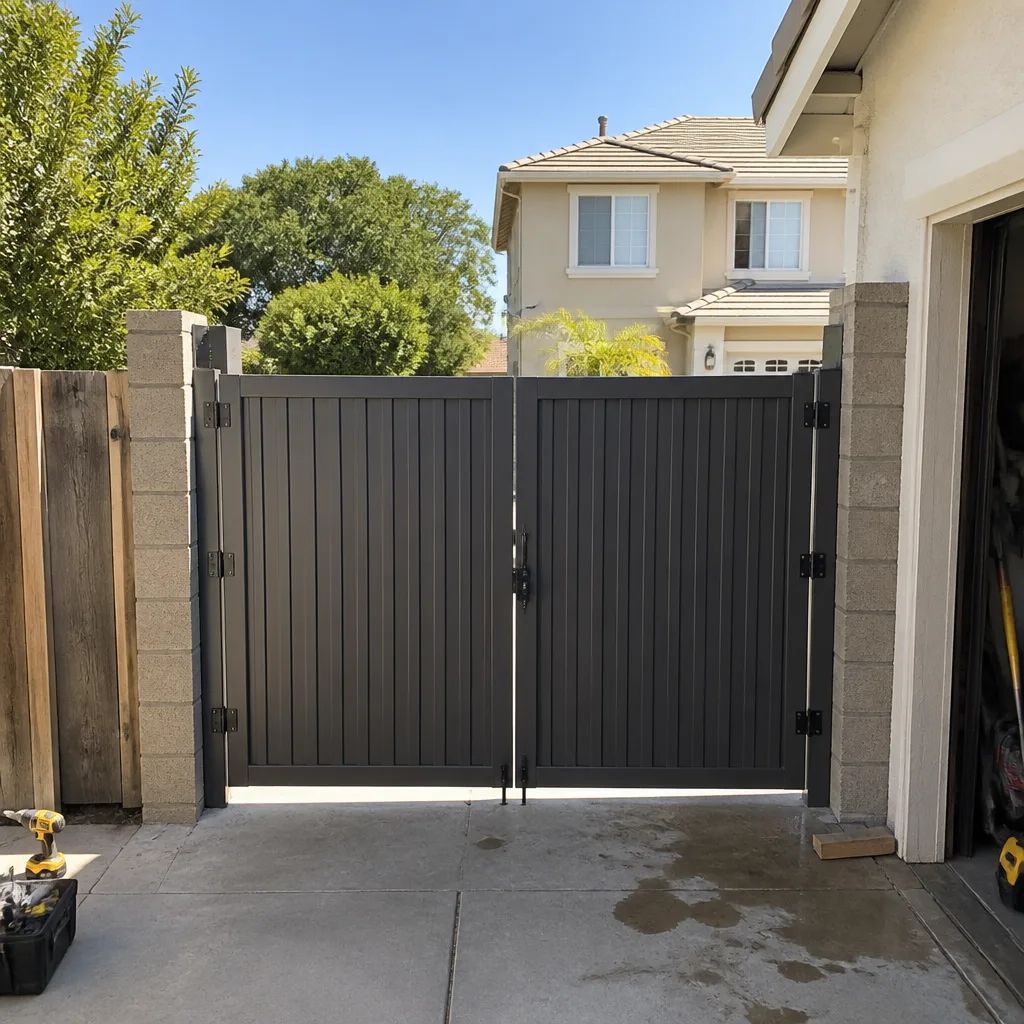 After
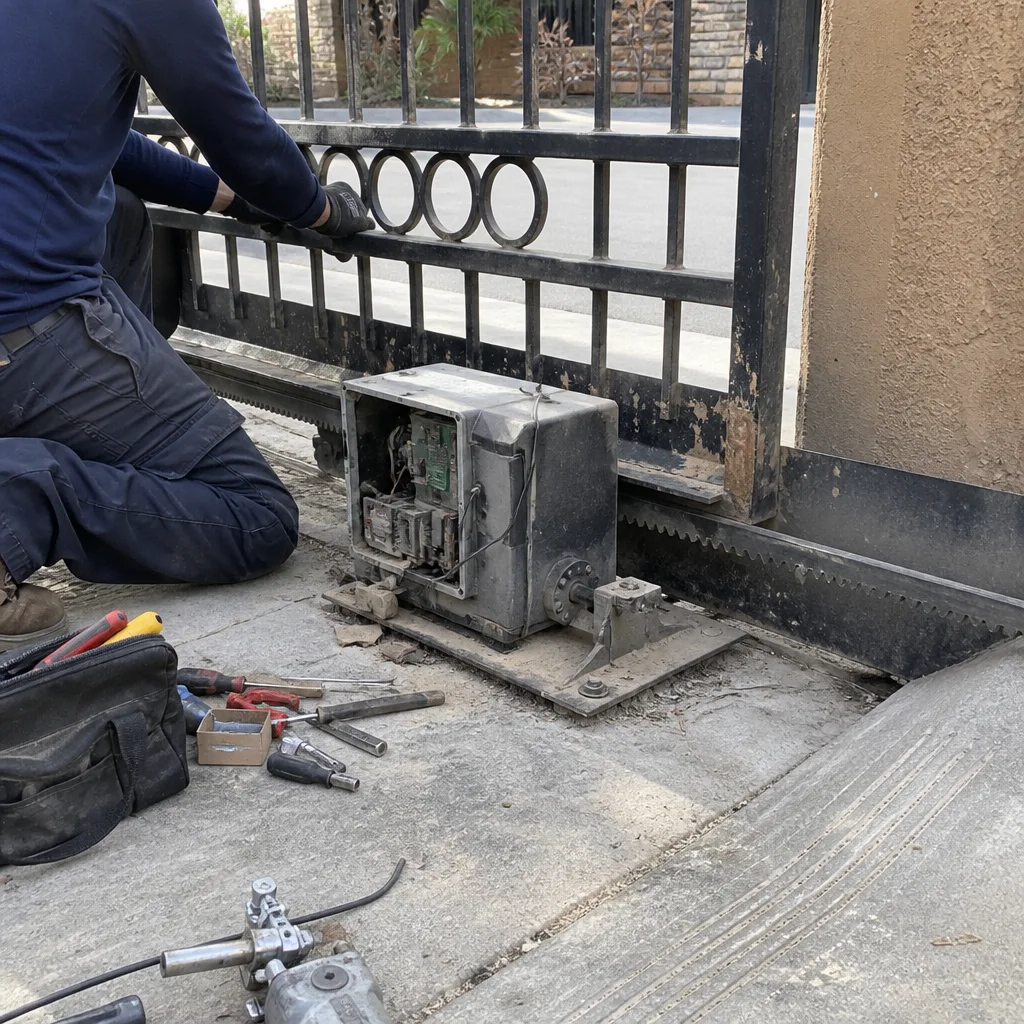 Before
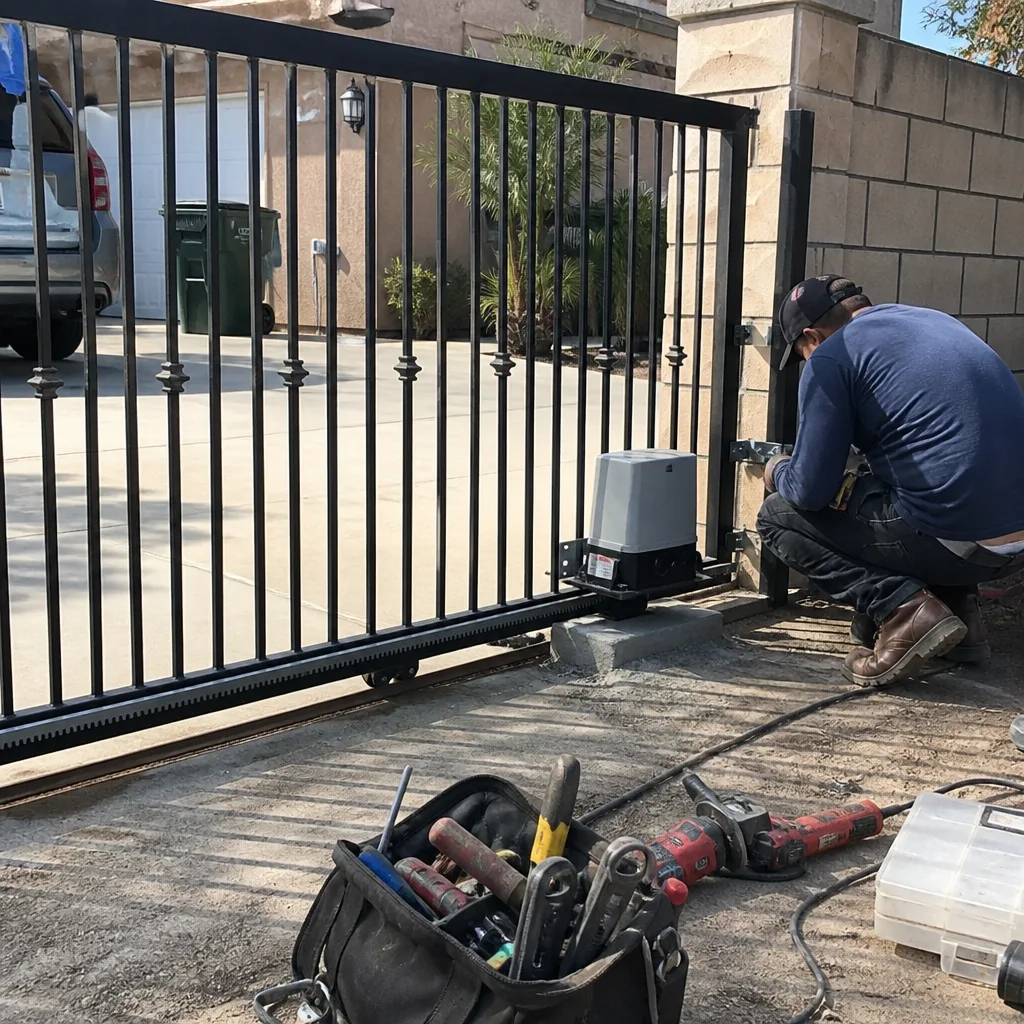 After