
Last updated October 30, 2026
 Wrought iron
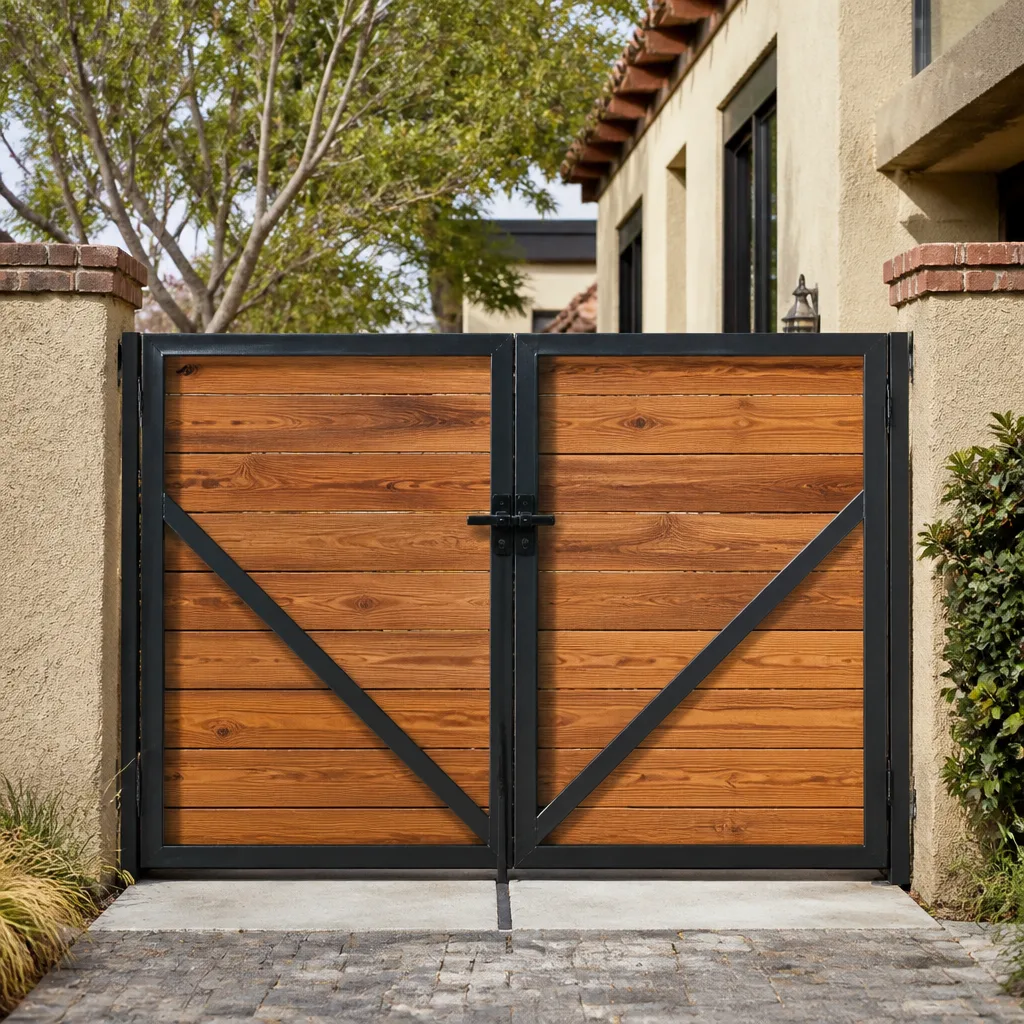 Wood & steel frame
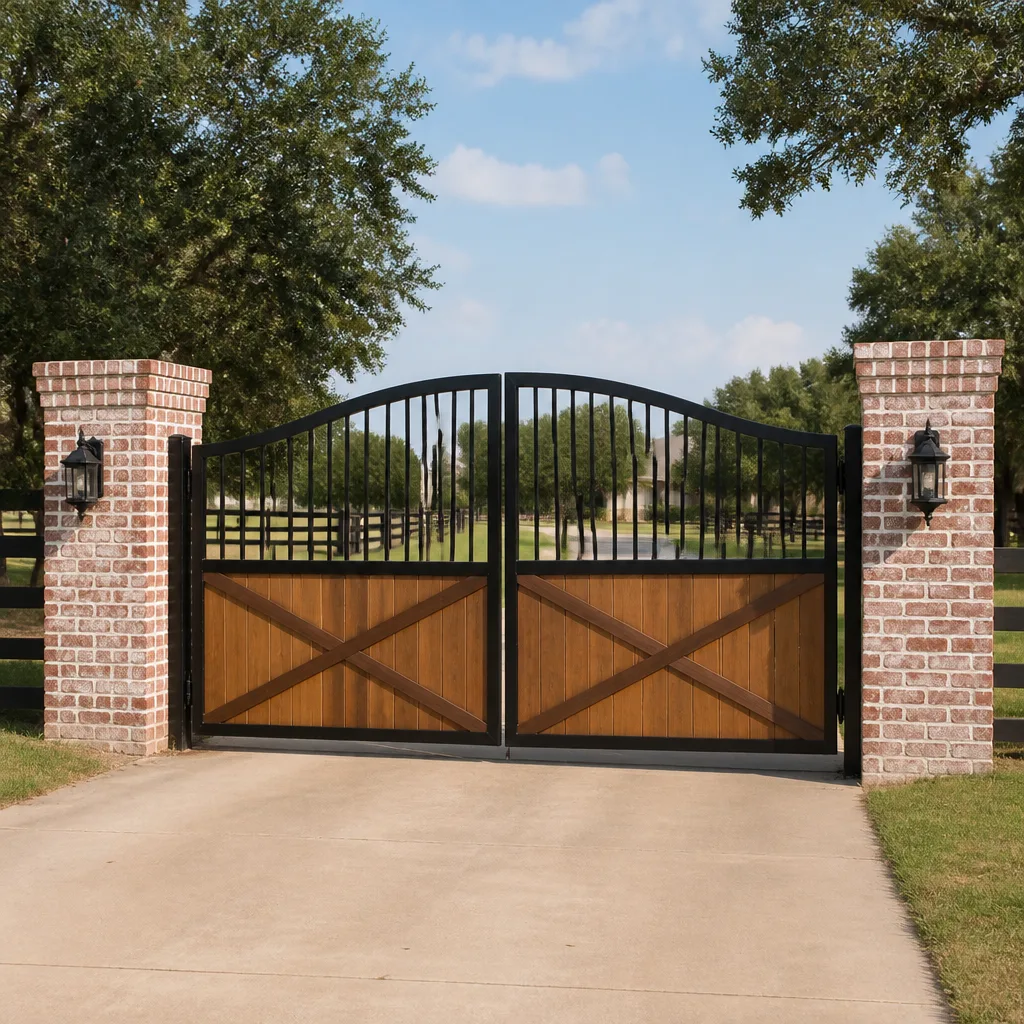 Farm & ranch
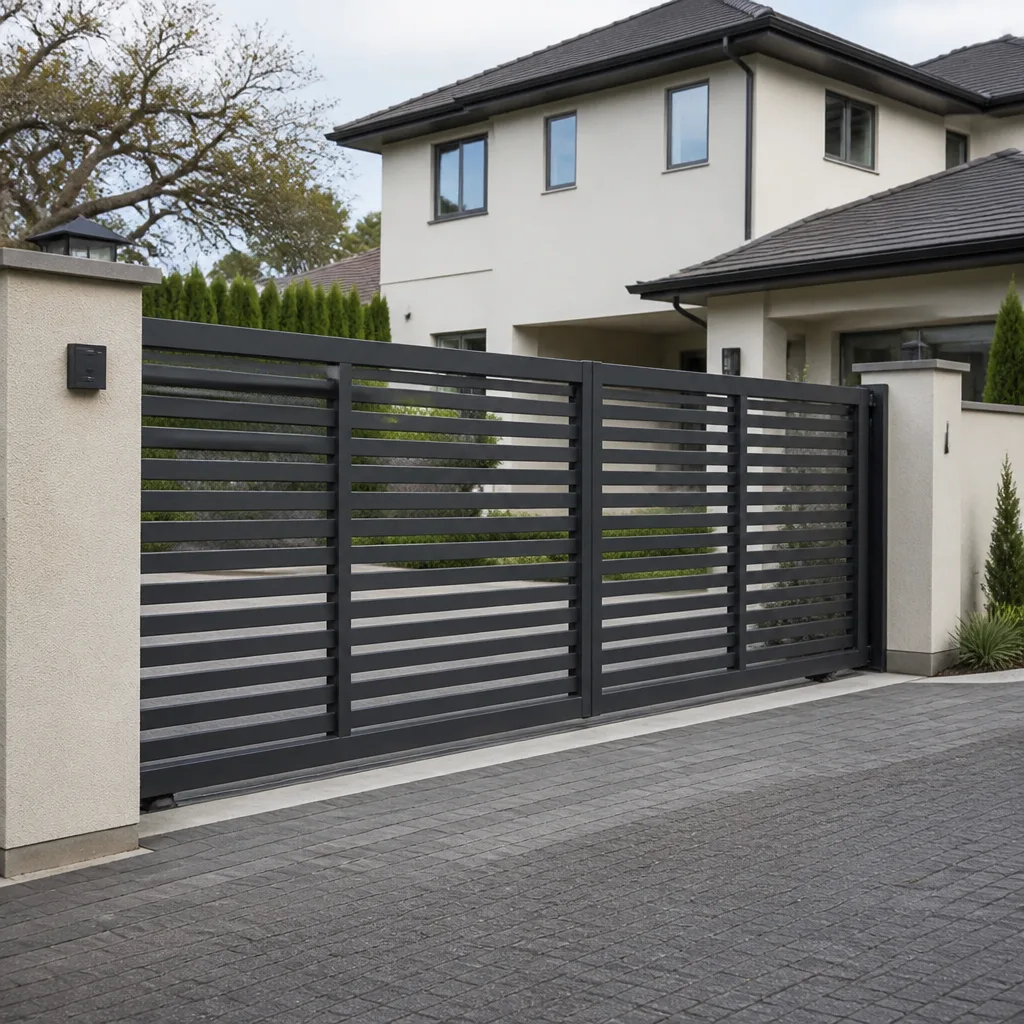 Sliding driveway gates
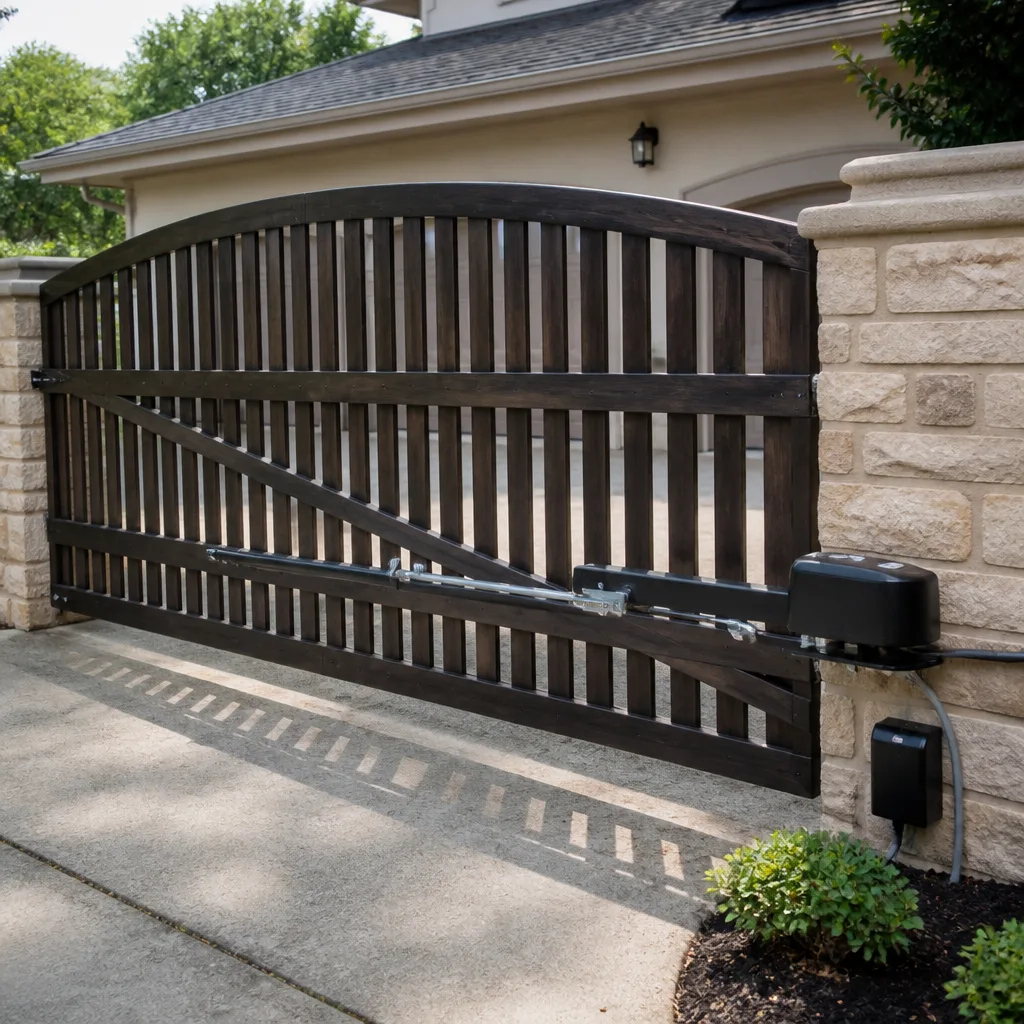 LiftMaster operators
Free on-site gate assessment - hinges, posts, and your LiftMaster or Nice gate operator checked before anything is quoted
The assessment is free and the quote is the invoice.
Get your free estimateThe Complete Guide to Gate Repair in Chino
A gate that reverses before closing isn’t a ‘sensor problem.’ It’s a symptom that could mean misaligned photo eyes, a failing control board, or a loop detector fault. Treating the symptom costs you twice. We’ve torn down hundreds of gates across Chino and the pattern is always the same: the visible failure is rarely the actual failure. This guide maps every common gate problem to its root cause so you fix the right thing the first time, whether you own a residential driveway gate off Euclid Avenue or manage a commercial access system near the Chino Airport industrial corridor. For professional help, explore our Gate Repair services. You’ll learn why gates fail in Chino specifically, what a legitimate repair scope looks like, and which problems signal replacement over repair.
Quick Answer
Gate repair in Chino means diagnosing one of five root causes: mechanical wear, electrical component failure, software or logic board faults, structural movement, or environmental stress from the region’s clay-heavy soil and temperature swings. Most repairs cost between $185 and $650 depending on the component, with full operator replacement running higher. The key is matching the symptom to the correct root cause, because replacing parts without addressing the underlying issue is how homeowners end up paying for the same repair twice.
Styles & brands we work with
Table of Contents
- The Five Root Causes of Gate Failure in Chino
- How Chino’s Soil Affects Gate Posts and Track Alignment
- Brand-Specific Failure Patterns: LiftMaster, DoorKing, and Viking
- Repair or Replace: How to Know Before You Spend
- What a Complete Repair Scope of Work Should Include
- How a Proper Gate Diagnostic Should Go
- Why Chino’s Climate Demands Specific Maintenance
- Commercial and HOA Gate Systems: What Property Managers Need to Know
The Five Root Causes of Gate Failure in Chino
Every gate failure we diagnose falls into one of five categories. Understanding which one you’re dealing with matters more than knowing the specific part that broke, because the category determines whether a repair will last. When you confuse categories, you get a technician who swaps a part, collects a check, and leaves you with the same problem three months later. Here’s what each category actually means.
1. Mechanical failures
Mechanical failures are the most visible and often the simplest to fix. They include worn-out wheels or rollers, broken hinge brackets, bent track sections, snapped chains, and rusted hardware. On sliding gates, the rollers take the full weight of the gate every time it opens and closes. After years of Chino’s dry summers and occasional heavy winter rain, those rollers wear unevenly, causing the gate to bind or drag. On swing gates, hinge bearings seize up from dust and lack of lubrication, which forces the opener motor to work harder until it burns out. Mechanical failures are usually the cheapest to repair, but only if you catch them before they cascade into motor failure.
2. Electrical failures
Electrical failures include dead control boards, blown fuses, failing capacitors, damaged wiring, and burned-out motors. These are the repairs that worry homeowners most because the symptoms look catastrophic: the gate won’t open at all, or it opens halfway and stops. But an electrical failure is not the same as needing a new gate. A blown capacitor on a Viking opener costs a fraction of a full replacement. Damaged low-voltage wire from a weed trimmer near the gate track is a straightforward splice. The problem is when technicians misread an electrical failure as a mechanical issue, or vice versa, and start replacing the wrong components. That’s where brand-specific expertise matters, especially with FAAC and BFT systems installed across Chino commercial properties.
3. Software and logic board faults
Modern automatic gates run on logic boards that control timing, force settings, safety sensors, and remote programming. Software faults happen when those boards lose programming, receive voltage spikes, or simply degrade over time. Symptoms include gates that reverse direction randomly, remotes that stop working, or auto-close features that trigger without cause. The challenge is that logic board faults are often misdiagnosed as sensor problems because the visible symptom looks identical. A call that starts with “my gate reverses before closing” could be a photo eye issue, but it could also be a logic board with corrupted force settings, as we explore in our DIY vs Professional Gate Repair: The Chino Homeowner’s Decision Guide. The fix depends on correct diagnosis, and correct diagnosis depends on knowing the specific board’s failure patterns.
4. Structural failures
Structural failures are the category most often missed on a first service call, and they’re the most expensive when ignored. This includes posts that have shifted or rotated, concrete footings that have cracked, gates that have sagged out of square, and track systems that have sunk. In Chino, this is where soil conditions play an outsize role, which we’ll address in detail below. What matters here is understanding that a structural failure will defeat any electrical or mechanical repair. You can install a brand-new operator on a gate whose post has shifted two degrees, and the new operator will fail within a year. Structural issues must be corrected first, before any other work makes sense.
5. Environmental failures
Environmental failures are caused by the conditions around the gate rather than the gate itself. Dust, heat, UV exposure, rain runoff, irrigation overspray, and nearby construction all qualify. Chino gets hot, dry summers that bake plastic components and fade wiring insulation. Santa Ana winds push fine dust into motor housings and limit switches. Lawn irrigation systems overspray gate tracks, accelerating rust. These failures are the most preventable through routine maintenance, but they’re also the least understood because they develop slowly. A gate that gradually slows over twelve months is likely dealing with an environmental stressor compounding a mechanical issue.
How Chino’s Soil Affects Gate Posts and Track Alignment
Chino sits on clay-heavy alluvial soil that expands and contracts with moisture. This is not a minor detail for automatic gates. Here’s what happens: during wet winters, the clay absorbs water and swells. During dry summers, the clay dries out, contracts, and can crack. This movement puts uneven pressure on concrete footings and gate posts, especially posts set in shorter footings or existing fence lines that weren’t engineered for a heavy automatic gate.
The result is a slow, creeping misalignment that many homeowners don’t notice until the gate starts binding, scraping, or refusing to close. We’ve seen gates in new Chino subdivisions with posts that looked plumb at installation but shifted six millimeters over two seasons, enough to trip the safety sensors and stop the gate mid-cycle. This is why your gate installation or repair should account for post depth, footing size, and drainage. A gate post set in a shallow footing on clay soil is a structural failure waiting to happen, and no amount of limit switch adjustment will fix it permanently.
Commercial properties face the same issue at larger scale. Sliding gates on long industrial driveways near Chino’s manufacturing zones are particularly vulnerable because the track bed settles at different rates along its length. One section of the track sinks an eighth of an inch, the gate wheel drags, and the operator draws excessive current until its thermal overload trips. The fix is re-leveling the track bed, not replacing the operator. But if nobody checks the track elevation first, you end up paying for both.
Brand-Specific Failure Patterns: LiftMaster, DoorKing, and Viking
Gate opener brands are not interchangeable, and each one has predictable failure modes that experienced technicians learn to recognize. This is where working with a specialist pays off. We service nine major gate brands across Chino, including LiftMaster, FAAC, BFT, Linear, Viking, Ghost Controls, DoorKing, Elite, and Mighty Mule. Here’s what we see most often from three of the big names in the Chino market.
LiftMaster
LiftMaster dominates residential driveway gates in Chino, and for good reason: the operators are reliable and parts are readily available. The most common failure patterns we see are photo eye alignment issues after a post shifts, logic board capacitor degradation after five to seven years of Southern California heat, and remote receiver degradation from UV exposure. LiftMaster boards are sensitive to voltage irregularities, so a failing capacitor on the board often masquerades as a “sensor problem.” The gate starts and stops unpredictably, and the homeowner assumes the photo eyes are dirty when the real fault is on the board.
DoorKing
DoorKing is the workhorse of commercial and HOA gate systems in the Inland Empire, including Chino’s gated communities and industrial properties. These operators are built for heavy cycles, but they develop their own failure patterns: worn-out limit switch assemblies from thousands of open-close cycles, loop detector faults from cracked sawcut loops in the asphalt, and relay failures on older boards. DoorKing systems also tend to accumulate programming quirks when multiple technicians make adjustments over the years without documenting what changed. A methodical diagnostic is essential, because the gate may have three minor problems contributing to a single confusing symptom.
Viking
Viking operators are common on mid-range residential and light commercial installations in Chino. Their most common failure modes are solenoid-driven mechanical lock failures, battery backup degradation, and gearbox wear on older units. Viking gearboxes make noise before they fail completely, so a gate that’s been getting progressively louder over months is likely in the early stages of a gearbox failure. Catching that early saves the motor and keeps the repair in the mechanical category rather than cascading into full operator replacement.
Repair or Replace: How to Know Before You Spend
The most expensive mistake a homeowner can make is paying for a full replacement when a $200 repair would have solved the problem. The second most expensive mistake is pouring $600 into repairs on an operator that’s near the end of its service life and will fail again in eight months. Here’s the decision framework we use when assessing a gate in Chino.
Repair makes sense when:
- The operator is under ten years old and parts are still available for the brand.
- The failure is isolated to one component: a capacitor, a limit switch, a photo eye, a roller, a hinge bearing.
- The gate structure itself is sound, with posts plumb and track level.
- The operator is a quality brand like FAAC or BFT that’s worth maintaining.
- The total repair cost is under 50 percent of replacement cost.
Replacement makes sense when:
- The operator is over fifteen years old and there are multiple failing components.
- The gate structure is unsound and would require extensive rework anyway.
- Parts are discontinued for the brand in question.
- The repair estimate exceeds 60 to 70 percent of a new system with fresh parts.
- You’re facing chronic electrical failures that indicate board or wiring harness degradation throughout the system.
In practice, the decision comes down to longevity: will this repair hold for the next three to five years? If the answer is no, replacement is the honest recommendation, not an upsell. And if you do need replacement, this is where working with a company that handles both repair and Gate Installation in Chino under one roof saves you from a contractor handoff.
What a Complete Repair Scope of Work Should Include
When you receive a repair estimate, you should see a scope of work that’s specific enough to hold someone accountable. Low bids often omit steps, which is how you end up with a “repair” that doesn’t last. Here’s what a complete gate repair scope should include, item by item.
- Diagnostic summary: what the tech observed, what was tested, and what was found. This should name the specific components checked and their condition.
- Root cause identification: not just the failed part, but why it failed. A burned-out motor with no explanation of what caused the burn is incomplete.
- Parts list with brand and model specificity: if the quote says “replacement opener” without naming the brand and model, ask questions. Generic parts are a red flag.
- Labor breakdown for each repair task: mechanical adjustments, electrical work, and programming should be itemized separately.
- Structural inspection results: posts, footings, hinges, track, and gate weight distribution should be assessed and documented.
- Safety system verification: photo eyes, edge sensors, reversing mechanisms, and warning devices should be tested and confirmed functional before the job is closed.
- Programming and settings confirmation: limit switches, force settings, auto-close timing, and remote programming should be re-verified against manufacturer specs.
- Final test cycle documentation: the gate should be cycled a minimum of five to ten times under normal load to confirm stable operation before the technician leaves.
If the quote you received is missing more than one of these items, you’re probably looking at a cut-rate bid that will cost more in the long run. That’s not a criticism of other Chino providers so much as a reality of the trade: skipping these steps makes the initial price lower but the eventual total higher. Any gate specialist quoting Electric Gate Repair in Chino should be able to walk you through each line item and explain why it’s included.
How a Proper Gate Diagnostic Should Go
A legitimate gate diagnostic follows a repeatable sequence. This is the sequence we use on every service call, whether it’s a residential swing gate in the Preserve or a commercial sliding gate on a Chino industrial lot. Understanding this sequence helps you evaluate whether the technician at your gate is actually diagnosing or just part-swapping.
- Visual inspection first: the technician should examine the entire gate system before touching anything: posts, hinges, track, wheels, chain, operator housing, wiring, photo eyes, and control board. Ten minutes of observation catches the majority of root causes before any testing begins.
- Manual operation check: the gate should be disengaged and moved by hand to feel for binding, weight imbalance, or mechanical resistance. A gate that’s hard to move manually tells you the problem is mechanical before you ever test an electrical component.
- Electrical system testing: voltage at the operator, continuity through the wiring, and resistance across the motor windings. This isolates whether the problem is power delivery or component failure.
- Safety device verification: photo eyes tested for alignment and signal, edge sensors checked for continuity, loop detectors tested with a vehicle present and absent.
- Logic board interrogation: checking for error codes specific to the brand, reviewing programming settings, and testing outputs. This is where brand knowledge pays off, because a Linear board’s error code means something different from a Viking’s.
- Root cause confirmation: the technician should be able to explain in plain language what failed, why it failed, and what the repair involves before any work is authorized.
Why Chino’s Climate Demands Specific Maintenance
Chino’s climate is hard on gate equipment in specific, predictable ways. The summers are long, dry, and hot, with regular stretches above 95 degrees. The winters bring occasional heavy rain that saturates the clay soil. Between those seasons come Santa Ana wind events that push dust and debris into every moving part. Here’s what that means for your gate maintenance schedule.
Heat: high temperatures degrade capacitors faster than anything else on a control board. Capacitors have a rated service life in hours, and hot ambient temperatures accelerate that clock. If your operator housing is exposed to direct afternoon sun on the west side of your property in Chino, the components inside are aging faster than the manufacturer’s stated lifespan.
Dust: Chino’s dry air and wind events mean fine particulate gets into motor housings, limit switches, relay contacts, and photo eye lenses. Limit switches are especially vulnerable: a grain of dust between the switch contacts creates intermittent operation that looks like a software glitch.
Moisture cycles: when rain does come, it’s often concentrated, and the clay soil holds water for weeks. That moisture translates into shifting posts, expanding concrete cracks, and accelerated corrosion on exposed metal components. Regular inspection after heavy rain is more valuable in Chino than in coastal areas with consistent moisture and less dramatic soil movement.
Practical maintenance means cleaning photo eyes quarterly, lubricating hinges and rollers twice a year, checking post alignment once a year, and inspecting the control board for swollen capacitors annually. Most homeowners skip all of this, which is fine until the gate fails during the first week of summer heat, and every technician in Chino is booked solid.
Commercial and HOA Gate Systems: What Property Managers Need to Know
Commercial gate systems in Chino carry different failure profiles and different consequences than residential gates. An HOA gate that fails during evening rush hour means backed-up traffic and angry residents. An industrial gate that fails on a loading dock means delayed shipments. Property managers need to understand the difference between a gate service call and a gate system assessment.
Commercial systems commonly use DoorKing, FAAC, BFT, and Linear operators, often tied into access control systems with keypads, telephone entry, card readers, and vehicle loop detectors. The most common failure we see on commercial properties in Chino is not the operator itself; it’s the peripheral system. A telephone entry unit with corroded relay contacts, a loop detector out of tune, or a keypad with worn buttons will present as “the gate won’t open,” but the operator is fine.
For property managers, the right approach is a preventive service schedule rather than reactive calls. A quarterly inspection catches loop detector degradation before the sawcut loop fails completely. It identifies a post that’s starting to shift before the gate binds. It finds the operator that’s been running hot before the motor burns. Commercial systems in Chino with high cycle counts can’t run on a “call when it breaks” model without paying a premium in emergency rates and resident complaints.
The same logic applies to the repair-versus-replace calculation at commercial scale. A DoorKing operator with 400,000 cycles on it isn’t a repair candidate when the gearbox fails; it’s a replacement decision. A BFT system with intermittent communication errors needs a proper electrical diagnostic, not a new keypad. When property managers call us for Gate Repair in Chino, we approach commercial work differently than residential because the stakes and the systems are different.
Common Mistakes to Avoid
- Replacing photo eyes before checking post alignment. Photo eyes go out of alignment when the post they’re mounted on shifts. Replacing the photo eye without fixing the post means the same problem returns in months.
- Lubricating a binding gate instead of finding the bind. Grease quiets the symptom but doesn’t address the worn roller or shifted track causing the resistance. The gate will bind again once the grease breaks down.
- Replacing the operator without assessing gate weight and balance. An oversized or undersized operator for the gate’s actual weight leads to premature failure. This is common when a lighter wooden gate is replaced with a heavier steel gate without upgrading the operator.
- Ignoring drainage around the gate post footings. Standing water at the base of a gate post seeps into the footing and accelerates soil movement. Sloping drainage away from gate posts costs little and prevents major structural problems.
- Programming around a safety fault instead of correcting it. Increasing force settings to push through a binding gate disables the reversing safety mechanism. That’s a safety hazard and an eventual equipment failure.
- Skipping loop detector testing on a sliding gate. A malfunctioning loop detector can cause a gate to close on a vehicle or refuse to close entirely. Testing loops is quick and rules out a whole category of phantom faults.
- Accepting a repair estimate with no written diagnostic. A quote that lists only the replacement part, with no explanation of what was tested and what failed, gives you no basis to evaluate whether the repair was correct.
See the difference
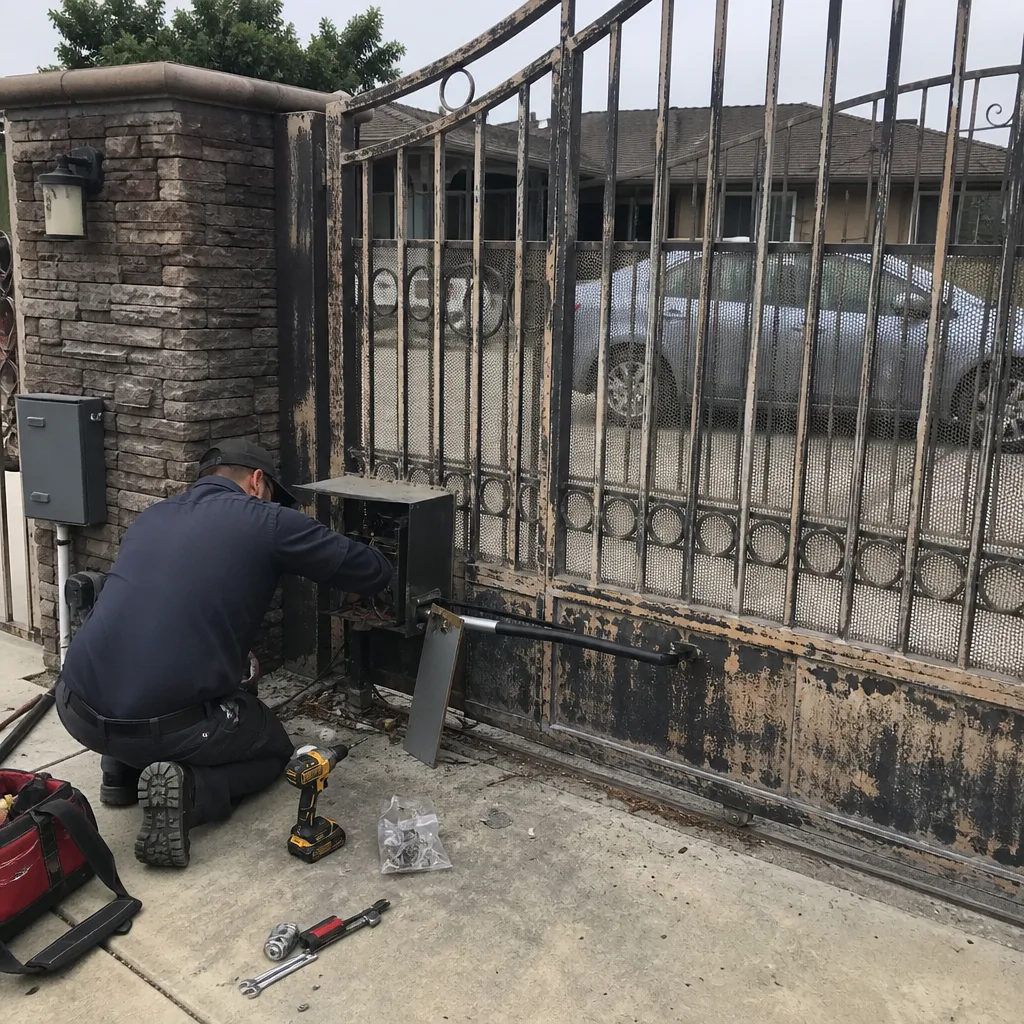 Before
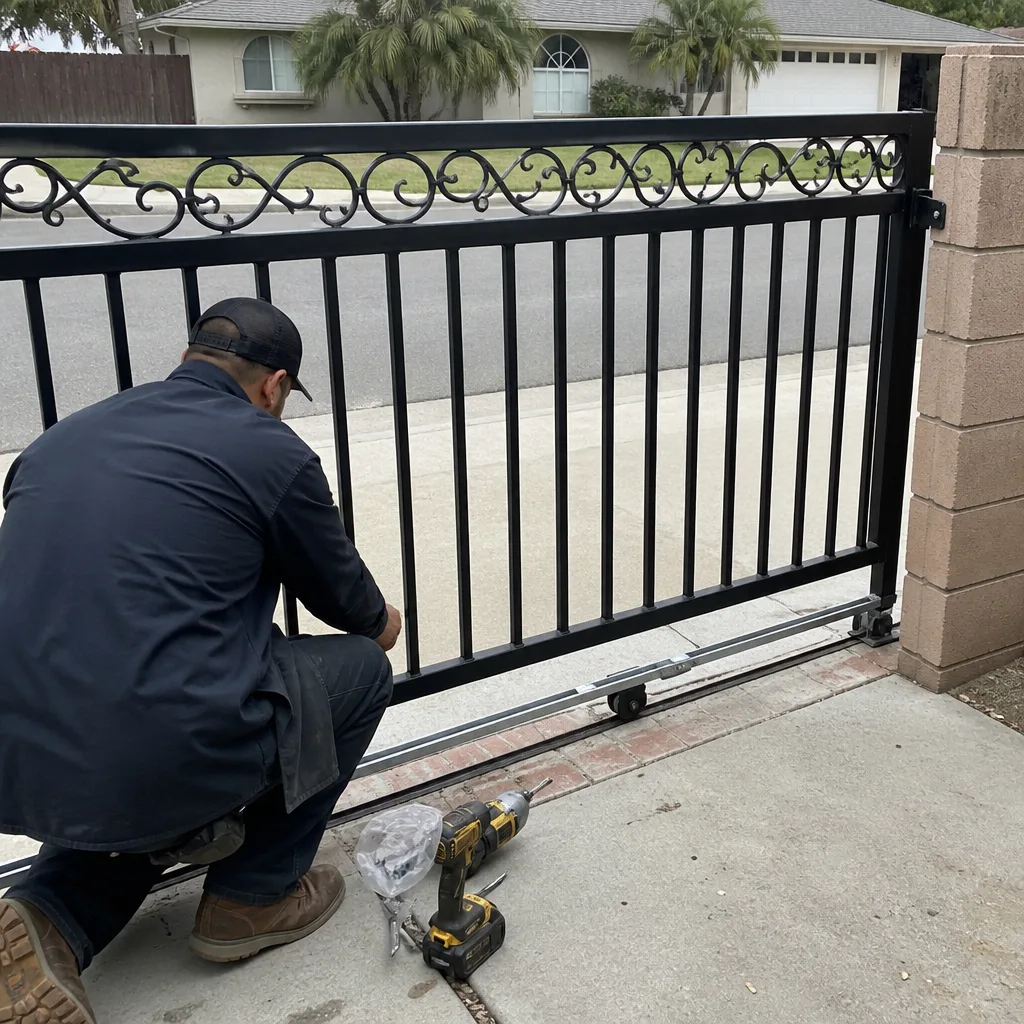 After
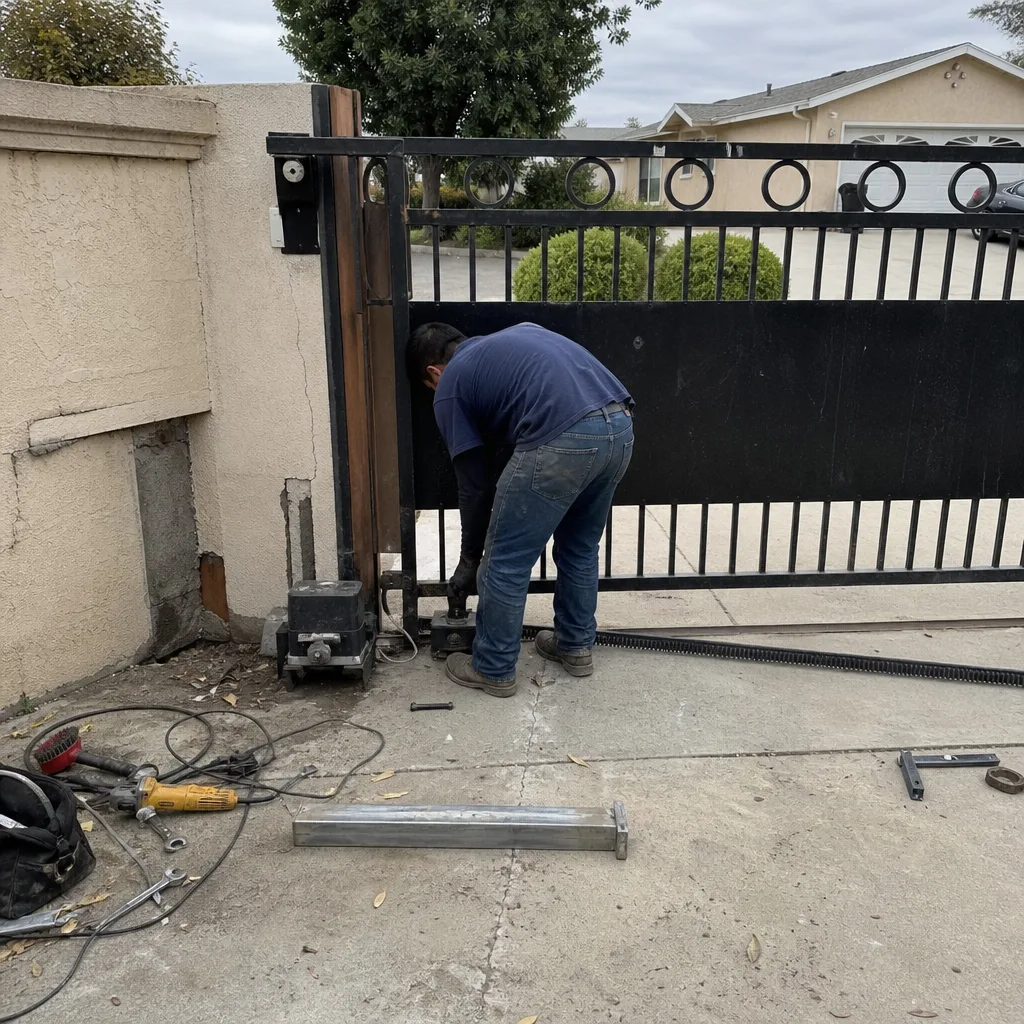 Before
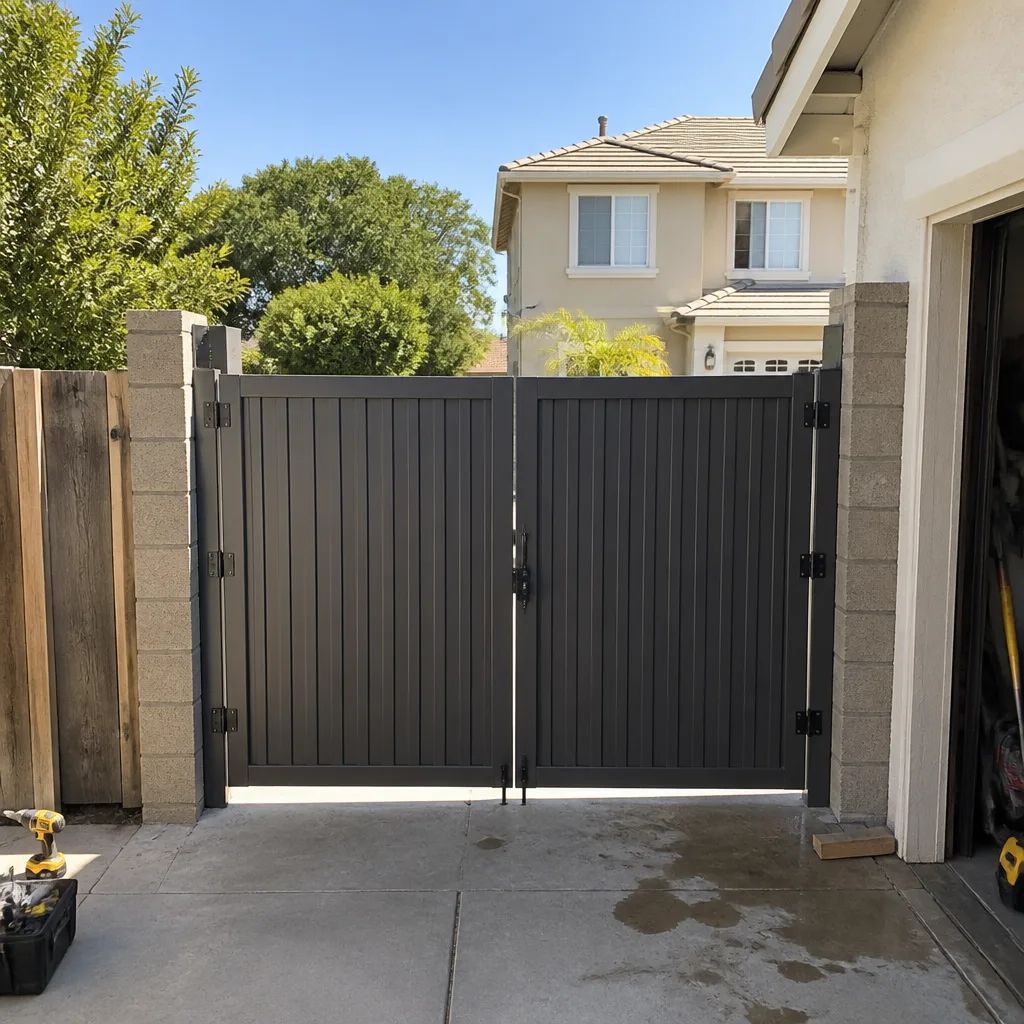 After
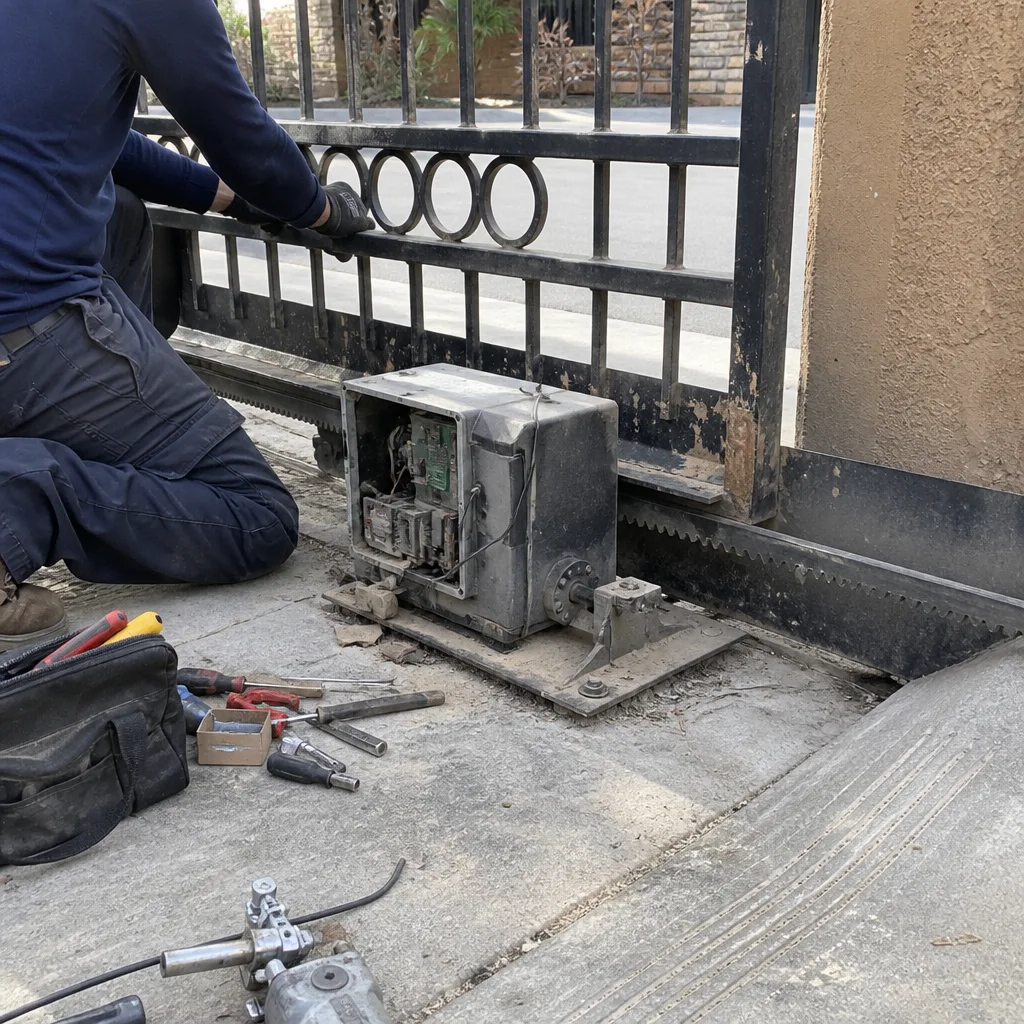 Before
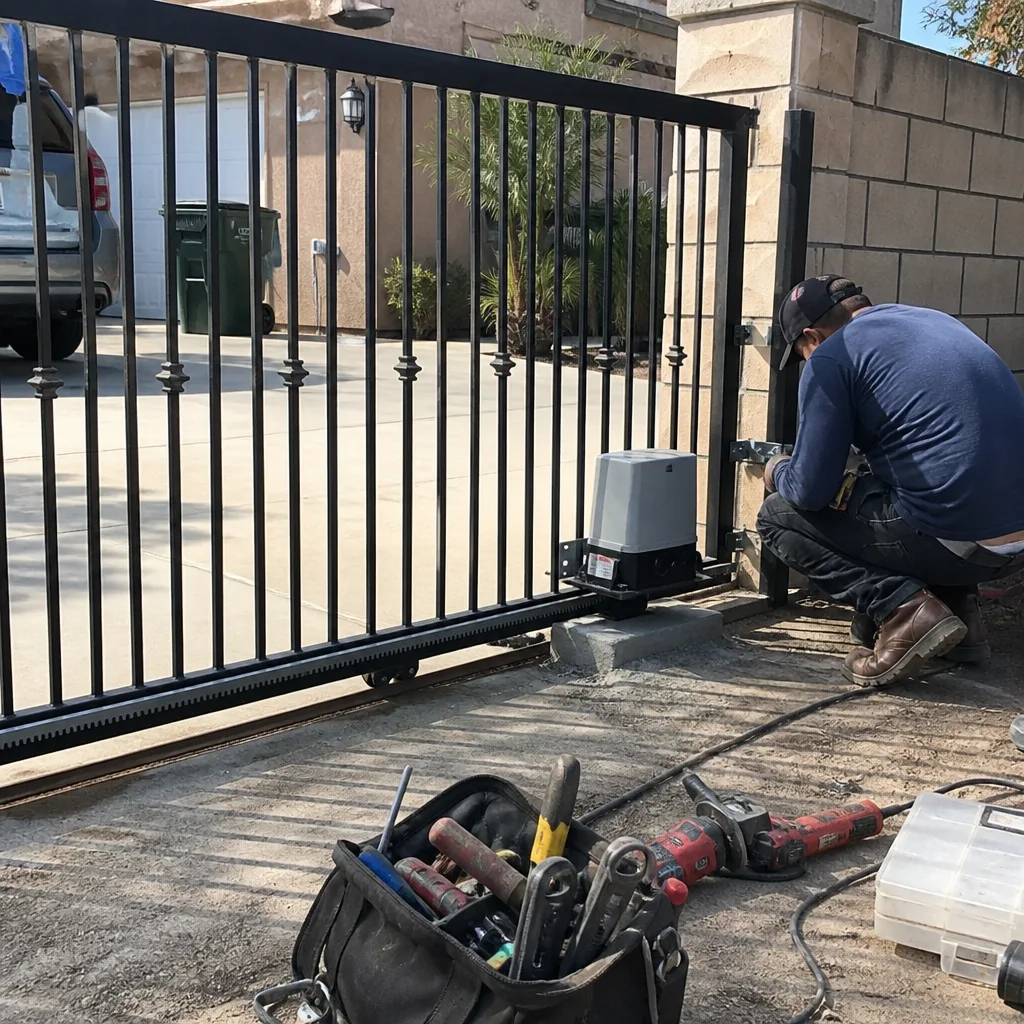 After
When to Call a Professional
Any gate repair involving electrical wiring, high-tension springs, or a gate that weighs several hundred pounds should be handled by a trained technician. A swing gate that closes on a person or pet is a serious safety incident, and the forces involved are not something to troubleshoot casually. If your gate is sparking, making grinding noises from the gearbox, failing to reverse when obstructed, or your opener’s control board shows scorch marks, shut the system down at the breaker and call a specialist. The same applies to any gate that has shifted visibly on its posts or developed a sag that wasn’t there six months ago. Structural movement requires evaluation before any electrical work makes sense. Lexington Gate Repair offers free estimates in Chino, call (866) 304-1321 and we’ll diagnose the problem correctly the first time.
Frequently Asked Questions
Gate repair costs in Chino typically range from $185 for minor mechanical fixes like hinge replacement or photo eye realignment up to $650 for control board replacement or motor repair, with full operator replacement running $1,200 to $3,500 depending on the brand and gate size. See our Gate Repair Cost Breakdown: The Chino Homeowner’s Reference for 2026 for detailed pricing. The final price depends on the root cause, not the symptom, so ask for a diagnostic summary before approving any work. Call (866) 304-1321 for a free estimate on your specific gate.
Yes, in most cases a gate that won’t open at all is an electrical failure: a dead control board, a blown capacitor, a tripped breaker, or a failed transformer are the most common causes for Chino residential systems. The fix depends on identifying which electrical component failed, which requires testing voltage at the operator and continuity through the low-voltage wiring before replacing anything. A diagnostic call will tell you within the first hour whether this is a simple repair or a replacement situation.
A gate that reverses before closing is most often caused by misaligned photo eyes, a failing control board with corrupted force settings, or a loop detector fault on sliding gate systems in Chino. The photo eyes are the first thing to check, but if cleaning and aligning them doesn’t fix the problem, the control board is the next suspect, especially on LiftMaster and Linear systems that are sensitive to voltage irregularities.
A quality gate opener like LiftMaster, FAAC, or Viking should last 10 to 15 years in Chino with proper maintenance, but heat and dust exposure can shorten that lifespan significantly if the operator is mounted in direct sun without shade. Control board capacitors are usually the first components to fail in our climate, often around the seven to ten year mark. Regular inspection extends the service life of the most expensive components.
Yes, we service commercial and HOA gate systems throughout Chino, including DoorKing, FAAC, BFT, Linear, and Viking operators tied into access control systems with keypads, telephone entry, and loop detectors. Commercial property managers get a different service approach: a full system assessment rather than a single-component repair, because commercial failures are usually in the peripherals rather than the operator itself.
The difference comes down to the structural integrity of the gate and the condition of the operator: a repair makes sense when the operator is serviceable and the structure is sound, while installation makes sense when the gate has shifted structurally or the operator has multiple failing components. If you’re in the gray zone between the two, a proper diagnostic will give you a clear recommendation based on the cost of repair versus the longevity of replacement. See our Lexington Gate Repair home page for more on how we approach both services.
The Bottom Line
Gate repair in Chino is a diagnostic discipline more than a parts-swapping task. The five root causes of failure, mechanical, electrical, software, structural, environmental, each require a different fix, and confusing them is the single most expensive mistake a homeowner can make. Chino’s clay soil and hot, dusty climate add specific failure patterns that generic advice from manufacturer manuals doesn’t address. Whether you’re repairing a LiftMaster on a residential driveway in the Preserve or maintaining a DoorKing system on a commercial property near the airport, the principle is the same: find the actual cause before you spend on the symptom. Browse our more guides & resources for additional help. If you’re experiencing gate problems and want a diagnosis you can trust, call (866) 304-1321 for a free estimate from a team that works on your brand, not on guesses.
Written by the team at Lexington Gate Repair, serving Chino since 2011.