
Last updated October 30, 2026
 Wrought iron
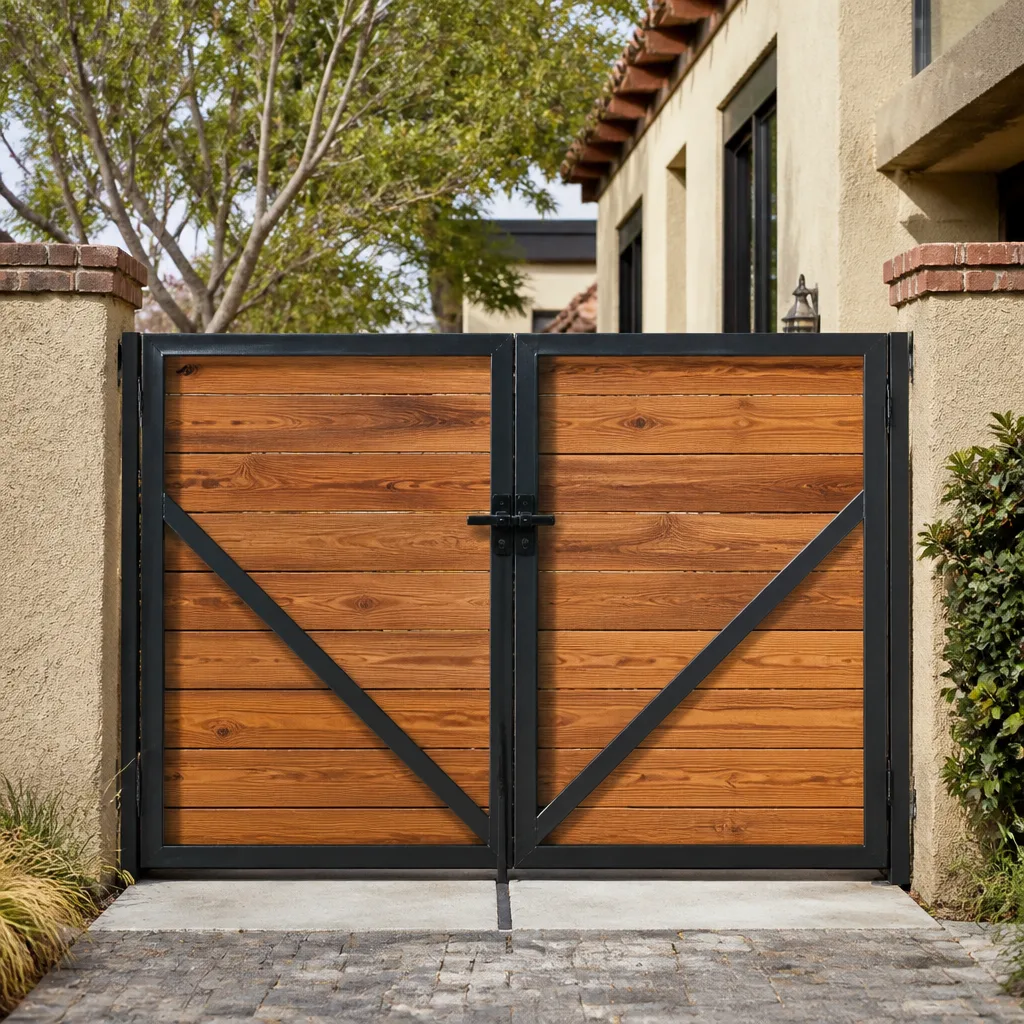 Wood & steel frame
 Farm & ranch
 Sliding driveway gates
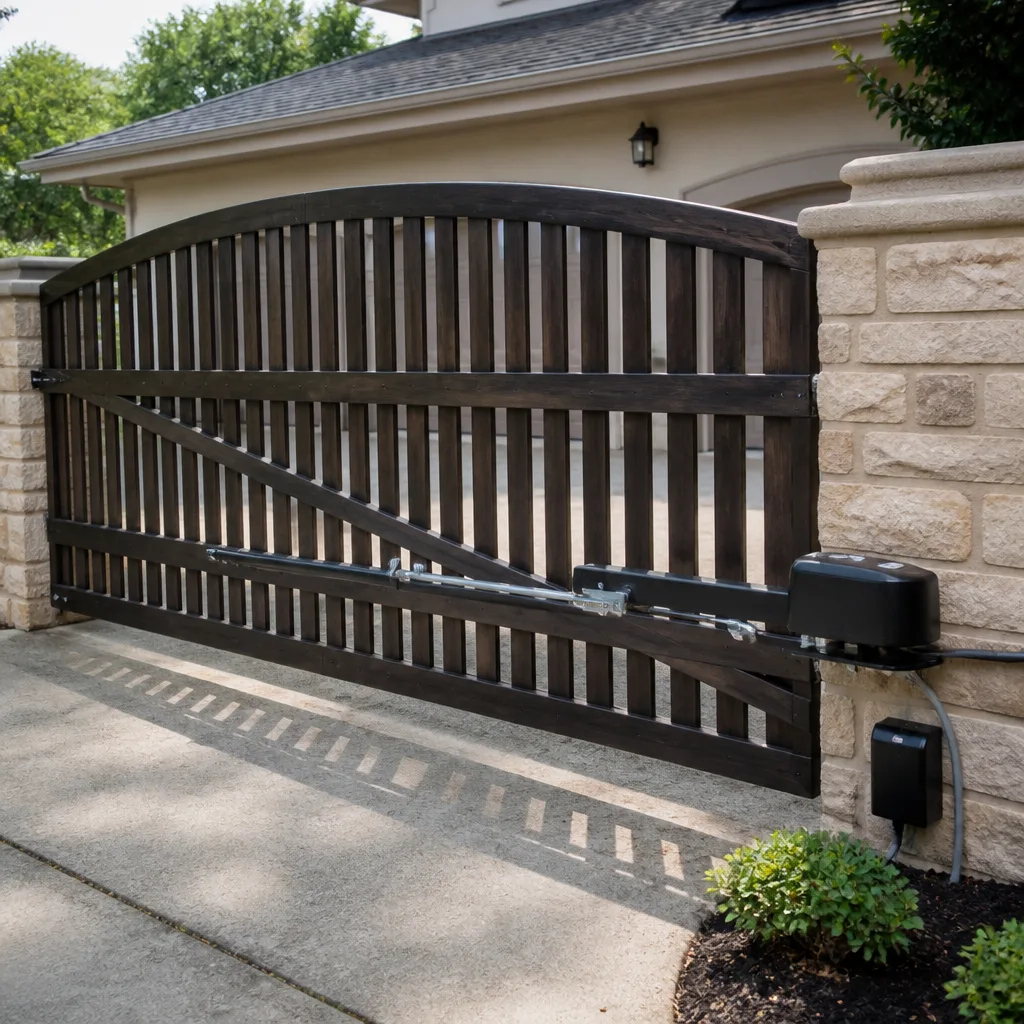 LiftMaster operators
Free on-site gate assessment - hinges, posts, and your LiftMaster or Nice gate operator checked before anything is quoted
The assessment is free and the quote is the invoice.
Get your free estimateGate Repair Maintenance Checklist for Chino Homeowners
Most gate maintenance checklists tell you to “lubricate moving parts.” That advice is useless, and in some cases actively harmful. Put the wrong grease on a rack-and-pinion drive from a BFT or Viking operator and you’ll accelerate wear faster than if you’d done nothing at all. Chino’s summer heat, which routinely pushes past 95°F from June through September, bakes grease until it turns to sludge and forces limit switches out of adjustment in ways coastal installers never see. This guide is built for that reality. You’ll learn exactly what to check on your gate in Chino, which lubricants go where, how often each task matters, and when to stop and call a gate specialist instead.
Styles & brands we work with
Quick Answer
A proper gate maintenance checklist for Chino homeowners covers five systems: the operator and limit switches, the gate track or hinges, the safety sensors and photo eyes, the battery backup, and the physical gate structure itself. Run a 10-minute visual and functional check monthly, a 45-minute mechanical check quarterly, and a full electrical and torque inspection annually. The heat in Chino means your limit switches and logic boards need adjustment more often than manufacturer spec sheets suggest.
Table of Contents
- The Lubrication Matrix: What Gets Grease, What Gets Oil, What Gets Nothing
- Monthly Checks: The 10-Minute Walk-Around
- Quarterly Checks: The 45-Minute Mechanical Deep Dive
- Annual Checks: Electrical, Torque, and Full-System Inspection
- How Chino’s Summer Heat Attacks Your Gate
- Battery Backup Health: The Outage Test Most People Skip
- Slide Gates vs. Swing Gates vs. Barrier Arms: Different Checks for Different Hardware
- Common Mistakes to Avoid
- When to Call a Professional
- Frequently Asked Questions
- The Bottom Line
The Lubrication Matrix: What Gets Grease, What Gets Oil, What Gets Nothing
The single most common maintenance error we see in gate repair in Chino is indiscriminate lubrication. Someone sprays WD-40 on everything that moves, including the chain, the gearbox, and sometimes even the control board housing. That causes three problems. First, WD-40 is a solvent with light lubricating properties. It strips existing grease and leaves metal surfaces vulnerable to the dry, dusty conditions that define inland Chino summers. Second, oil on a rack-and-pinion track attracts dirt, which turns into an abrasive paste. Third, grease on a slide gate’s nylon guide wheels does nothing but create a sticky surface that grime bonds to.
Here is what actually belongs where, based on the components that fail most often across the LiftMaster, Linear, and Ghost Controls systems we service regularly in Chino.
Grease These Components
- Slide gate rack and pinion gear: Use a white lithium grease formulated for outdoor metal-to-metal contact. Apply a thin, even coat along the rack teeth every six months. Too much grease collects Chino dust and becomes abrasive.
- Swing gate hinge pins: Heavy-duty wheel bearing grease works well here. The hinge pin is under constant load and needs a thick film to prevent metal-on-metal galling.
- Chain drives on swing operators: A tacky chain lubricant or motorcycle chain wax stays put and resists flinging. Avoid light spray oils entirely.
Oil These Components
- Pivot points on operator arms: A few drops of 3-in-1 oil or a similar light machine oil keeps the articulation points on a Viking or BFT articulated arm operator moving freely.
- Key cylinder and lock components: Graphite powder or a dry lock lubricant. Oil in a lock cylinder is a magnet for dust, and Chino has plenty of it.
Do Not Lubricate These Components
- Nylon guide wheels and rollers: These are self-lubricating by design. Adding lubricant creates a wet surface that dirt bonds to, eventually causing the wheel to seize.
- Photo eye lenses: Clean them with a dry microfiber cloth only. Any residue from lubricants or cleaners diffuses the beam and causes false obstruction readings.
- Logic boards and limit switch assemblies: These are electrical components. Moisture, oil, or grease creates shorts and corrosion. Leave them completely dry.
- Belt drives: Belts are rubber or composite. Oil degrades them. If a belt is squeaking, the tension or alignment is wrong, not the lubrication.
If you’re unsure which lubricant your specific operator needs, the brand name on the housing tells you a lot. Linear and Ghost Controls residential operators lean toward simpler chain and screw-drive mechanisms. BFT and Viking units, especially on commercial or HOA properties in Chino, often use hydraulic or articulated arm designs with different service requirements. A gate specialist who knows your brand will tell you what belongs where, and more importantly, what should never be touched.
Monthly Checks: The 10-Minute Walk-Around
This is the routine most Chino homeowners can do themselves every 30 days. It catches the early warning signs that turn into expensive electric gate repairs later. Set a calendar reminder. Ten minutes, once a month, ideally in the morning before the heat sets in.
- Open and close the gate three full cycles. Stand where you can watch the entire travel path. Listen for grinding, squealing, or a change in pitch from the motor. A new noise is the first sign of a developing problem.
- Watch the gate’s speed and smoothness. Does it hesitate at any point? Does it slow down mid-travel? A gate that jerks or changes speed is telling you something is binding or a limit switch is drifting.
- Check the photo eyes. With the gate open, block the path across the safety beam with your hand. The gate should stop or reverse immediately. If it doesn’t, stop testing and call a professional. A non-functioning safety sensor is a serious safety issue.
- Inspect the track for debris. For slide gates, remove leaves, gravel, and any accumulation in the track channel. Chino’s Santa Ana wind events push debris into tracks quickly, and a pebble wedged in the track can strain the motor on every cycle.
- Look at the gate structure itself. Walk to the gate and push firmly against it at the latch point and mid-span. Any movement you can feel or see means a hinge, weld, or mounting point is loosening.
- Test the manual release. Disengage the operator and push the gate by hand. It should move freely without binding. If it takes significant effort, the problem is mechanical, not electrical, and forcing the operator to work against that resistance shortens its life.
- Check the keypad or intercom if you have one. Enter your code and verify it activates the gate on the first try. A weak keypad battery or a corroded wire connection announces itself as a delayed or failed response.
Total time investment: about 10 minutes. The payoff is that you’ll catch most gate problems in Chino before they become no-power, no-movement emergencies on a Sunday night.
Quarterly Checks: The 45-Minute Mechanical Deep Dive
Every three months, set aside a full 45 minutes for the checks that require basic hand tools and closer inspection. This is where you catch the mechanical wear patterns that lead to premature operator failure, especially on slide gates, which are the dominant style in many Chino neighborhoods built in the 1990s and 2000s.
Quarterly Task List
- Check torque on all visible bolts and mounting hardware. Vibrations from daily cycling loosen bolts over time. Use a socket set to check the operator mounting plate, gate hinge bolts, track anchor brackets, and any bolts on the gate itself. A gate that rattles has already loosened somewhere.
- Inspect chain or belt tension. For chain-drive operators, press down on the chain at the mid-point between sprockets. There should be about 1/4 to 1/2 inch of deflection. Too tight stresses the gearbox bearings. Too loose causes skipping and jerky travel. For belt drives, similar rule: firm, with slight give, never guitar-string tight.
- Clean the track thoroughly. Beyond the monthly debris check, use compressed air or a stiff brush to clear accumulated dust and grit from the entire track length. Chino’s dry summers mean dust coats everything within weeks.
- Inspect the rack and pinion teeth. Look for wear patterns. Teeth that look sharpened or have a hook shape at the contact point are wearing down. This is a replacement item before it causes the pinion gear to slip.
- Lubricate per the matrix above. This is the right interval for reapplying grease to the rack, hinge pins, and pivot points. Remember: thin coat, not a slathering.
- Check limit switch positioning. Open the operator cover and visually inspect where the limit cams sit. In our experience with Chino’s heat cycles, limit switches on older Linear and LiftMaster units drift out of position every few months as metal components expand and contract. If the gate doesn’t stop at exactly the same point every cycle, the limits are the prime suspect.
- Test the obstruction detection under load. Put a trash can or similar object in the gate’s closing path. The gate should reverse on contact. This tests the internal force sensing, not just the photo eyes. If the gate tries to crush the obstacle, stop using it and call a gate specialist immediately.
This quarterly routine catches the mechanical degradation that happens gradually, invisibly, until something bends or snaps. For most Chino homeowners with a single-family automatic gate, this is the highest-value 45 minutes in gate maintenance.
Annual Checks: Electrical, Torque, and Full-System Inspection
Once a year, your gate needs an electrical inspection that goes beyond what most homeowners can safely perform. This is also the right time to consider a professional service visit if you want a trained set of eyes on the system before summer hits. In Chino, schedule this in late March or early April, before the first 95°F day arrives and the gate starts working its hardest.
What Gets Checked Annually
- Capacitor health. The start capacitor in your operator motor weakens over time. A weak capacitor still starts the motor, but draws more current doing it, which stresses the logic board. Testing requires a multimeter and knowledge of capacitor discharge safety.
- Wire connections and terminal blocks. Loose screw terminals create resistance, which creates heat, which creates intermittent failures. Every connection in the control board should be checked and re-tightened.
- Grounding and surge protection. Chino gets thunderstorms, and even distant strikes can induce voltage spikes on gate wiring. A properly grounded system with a functioning surge protector survives. A poorly grounded one takes out logic boards.
- Motor brush wear. DC motors used in many Ghost Controls and residential Linear operators have carbon brushes that wear down. They are replaceable, but only if you catch them before they score the commutator.
- Solar panel output, if equipped. Many Chino homeowners have solar-assisted gates. Dust accumulation on panels reduces output, and cable connections corrode over time. Annual cleaning and connection checks keep the battery topped off.
- Gate level and plumb. A gate that has shifted slightly out of level puts uneven load on hinges or wheels. Over a year, this accelerates wear dramatically. A professional checks level and makes adjustments before the problem compounds.
Let me be direct about one thing: the annual inspection is where we find the problems that would have stranded you later. In our experience servicing gates across Chino, the typical annual inspection reveals at least one issue that the homeowner had no way of detecting: a limit switch starting to fail intermittently, a capacitor losing capacity, a wire that’s been slowly rubbing against a moving part. That’s not a sales pitch. It’s the reality of electromechanical equipment in an environment with extreme heat and dust.
How Chino’s Summer Heat Attacks Your Gate
Chino’s summer climate creates specific failure modes that you won’t find in generic maintenance guides written for temperate regions. Understanding these patterns helps you prioritize what to inspect and when.
The Limit Switch Drift Problem
Limit switches tell your operator where the gate travel begins and ends. Most residential operators use electromechanical switches with metal contact points that slide along a cam. Here’s what happens in Chino: daytime temperatures above 95°F expand the metal components. Nighttime temperatures drop, contracting them. Over hundreds of thermal cycles, the limit cam positions shift slightly. The gate now stops six inches short, or over-travels and slams against the stop. This is why we recommend checking limit position quarterly in Chino, not annually as most manufacturer guides suggest.
Grease Breakdown and Re-Lubrication Intervals
Standard white lithium grease starts breaking down at sustained temperatures above 175°F. That sounds safe, until you realize that a metal gate surface in direct Chino sun can reach 150°F to 160°F on a 100°F day. The grease inside the rack-and-pinion housing runs hotter than the outside air. Every summer, we see slide gates in Chino where the grease has become a gummy, sticky paste that makes the motor work 20% to 30% harder. Changing to a high-temperature-rated synthetic grease and re-lubricating every three months through the summer months prevents this.
Logic Board Thermal Stress
The printed circuit board inside your operator housing operates within a specified temperature range, typically up to 140°F ambient. Inside a metal housing in direct sun on a 100°F Chino day, ambient temperature can exceed that rating. The result is accelerated degradation of solder joints and capacitors. Boards that would last 15 years in San Diego fail in 8 to 10 in Chino. You can slow this by verifying the operator housing has shade, or by installing a simple shade structure if your gate faces west. We’ve replaced enough electric gate control boards over the years to know that housing placement matters as much as brand quality.
Dust and Sensor Contamination
Chino’s Santa Ana events and general dry conditions mean airborne dust settles on everything. Photo eye lenses get a fine coating that diffuses the beam. Limit switch contact points accumulate dust that creates resistance. Control board connectors oxidize faster than in coastal environments. Your maintenance schedule needs to account for this. Clean photo eyes monthly, not quarterly. Check limit switch contacts quarterly, not annually. An air compressor with a blower nozzle is the best tool you can own for gate maintenance in Chino.
Battery Backup Health: The Outage Test Most People Skip
Your automatic gate runs on household AC power. When that power goes out in Chino, during a summer rolling blackout or a wind event, the battery backup is the only thing between you and a gate that won’t open. Except most people have no idea whether their battery backup actually works until the day they need it. And batteries that sit for years without being exercised will fail silently.
Here’s the test that matters: simulate an outage. Find the circuit breaker that feeds your gate operator. Run the gate to the closed position. Turn off the breaker. Now try to open the gate using your remote or keypad. It should open, though possibly slower than normal. Now turn the breaker back on. If the gate opened normally on battery power, your backup is functioning. If it didn’t move, or moved sluggishly and stopped, you have a battery problem that needs attention before any real outage occurs.
Battery replacement intervals vary. Lead-acid batteries in gate operators typically last 3 to 5 years in Chino’s heat. Heat accelerates the chemical degradation inside lead-acid cells, so a battery that would last 5 years in a mild climate often dies in 3 here. If you’ve owned your gate system for more than 3 years and have never replaced the batteries, assume they need attention. This is a simple and relatively inexpensive replacement, and it’s the difference between a gate that still works during an outage and a gate that leaves you manually releasing the operator and dragging a 400-pound gate open by hand.
Slide Gates vs. Swing Gates vs. Barrier Arms: Different Checks for Different Hardware
Chino has a mix of gate types depending on the property and its age. Slide gates dominate on newer custom homes and many HOA entrances. Swing gates are common on older ranch-style properties and some commercial lots. Barrier arm operators handle parking access at commercial properties and apartment complexes. Each type fails differently, and your maintenance focus should follow the hardware.
Slide Gate Specifics
Slide gates carry their entire weight on a track and guide wheels, with the rack and pinion providing movement. Your highest-priority checks are: track debris (monthly), rack and pinion wear (quarterly), guide wheel condition (quarterly), and motor torque response (quarterly obstruction test). A slide gate that’s hard to push manually is overloaded or has failing wheels. Address that before the motor burns out trying to overcome resistance it was never designed for. This is the most common failure pattern we see in Chino slide gates, especially on heavier ornamental iron gates that have been in service for 10+ years.
Swing Gate Specifics
Swing gates pivot on hinges and are driven by an articulated arm, underground operator, or linear ram. Your highest-priority checks are: hinge pin wear (quarterly), operator arm pivot points (quarterly), gate level and plumb (annually), and opening force (monthly manual release test). A swing gate that sags or drags on the ground at the latch side is fighting friction on every cycle. The hinge posts may have shifted, or the hinges themselves are wearing out. This is a structural issue that will shorten operator life significantly if ignored.
Barrier Arm Specifics
Barrier arms are spring-balanced mechanisms. The spring does most of the lifting work, and the motor just moves the arm through its arc. Your highest-priority checks are: spring tension and condition (quarterly), arm balance (quarterly), and limit positioning (monthly). A barrier arm that drops or slams down when power is cut has lost spring tension and is dangerous. If you manage a commercial property in Chino with a barrier gate, make this check non-negotiable. A falling barrier arm can damage vehicles and injure pedestrians.
Common Mistakes to Avoid
- Using WD-40 as an all-purpose gate lubricant. WD-40 is a solvent with light oil. It strips real grease and leaves components dry within weeks. Use the right product for the right component, every time.
- Ignoring a noisy gate. A gate that grinds, squeals, or clunks is announcing a mechanical problem. The longer it runs with that problem, the more parts it destroys. A $50 bearing replacement becomes a $400 gearbox replacement if ignored long enough.
- Testing the photo eyes once and forgetting them. Safety sensors can fail intermittently for weeks before they fail completely. Monthly testing takes 30 seconds and catches early failure. Do it every month in Chino, where dust contamination is constant.
- Forcing a gate that’s stuck or binding. Holding the remote button down or using the manual override to force a resisting gate through its travel path bends things, strips gears, and blows motors. If a gate won’t move freely manually, stop and diagnose before applying motor force.
- Skipping battery backup testing until an outage happens. Batteries are consumable items with a finite life. In Chino’s heat, that life is shorter than the manufacturer’s generic estimate. Test quarterly using the breaker method described above.
- Treating all gate operators as interchangeable. A Viking operator and a Ghost Controls operator have different service requirements, different error codes, and different parts. Advice written for one brand may be wrong for another. When in doubt, consult a specialist who works on your specific brand.
- Waiting until summer to address known issues. A gate that struggles in April’s mild temperatures will definitely fail during a 100°F July heat wave. Chino homeowners should treat spring as the deadline for gate repairs that have been deferred.
When to Call a Professional
Some gate issues are safe and sensible to address yourself: monthly visual checks, cleaning photo eyes, clearing track debris, testing the battery backup. Others require training, tools, and experience. Call a gate specialist when you notice any of these: the gate reverses for no visible reason, the operator hums but doesn’t move, you smell burning electrical components, the gate slams or drops instead of moving smoothly, the obstruction detection doesn’t work, or you’ve adjusted the limit switches and the problem persists. These are signs of failing electrical components, damaged gearboxes, or structural problems that can cause injury if mishandled. Lexington Gate Repair offers free estimates in Chino for gate repair and gate installation. Call (866) 304-1321 if you’re not sure whether a symptom is normal or serious. We work on your brand, and we’ll tell you straight what needs attention and what doesn’t.
Frequently Asked Questions
Run a 10-minute visual and functional check monthly, a 45-minute mechanical check quarterly, and a full electrical inspection annually. Chino’s heat and dust mean your gate needs attention more often than manufacturer guidelines suggest for milder climates.
Slide gate racks need a white lithium grease or high-temperature synthetic grease applied in a thin, even coat. Never use WD-40 or other spray solvents, and never lubricate the track channel itself. Grease goes on the rack teeth only.
Thermal expansion and contraction in Chino, where daytime and nighttime temperatures can swing 30 degrees or more, cause limit switches to drift. Check and re-set limit positions quarterly, and schedule an annual service visit in spring before the summer heat peaks.
Expect 3 to 5 years from lead-acid batteries in Chino’s summer heat, which accelerates battery aging. Test your battery backup quarterly by cutting power at the breaker and attempting to open the gate. If it moves slowly or not at all, replace the battery before you need it during an outage.
Monthly checks, cleaning photo eyes, clearing track debris, and testing the battery backup are DIY-friendly. Anything involving wiring, logic boards, limit switches, gearboxes, or spring tension should be handled by a gate specialist. High-voltage components and heavy gate structures can cause serious injury if mishandled.
We repair and install gates from LiftMaster, Linear, Viking, Ghost Controls, and more. We work on your brand, whether it’s a residential Mighty Mule or a commercial BFT system. If you’re not sure what brand you have, the housing label tells you most of what we need to know.
The Bottom Line
A gate maintenance checklist that doesn’t account for Chino’s specific conditions isn’t worth much. Your gate faces summer heat that kills grease, dust that contaminates sensors, and thermal cycling that drifts limits out of position. Monthly visual and functional checks, quarterly mechanical service, and annual electrical inspection will catch most failures before they strand you. Use the right lubricants on the right components. Test your battery backup before you need it. And know the difference between what’s safe to handle yourself and what belongs in the hands of a gate specialist. Your gate protects your property. A little regular attention keeps it working for years instead of surprising you on the hottest day of summer.
Written by the team at Lexington Gate Repair, serving Chino since 2011.
See the difference
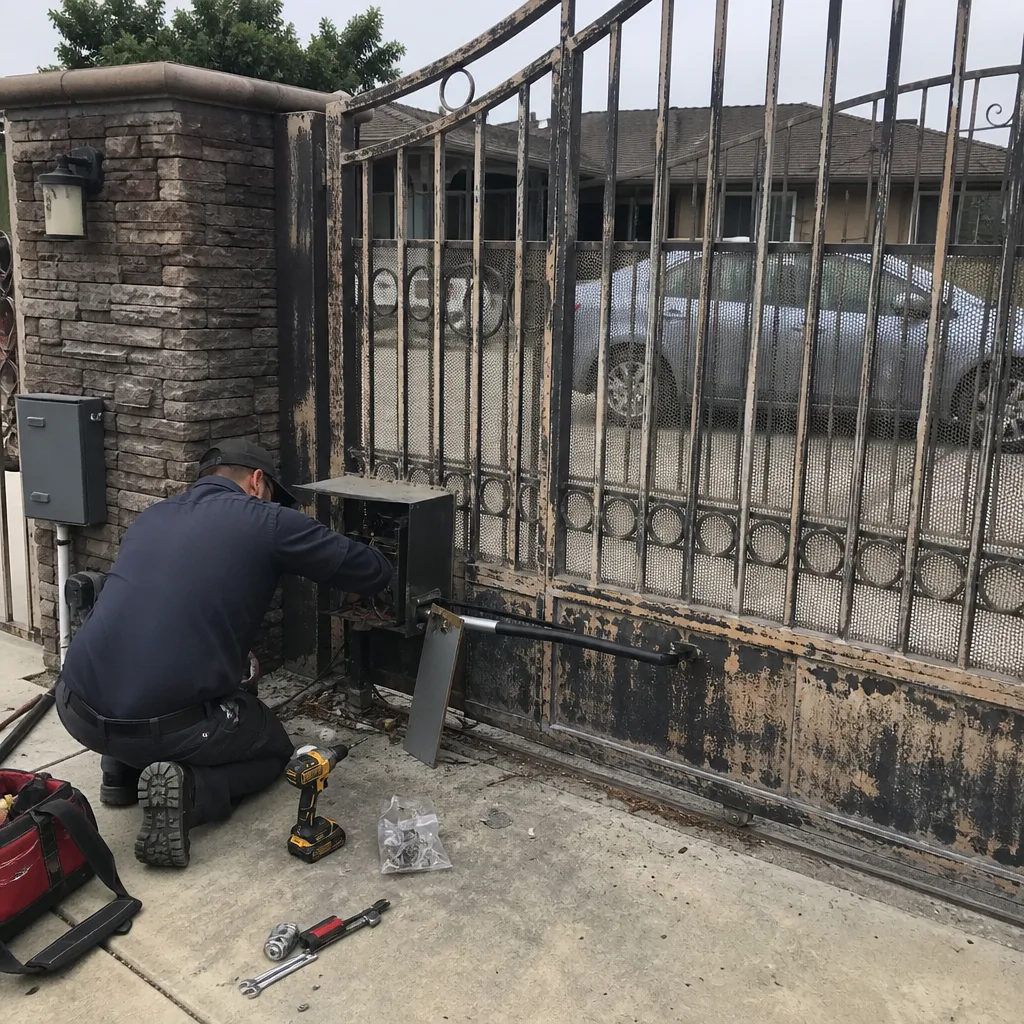 Before
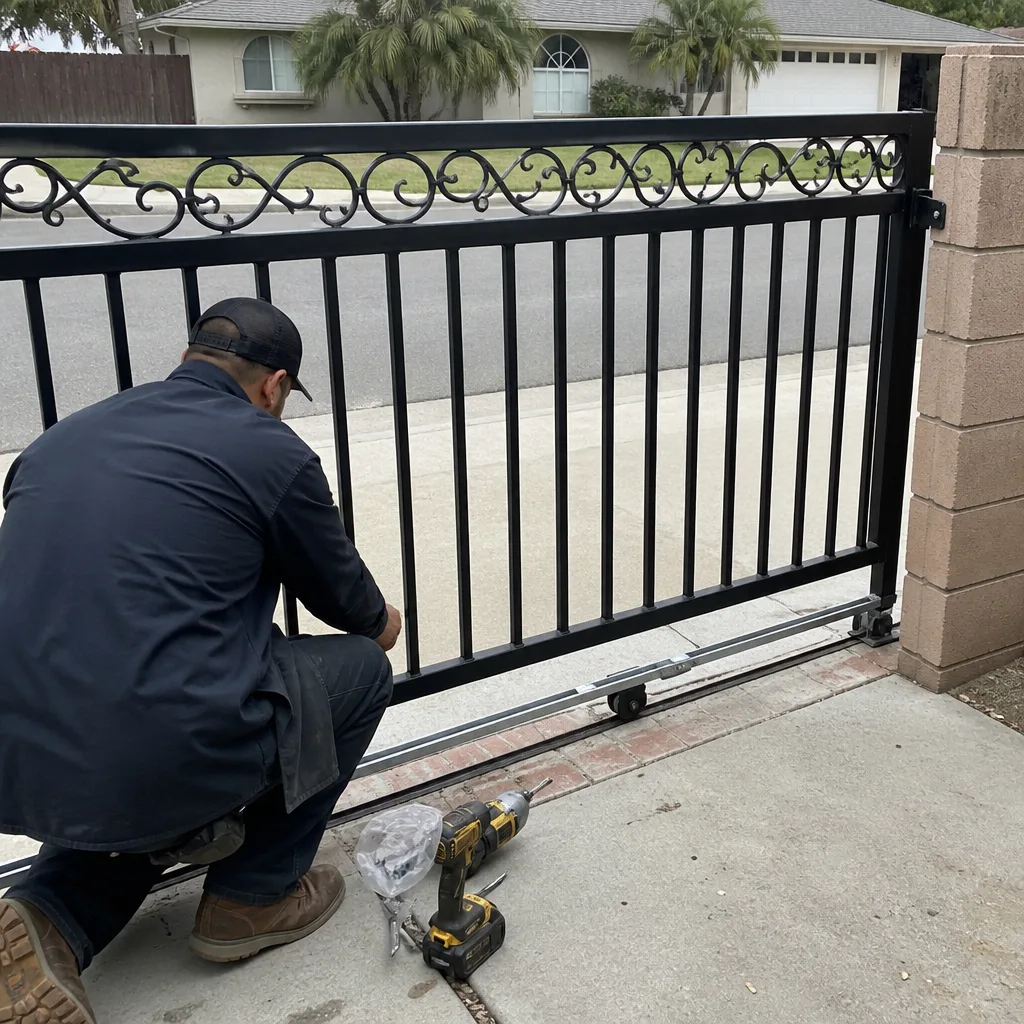 After
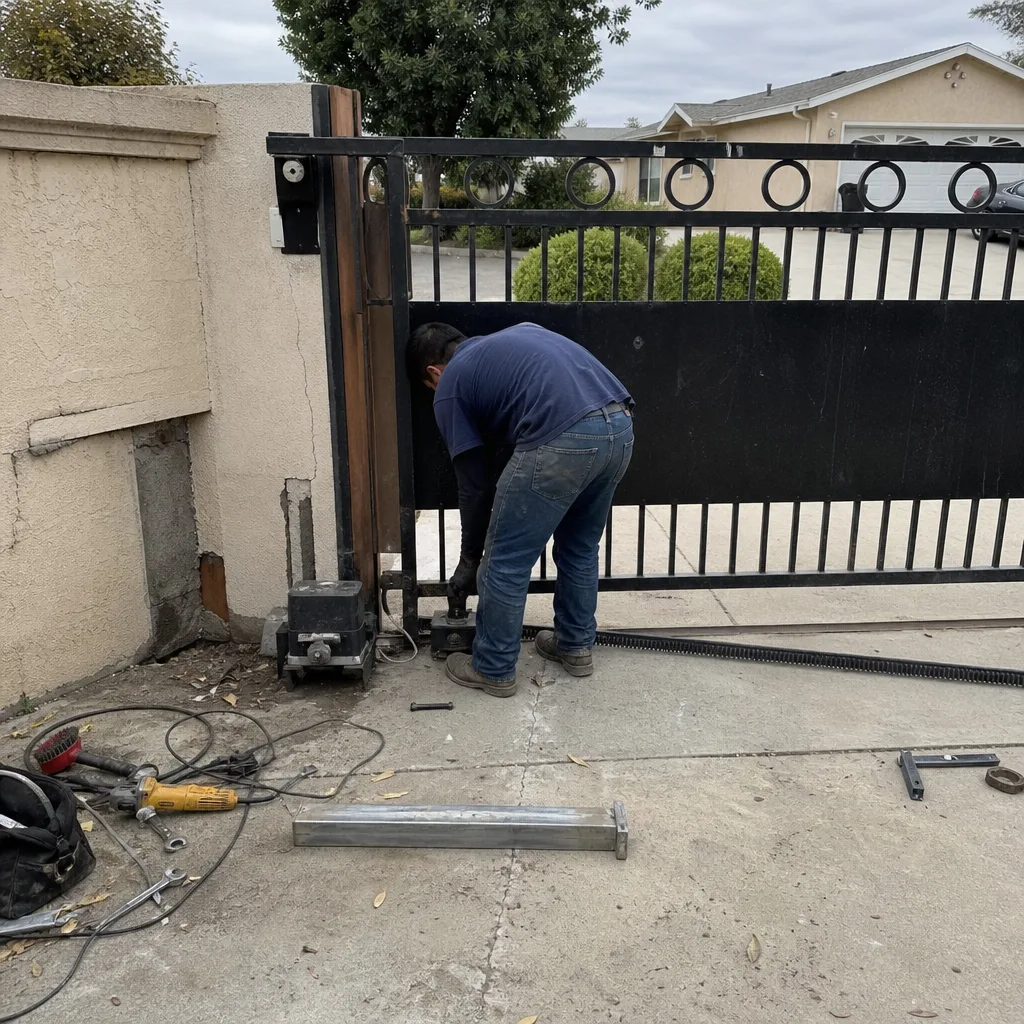 Before
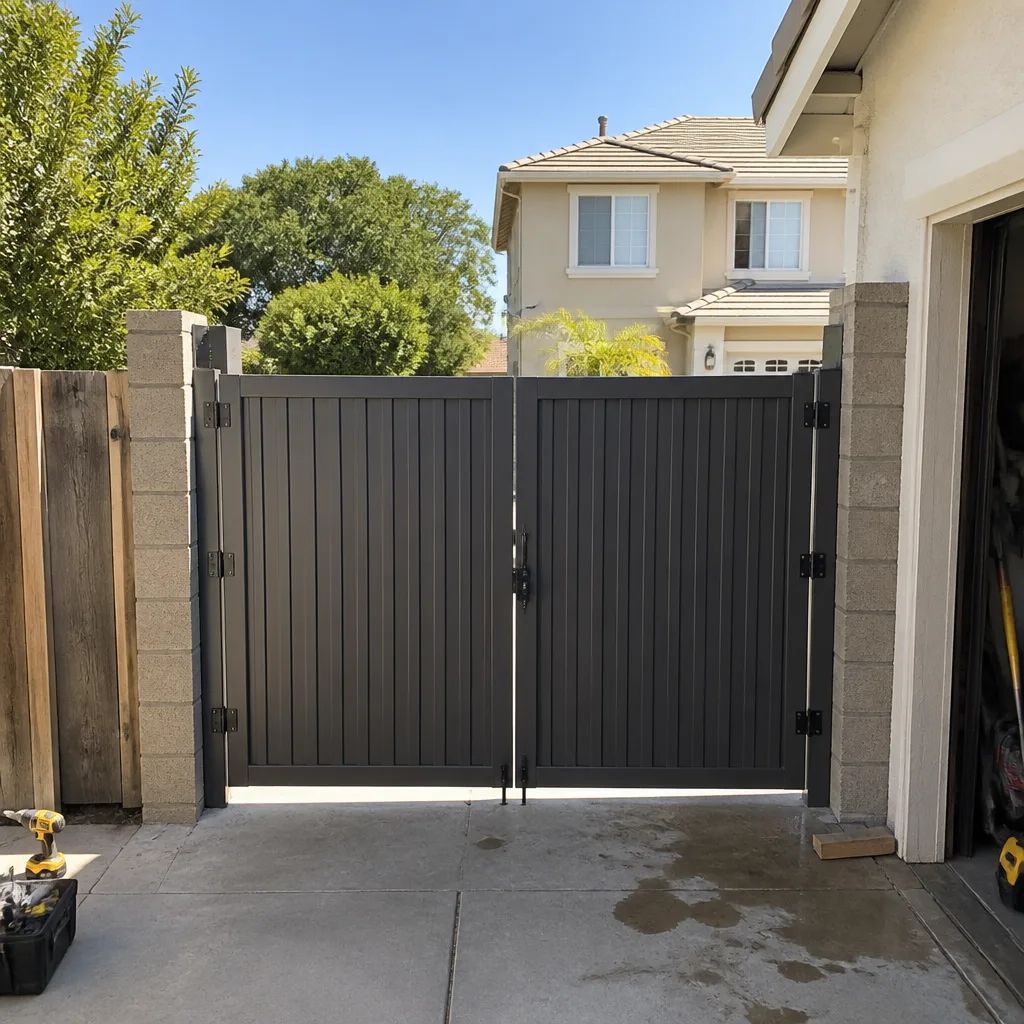 After
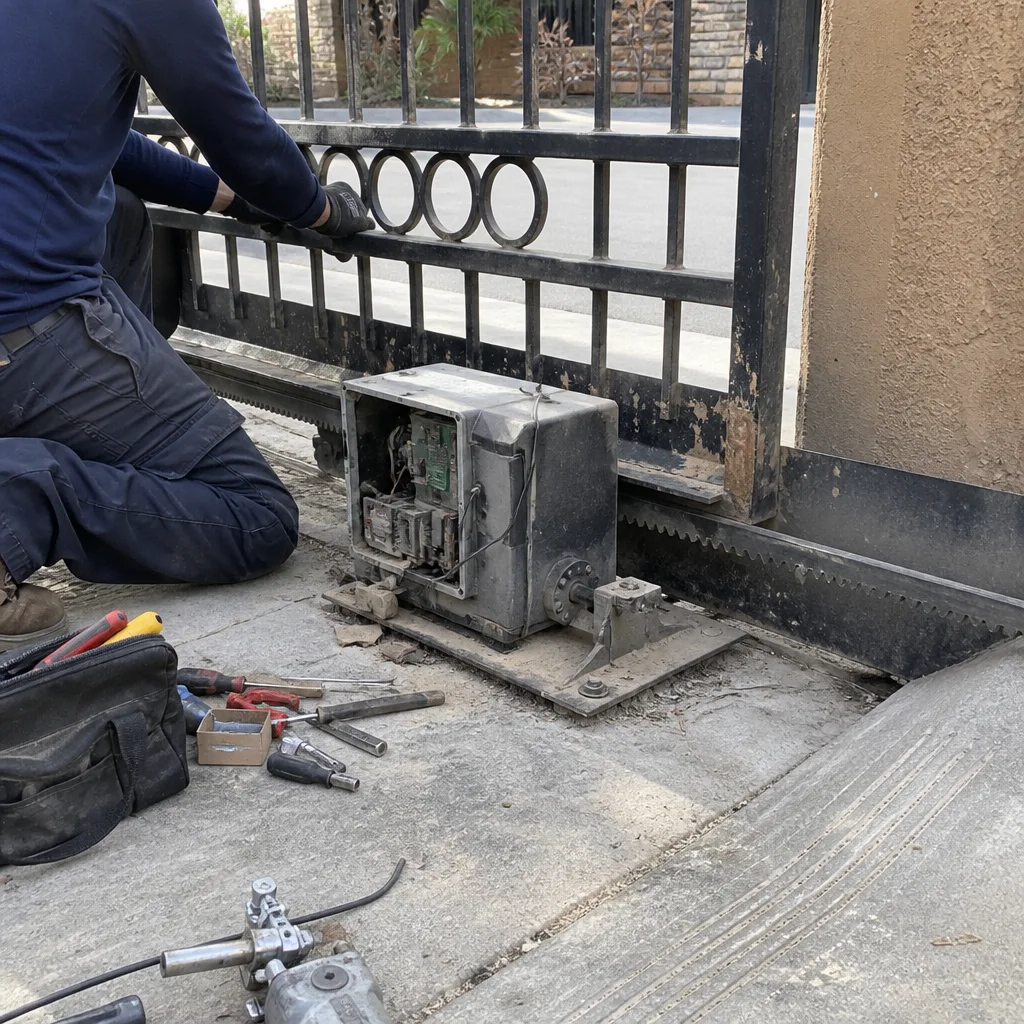 Before
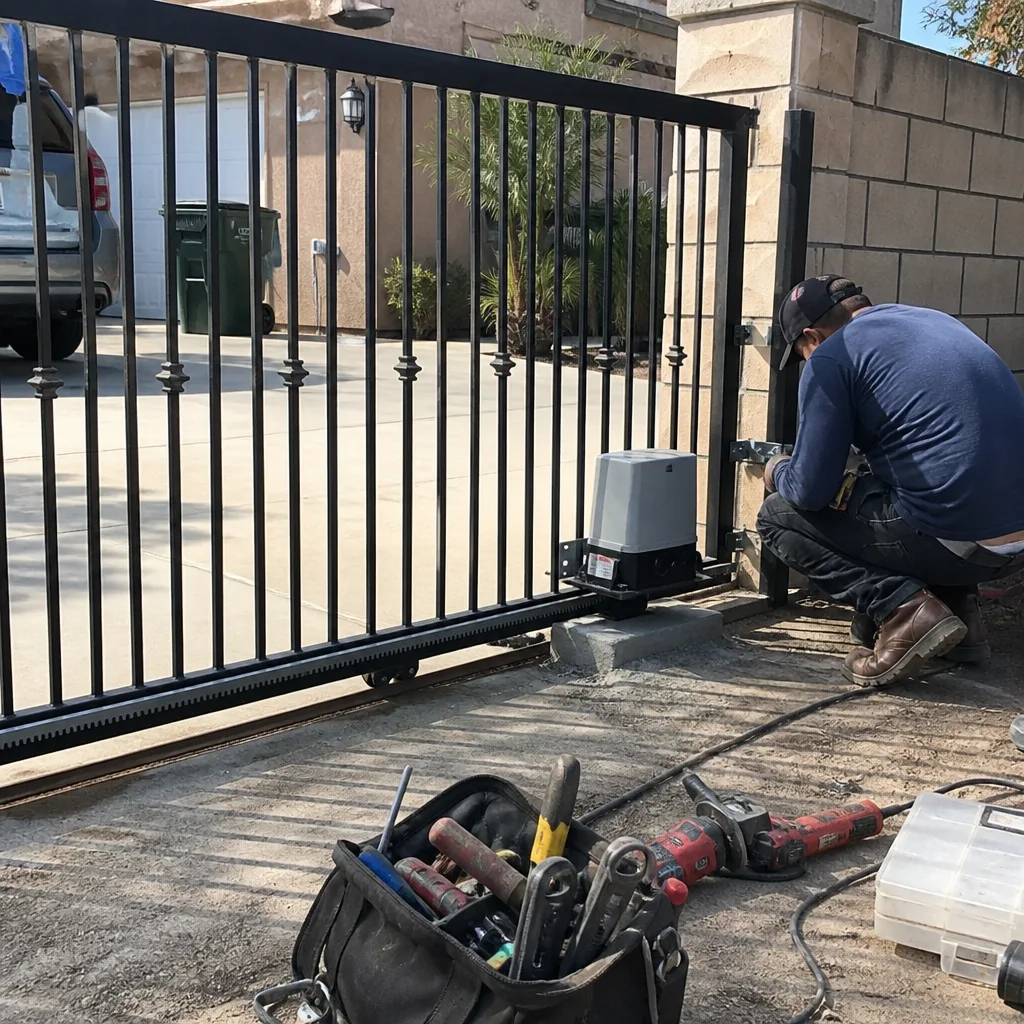 After